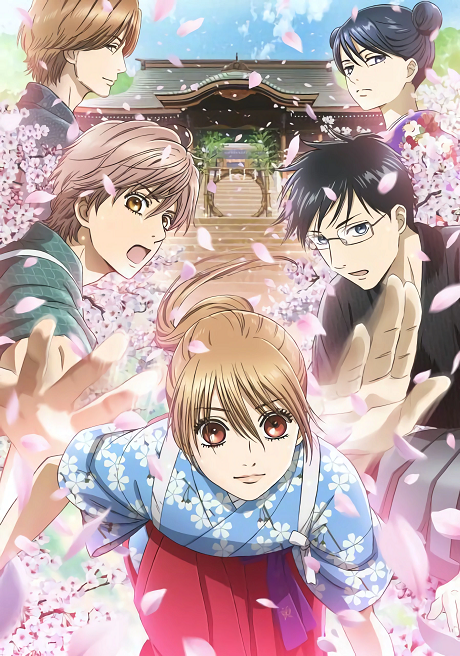
Chihayafuru 3
They may have just won their most coveted karuta tournament, but members of the Mizusawa karuta team still have a long way to go. Each member chases their dreams, and with a win under their collective belt, those dreams are closer in reach than ever. Chihaya Ayase is determined to challenge Wakamiya Shinobu and win the title of Queen, and Taichi Mashima is ready to take on Arata Wataya now that he’s made it into the most elite of karuta players — but an unexpected revelation will deal these karuta players a hand none of them saw coming.
(Source: Sentai Filmworks)
📺Anime Details
📝Editorial Analysis
The hush before the final match of the national tournament — not silence, but the weight of breath held too long, fingers trembling just slightly on the edge of a card, the fluorescent lights humming like a nervous pulse overhead. That’s where Chihayafuru 3 lives: in the suspended second before impact, where every heartbeat is a syllable of kami, every blink risks missing the flicker of a sleeve as a hand darts across the tatami. It’s not about victory yet — it’s about the unbearable intimacy of preparation, the way Taichi’s knuckles whiten around his practice deck, how Chihaya’s voice cracks just once when she says, “I’m going to beat Shinobu,” not as bravado, but as a vow carved into bone.
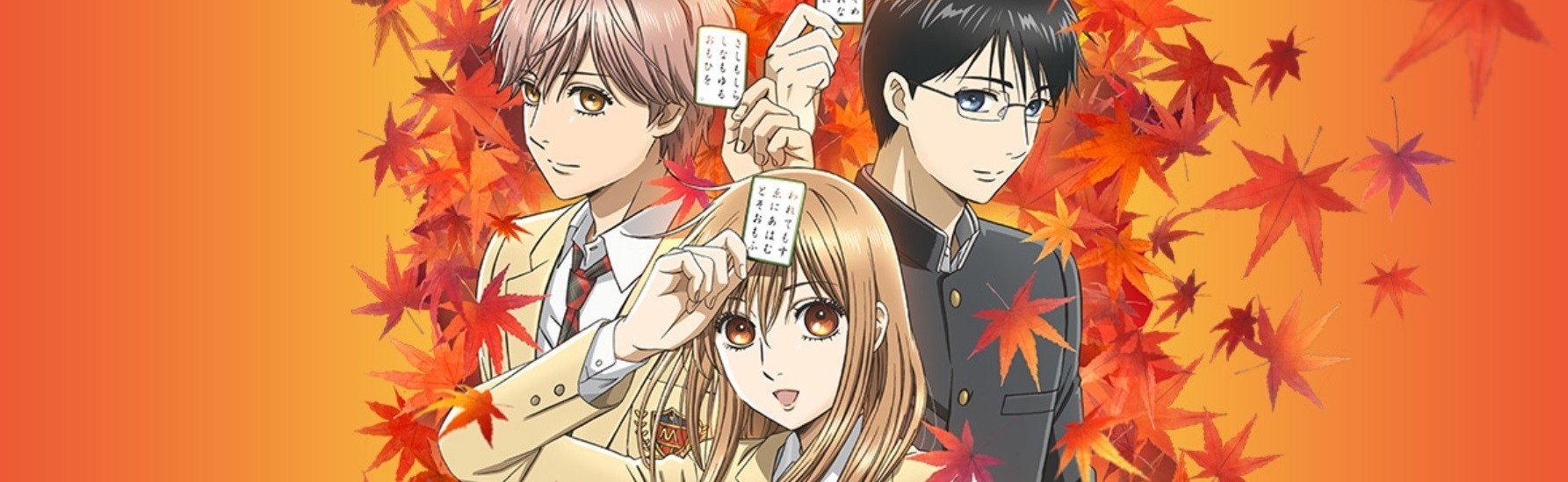
What makes Chihayafuru 3 vibrate so uniquely isn’t its sports structure or even its romance — it’s the tenderness of rigor. This is an anime that treats memorization like devotion, repetition like prayer, and competition not as conquest but as recognition: seeing your opponent’s exhaustion, their joy, their history — all folded into the rhythm of a single chant. You don’t just watch karuta — you feel the dry scrape of paper on palm, the sting of a missed read, the quiet devastation of a teammate’s loss that lands like a physical blow because you’ve shared their late-night cram sessions, their cafeteria lunches dissecting tanka, their unspoken fears about futures already narrowing. It’s warmth forged in discipline, longing sharpened by proximity, hope that never shouts — it exhales, steady and low.
That emotional DNA echoes sharply in Thrillville®: Off the Rails™, a game whose description highlights 20 death-defying rides and building coasters that leap from one track to another, launch through the air like cannonballs. On paper, it’s pure kinetic chaos — but the player review nails the resonance: “Used to play this game on the Wii around 13 years ago. Glad to see the PC port runs smoothly and is still as fun. This game has aged really well!” That nostalgia isn’t for the physics — it’s for the careful, obsessive craft behind each loop-the-loop, the hours spent tweaking drop angles and launch speeds until the ride feels right, until it sings. Like Chihaya adjusting her stance millimeter by millimeter before a match, or Taichi rewriting his entire reading strategy after one misstep — it’s the same quiet pride in precision, the same joy in making something dangerous move with grace. The romance and shoujo tags? Not about love triangles — but about the devotion poured into creation, the way building a coaster becomes an act of self-expression, just as mastering a poem becomes a declaration of identity.
And then there’s the competitive spirit tag — not rivalry as hostility, but as shared gravity. In Chihayafuru 3, Taichi doesn’t want to crush Arata; he wants to meet him, to stand in the same light, to prove he belongs there, in that rarefied air. Likewise, Thrillville®: Off the Rails™ frames competition not as demolition derby but as showmanship: designing a ride so thrilling it draws crowds, earns applause, forces others to pause and say, “How did they do that?” — exactly how Chihaya watches Shinobu’s flawless reads and feels not envy, but awed hunger, the kind that makes your own hands itch to try.
Who loves this pairing? The person who replays the same boss fight not to win faster, but to feel the timing click, who saves a favorite line of dialogue in a notes app, who practices a piano piece for months just to hear one phrase bloom with perfect phrasing. They’re the ones who cry at a perfectly executed karuta shuffle — and grin like a kid when their rollercoaster finally clears a triple inversion without derailing. They don’t chase spectacle — they chase resonance. The kind that hums in your ribs long after the screen fades to black, long after the last card is flipped, long after the final loop echoes into silence.
🎮2 Games That Match the Vibe


Match Dimensions Explained
❓Frequently Asked Questions
Why does the Hyakunin Isshu match in Chihayafuru 3 feel so intense compared to other anime sports games?
Because it mirrors the high-stakes, real-time card-slapping tension of Thrillville®: Off the Rails™—where split-second timing on coaster launches and mid-air track switches forces you to stay hyper-focused, just like Chihaya slamming down a ‘Kokoro’ card while the crowd holds its breath. Both rely on rhythm, anticipation, and that heart-pounding 'now-or-never' pressure—not just flashy animation.
Is there a Chihayafuru 3 video game adaptation?
No—there’s never been an official Chihayafuru 3 game. But Thrillville®: Off the Rails™ nails the same emotional core: competitive spirit layered with heartfelt romance and shoujo-style character growth (think Arata’s quiet intensity or Taichi’s loyalty), all wrapped in a vibrant, kinetic world where skill and heart collide.
Thrillville vs. Chihayafuru 3: which one captures more authentic competitive tension?
Thrillville®: Off the Rails™ actually delivers *more* tangible competitive tension—you’re literally racing against physics, timers, and rival park builders to pull off insane coaster stunts, just like Chihaya racing against time to recite poems before her opponent. The 76 Metacritic score reflects how well it translates that 'edge-of-your-seat' energy into gameplay—not just story.
What’s the best game like Chihayafuru 3 if I want that warm, nostalgic, slightly bittersweet coming-of-age vibe?
Thrillville®: Off the Rails™ is surprisingly perfect for that—it’s got that early-2000s charm (like your first Chihayafuru rewatch), characters who grow through shared passion (not just rivalry), and moments where building a coaster feels as emotionally resonant as Chihaya finally nailing her ‘Yume no Tsuzuki’ recitation. Even the player review calls it ‘aged really well’—same cozy, enduring warmth.