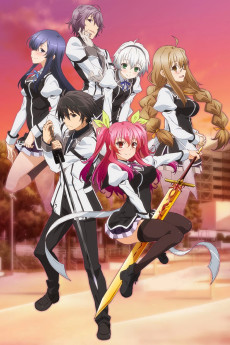
Chivalry of a Failed Knight
The "school sword action" story revolves around Magic Knights, modern magic-users who fight with weapons converted from their souls. Ikki Kurogane goes to a school for these Magic Knights, but he is the "Failed Knight" or "Worst One" who is failing because he has no magical skills. However, one day, he is challenged to a duel by Stella, a foreign princess and the "Number One" student. In this duel, "the loser must be obedient for life."
(Source: Anime News Network)
📺Anime Details
📝Editorial Analysis
The clang of steel on steel—sharp, final, ringing out across the polished floor of the dueling arena—and then silence. Not the hollow quiet after a victory, but the thick, charged stillness that follows a truth being forced into the open: Ikki Kurogane, barefoot, breathing hard, his school uniform torn at the shoulder, standing over Stella Vermillion—who just lost. Not because she faltered, but because he moved. Not with magic, not with flash, but with timing so precise it felt like gravity bending around him. That moment isn’t about power scaling or spectacle—it’s about dignity staked, pride stripped bare, and two teenagers holding each other’s futures in trembling hands while the rest of the world watches, breathless.
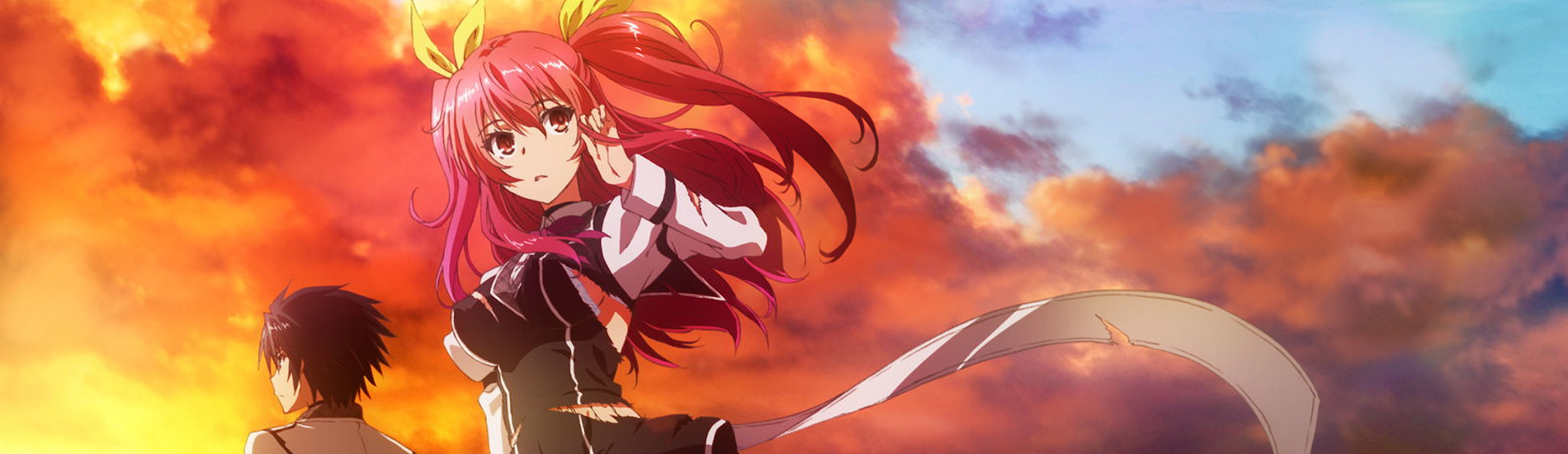
What makes Chivalry of a Failed Knight vibrate with such rare intensity isn’t its boarding-school trappings or even its ecchi flourishes—it’s the weight of unspoken worth. Here, magic isn’t just energy; it’s social capital, lineage, legitimacy. To have none is to be structurally invisible—until you choose to stand. Ikki doesn’t rise through revelation or hidden power-ups. He rises by refusing to let his lack of magic erase his capacity for judgment, for endurance, for honor practiced in real time. The tragedy isn’t melodramatic loss—it’s the slow burn of being measured daily against a metric you can’t access, then proving value in ways the system wasn’t built to recognize. You don’t feel triumphant watching Ikki win—you feel relieved, almost tender, like witnessing someone finally exhale after years of holding their breath.
That same emotional DNA pulses through Dark Messiah of Might & Magic, where ferocious melee combat isn’t about combos or stamina bars—it’s about consequence. The game’s Source Engine delivers impact you feel in your knuckles: a shield bash that staggers, a kick that sends an enemy stumbling into a chandelier, a well-timed dodge that turns certain death into a split-second opening. As one player puts it, it’s “a fantastic melee combat game that still holds up pretty well today”—not because it’s polished, but because its physicality mirrors Ikki’s fights: raw, immediate, tactile. There’s no magical auto-targeting here—just you, your weapon, and the desperate calculus of distance and timing. Like Ikki, you’re often outmatched, outnumbered, and forced to think your way through violence, not power your way past it. The emotional narrative isn’t in cutscenes—it’s in the exhaustion of surviving three waves of guards with a broken sword and a bruised rib. It’s earned, not granted.
And then there’s the quiet resonance with how both works handle hierarchy—not as backdrop, but as pressure. In Chivalry of a Failed Knight, the ranking system isn’t just flavor—it’s architecture. “Number One” isn’t a title; it’s a wall. Stella carries it like armor and burden alike. Her challenge isn’t arrogance—it’s the only language her world understands for testing sincerity. Similarly, Dark Messiah of Might & Magic drops you into a world where nobility, bloodlines, and sanctioned magic define who gets heard, who gets trusted, who gets believed. Your protagonist isn’t some chosen one—he’s a bastard son with a knack for improvisation, navigating courts where every bow hides a blade and every compliment is a negotiation. The game’s “Emotional Narrative” tag isn’t about romance or redemption arcs—it’s about the weariness of proving yourself in systems rigged against you, again and again, until your competence becomes undeniable—not because you leveled up, but because you refused to disappear.
Who lives for this? Not just fans of swordplay or tsundere banter—but people who ache for stories where respect isn’t inherited, it’s forged. The kind of viewer who replays Ikki’s first duel not for the fan service, but for the way his hand shakes before he raises his sword—not from fear, but from the sheer effort of choosing to be seen. The kind of player who reloads a Dark Messiah fight three times not to win faster, but to land that one perfect counter—the one that says, I was paying attention. I learned. These aren’t power fantasies. They’re dignity fantasies. And they hum with the same frequency: low, steady, unmistakable—like steel held to the light just long enough to catch the true grain beneath the polish.
🎮1 Games That Match the Vibe
Match Dimensions Explained
❓Frequently Asked Questions
Why does the final duel in Chivalry of a Failed Knight feel so different from Dark Messiah of Might & Magic?
Because Chivalry’s climax leans hard into emotional narrative—think Kirihara’s trembling hands and Shizuku’s silent resolve during the Academy Finals—while Dark Messiah’s finale is pure action spectacle: you’re vaulting over enemies, snapping necks with telekinesis, and blowing up towers in real-time physics chaos. The Source Engine’s ragdoll system makes every takedown visceral, but it skips the quiet character beats that define Chivalry’s payoff.
Is there an anime or manga adaptation of Dark Messiah of Might & Magic?
Nope—Dark Messiah has never been adapted into anime or manga. It’s strictly a standalone Action-RPG from the Might & Magic universe, with zero official spin-offs in those mediums. Fans who loved Chivalry’s anime pacing sometimes assume Dark Messiah got similar treatment, but it’s remained a cult PC gem since 2006.
How does Dark Messiah of Might & Magic compare to Arx Fatalis in melee combat?
Dark Messiah’s melee is way more dynamic and physics-driven—you’ll see enemies stumble mid-swing, get disarmed by environmental traps, or collapse realistically when you kick them off cliffs—whereas Arx Fatalis relies on spell-drawing and slower, more deliberate swordplay. A player review even calls Dark Messiah ‘a fantastic melee combat game that still holds up pretty well today’ compared to Arx’s clunkier timing and inventory-heavy flow.
What’s the best game like Chivalry of a Failed Knight if I want that intense, emotionally charged tournament vibe?
Dark Messiah of Might & Magic nails the ‘intense tournament vibe’—but swaps school uniforms for dark fantasy arenas where your choices in duels (like sparing or executing foes) directly impact story beats and NPC loyalty. Its Action Spectacle + Emotional Narrative combo means fights feel consequential, not just flashy—just like Kirihara’s climactic match where every parry echoes his growth.