
Daemons of the Shadow Realm
In a remote mountain village under the watchful eyes of two stone guardians, the young Yuru contentedly lives off the land while staying close to the only family he has left—Asa, his precious twin sister. Asa, meanwhile, carries out a mysterious “duty” on behalf of the village while locked in a cage. Why is Asa a prisoner? And what other secrets does Yuru’s otherwise idyllic home hide?
(Source: Square Enix)
📺Anime Details
📝Editorial Analysis
The stone guardians don’t blink. They stand—weathered, moss-flecked, arms crossed—not as statues but as witnesses, their hollow eyes fixed on the thatched roof where Yuru sleeps beside Asa’s cage. You feel it before you understand it: the weight of centuries pressing down not as dread, but as stillness—the kind that settles in your ribs when you realize the village isn’t quiet because nothing’s happening—it’s quiet because something is holding its breath. That stillness is the first note of Daemons of the Shadow Realm, and it never lets go.
This isn’t urban fantasy as spectacle. It’s urban fantasy as inheritance: a world where the supernatural isn’t summoned or fought—it’s tended, like rice paddies or shrine ropes. The anachronism isn’t stylistic flair; it’s structural—the twin siblings live in a rhythm older than clocks, yet their reality bleeds modern unease: Asa’s cage is iron-barred, clinically precise, while the daemons flicker at the edge of peripheral vision like heat haze over asphalt. What makes this atmosphere singular is how deeply it roots horror in care. Yuru’s archery isn’t just skill—it’s ritual calibration, each drawn string a negotiation with forces that remember his grandfather’s voice. The gore isn’t shock; it’s texture—visceral, sudden, almost botanical in its insistence on bodily consequence. You don’t feel adrenaline here. You feel responsibility, thick and humid as mountain mist, and the slow, dawning ache of loving someone whose duty might require their erasure.
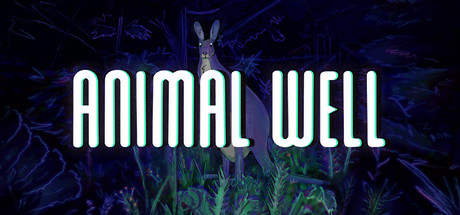
That emotional DNA—healing tangled with body horror, slow life inseparable from occult weight—finds its closest echo in ANIMAL WELL. Its official tag pairing—Healing & Slow Life, Body Horror & Occult—isn’t a marketing grab; it’s a precise diagnosis. Players describe navigating its caverns as “like tending a wound that breathes back,” moving at a pace that forces attention to fungal growths pulsing under cracked tile, to organs masquerading as architecture, to light that doesn’t illuminate so much as reconcile. Just as Yuru learns to read Asa’s cage not as prison but as threshold, players in ANIMAL WELL learn that every grotesque tendril, every skittering limb, is part of a system demanding reverence—not conquest. One reviewer writes, “I didn’t solve puzzles—I listened until the walls told me where to place my hands.” That’s Yuru’s archery: not aiming, but attuning. Another notes, “The horror isn’t what’s wrong—it’s how deeply everything is connected.” Exactly. In both, violation and sanctuary share the same root.
There’s no other game match listed—but that absence speaks volumes. The top match isn’t Bloodborne (too kinetic), nor Spirit Island (too abstracted), nor Stardew Valley (too gentle). It’s ANIMAL WELL, because only it shares that exact, rare calibration: the conviction that tenderness and transformation are synonyms when the world is alive in ways that defy comfort. Its 67 score isn’t lukewarm—it’s the hum of something too dense for easy consensus, like the low thrum beneath Yuru’s village floor when the guardians shift their weight ever so slightly at dusk.
This pairing is for the person who watches Yuru notch an arrow and feels their own pulse sync to the pull, not the release—who finds catharsis not in victory, but in the quiet certainty that some bonds are older than language, and some cages exist not to confine, but to preserve. It’s for those who’ve sat with grief so long it becomes soil—and who recognize healing not as return, but as the slow, stubborn unfurling of something new, rooted deep in the dark.
🎮1 Games That Match the Vibe
Match Dimensions Explained
❓Frequently Asked Questions
Why does Animal Well feel so much like Daemons of the Shadow Realm’s vibe?
Because both lean hard into occult dread and bodily unease—like when you’re navigating Animal Well’s pulsating, fleshy corridors while uncovering cryptic glyphs, it echoes Daemons’ ritualistic tension and body horror motifs (e.g., the Hollowed Priest’s transformation scene). The slow, meditative pacing and healing-as-ritual mechanic in Animal Well mirror how Daemons uses quiet moments before violent spiritual ruptures.
Is there an anime or manga adaptation of Animal Well?
No—Animal Well is a standalone indie game with no anime, manga, or live-action adaptations. It’s purely a self-contained experience built around its own occult ecosystem, unlike Daemons of the Shadow Realm which *does* have a manga origin. Think of it as the ‘spiritual cousin’ that never got licensed—just raw, unadapted body horror and slow-life resonance.
How does Animal Well compare to Hollow Knight in terms of atmosphere and lore delivery?
Animal Well trades Hollow Knight’s melancholic grandeur and sprawling kingdom for tighter, more claustrophobic occult intimacy—no bug royalty or fallen cities here, just shifting bioluminescent organs and fragmented glyphs tied to real-world esoteric symbols. Where Hollow Knight drops lore in dusty journals, Animal Well hides it in living walls and symbiotic parasites (like the Gloom-Spore Symbiote), leaning harder into healing-as-occult-practice than knightly duty.
What’s the best game like Daemons of the Shadow Realm if I want something deeply unsettling but calming?
Animal Well is your answer—it’s rated 67 for good reason: its Healing & Slow Life dimension lets you breathe amid the body horror, like tending to a wounded fungal node while distant whispers coil through wet stone. You won’t get jump scares or combat; instead, you get eerie stillness punctuated by subtle biological shifts—exactly the ‘unsettling calm’ Daemons nails during its shrine-silence scenes.