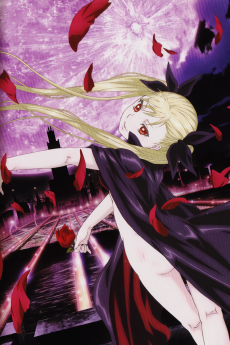
Dance in the Vampire Bund
When Mina Tepes—queen of the vampires—suddenly appears in Japan to establish a colony for her blood-sucking brethren, Akira Kaburagi’s world will never be the same. As a boy, Akira vowed to serve the ruler of the night, and now he must fulfill his destiny by protecting Mina from those who would dethrone her!
(Source: Crunchyroll)
📺Anime Details
📝Editorial Analysis
The first time Mina Tepes steps onto the rain-slicked Tokyo dock—her white gown clinging, her crimson eyes catching the sodium-orange glow of streetlights—you don’t feel awe. You feel recognition. Not of royalty, not of power—but of a quiet, unshakable certainty in someone who has already decided what love and duty cost. She doesn’t smile. She doesn’t flinch. She simply arrives, and the city’s rhythm stutters—not because she’s supernatural, but because she carries history like weight, and wears it like breath.
That’s the core feeling Dance in the Vampire Bund sustains: gravitas draped in velvet and vulnerability. It’s not about fangs or bloodlust—it’s about sovereignty held tenuously over fractured trust, about devotion that borders on self-erasure, and about intimacy forged in silence more than in touch. The amnesia isn’t just plot device—it’s emotional architecture: Akira remembers his vow but not its origin; Mina remembers centuries but hides her exhaustion behind poise. Their cohabitation isn’t fanservice—it’s ritual. Every shared meal, every guarded glance, every moment of nudity (never gratuitous, always contextualized by exposure—of status, of weakness, of truth) underscores how deeply exposed both characters are beneath the political theater. This is urban fantasy where the city isn’t backdrop—it’s pressure chamber. The age gap isn’t titillation—it’s asymmetry made palpable: one lives in millennia, the other in heartbeats. What lingers isn’t action or ecchi—it’s the ache of responsibility worn like second skin.
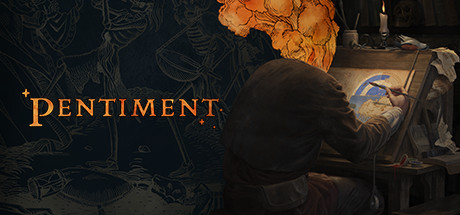
Which is why Pentiment, with its Mystery & Detective and Dark Fantasy dimensions, resonates so sharply. Its player reviews describe “a world where every choice echoes across generations” and “truth buried under layers of faith, class, and silence”—exactly the texture of Mina’s court, where vampire law mimics medieval canon, where Akira’s loyalty is constantly parsed as evidence, and where identity is both weapon and wound. Like Dance in the Vampire Bund, Pentiment treats memory as contested terrain—not amnesia as blank slate, but as erasure enforced by power. Both make you sit with the weight of what’s unsaid in a room full of witnesses.
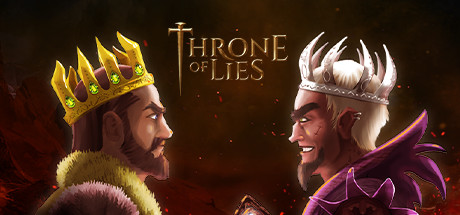
Then there’s Throne of Lies®: Medieval Politics, also tagged Mystery & Detective and Dark Fantasy. Player reviews cite “trust as currency you can’t afford to spend” and “alliances that shift like fog over stone.” That’s Mina’s Bund in microcosm: werewolves negotiating treaties in candlelit parlors, human bureaucrats signing accords they don’t understand, Akira standing guard while parsing subtext like scripture. No one speaks plainly—not because they’re evasive, but because language itself is jurisdictional. The game’s political maneuvering mirrors the anime’s quiet diplomacy: a glance across a banquet table carries more consequence than a sword draw. Both refuse catharsis through violence alone—they demand you listen to the tremor in a voice before the dagger clears its sheath.
And Amnesia: Rebirth, likewise anchored in Mystery & Detective and Dark Fantasy, lands with eerie precision. Its reviews speak of “memory returning like bruises—tender, disorienting, necessary” and “love that feels like survival, not escape.” That’s Akira’s arc distilled: not remembering what he promised, but relearning why it still holds him upright. Mina’s vulnerability isn’t revealed in tears—it’s in the way she lets him hold her coat when the wind picks up, or how she pauses before stepping into sunlight she knows will burn. Amnesia: Rebirth doesn’t ask “Who am I?” as a puzzle—it asks “What must I become to carry what I’ve lost?” Just like Mina, who builds a Bund not as conquest, but as sanctuary—and pays for it daily in restraint.
This pairing isn’t for fans of vampires-as-romance or politics-as-pageantry. It’s for people who get chills when a character chooses silence over explanation—not because they’re withholding, but because some truths are too heavy to speak aloud. It’s for those who watch Akira kneel not as submission, but as alignment; who read Mina’s stillness not as coldness, but as containment. They’re drawn to stories where power is measured in withheld gestures, where intimacy lives in the space between words, and where devotion and duty aren’t synonyms—they’re dialects of the same desperate, tender language.
🎮3 Games That Match the Vibe

Match Dimensions Explained
❓Frequently Asked Questions
Why is Pentiment listed as similar to Dance in the Vampire Bund when it’s set in 16th-century Bavaria and has zero vampires?
Great question—it’s not about vampires, but about that same simmering gothic tension: political intrigue layered with forbidden romance, moral ambiguity, and richly drawn supernatural-adjacent lore. Like Mina’s fraught alliance with the vampire Lord, Pentiment’s protagonist navigates dangerous alliances with clergy, nobles, and mystics—where every dialogue choice reshapes relationships and consequences, just like those high-stakes negotiations in the Bund’s council chambers.
Is there a Dance in the Vampire Bund video game adaptation?
No official adaptation exists—but Throne of Lies®: Medieval Politics captures that same vibe of hidden identities, secret factions, and backstabbing diplomacy. You’ll recognize the energy: playing as a disguised vampire (or hunter) in a web of lies, where accusing the wrong player during the ‘Sunrise Trial’ feels just like Mina exposing a traitor in the Bund’s underground court scenes.
How does Amnesia: Rebirth compare to Pentiment for fans of Dance in the Vampire Bund’s gothic romance?
Pentiment leans into slow-burn political intimacy and dialogue-driven stakes—think Mina and Akira’s quiet, charged conversations in candlelit archives—while Amnesia: Rebirth trades that for visceral, oppressive dread: you’re fleeing monstrous echoes of your past, much like Mina confronting her own bloodline’s curse in the catacombs beneath Tokyo. Both nail gothic atmosphere, but Pentiment gives you agency in relationships; Amnesia makes you feel hunted by them.
What’s the best game like Dance in the Vampire Bund if I want that mix of forbidden romance and shadowy political maneuvering?
Throne of Lies®: Medieval Politics is your best bet—it’s all about masking your true nature (vampire, hunter, or neutral) while forging alliances, betraying confidants, and surviving nightly eliminations. The ‘Blood Pact’ mechanic mirrors how Mina balances loyalty to humans and vampires, and the way characters shift allegiances mid-game—like Lord Tepes manipulating council votes—hits that exact Bund-style power-play energy.