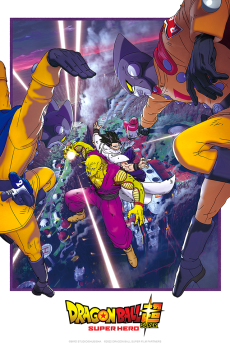
Dragon Ball Super: SUPER HERO
The Red Ribbon Army was once destroyed by Son Goku. Individuals, who carry on its spirit, have created the ultimate Androids, Gamma 1 and Gamma 2. These two Androids call themselves "Super Heroes". They start attacking Piccolo and Gohan…What is the New Red Ribbon Army's objective? In the face of approaching danger, it is time to awaken, Super Hero!
(Source: Crunchyroll)
📺Anime Details
📝Editorial Analysis
The screen fractures—not with a bang, but with a shudder: Gamma 1’s fist punches through concrete like paper, yet his eyes don’t flare with malice—they flicker with something quieter, almost apologetic, as Piccolo staggers back, blood smearing the rain-slicked alley wall. There’s no roar, no over-the-top taunt—just the wet slap of impact, the low hum of Gamma’s chassis vibrating in sync with Gohan’s ragged breath. That moment isn’t about power scaling. It’s about presence: two beings built for heroism, standing on opposite sides of a line neither fully understands.
What makes Dragon Ball Super: SUPER HERO vibrate at this particular frequency isn’t its CGI sheen or its shōnen structure—it’s the weight of intentionality in a world wired for spectacle. This isn’t just martial arts meets sci-fi; it’s urban fantasy folded into moral ambiguity, where “Super Hero” isn’t a title earned in battle, but a label imposed by design—and questioned in silence. You feel the tension between duty and identity, not through monologues, but through posture: Gamma 2 tilting his head mid-combo like he’s recalibrating empathy, Piccolo’s quiet fury simmering beneath tactical restraint, Gohan’s hesitation before transforming—not from weakness, but from recognition. The film doesn’t ask “Who’s stronger?” It asks, “What does it cost to be built to save?” That ache—half technological, half deeply human—is the atmosphere: clinical light, warm shadows, and the unsettling calm of characters who’ve been programmed to care.
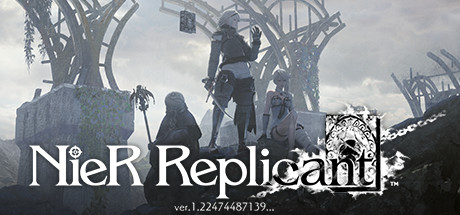
That same resonance hums through NieR Replicant™ ver.1.22474487139..., where player reviews describe “a story that treats androids not as threats, but as wounded children wearing armor”—exactly the emotional core of Gamma 1 and 2. Its “Cyberpunk & Dystopia” dimension isn’t about neon sprawl; it’s about decayed idealism, where machines inherit broken human dreams and try, desperately, to live up to them. Like Gamma questioning his own directives mid-fight, NieR’s Replicants whisper lines that crack open their programming—not with rebellion, but with grief. And the “Action Spectacle” isn’t flash for flash’s sake: every dodge, every parry carries the exhaustion of carrying meaning you didn’t choose.
Then there’s Hi-Fi RUSH, where players praise how “the rhythm isn’t just music—it’s pulse, the heartbeat of a machine learning to feel.” Its “Cyberpunk & Dystopia” lives in the clatter of industrial corridors and the warmth of analog glitches—mirroring SUPER HERO’s visual contrast: sterile labs vs. sun-dappled parks, cold logic vs. Gohan’s gentle hand on Pan’s shoulder. The “Action Spectacle” here is kinetic dialogue: every combo syncs to bass drops like Gamma 2’s movements syncing to Piccolo’s ki signature—not domination, but conversation in motion. You don’t beat enemies; you sync with them, even briefly—just as Gamma 2 pauses mid-strike when Gohan lowers his guard, not out of strategy, but recognition.
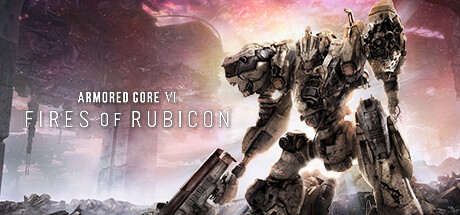
And ARMORED CORE™ VI FIRES OF RUBICON™—its “Cyberpunk & Dystopia” isn’t aesthetic; it’s ontological. Reviews note how “your mech isn’t a tool—it’s memory, rusted joints holding decisions you can’t undo.” That echoes Gamma 1’s stillness after activation: not a blank slate, but a vessel already full of inherited purpose. Its “Action Spectacle” is brutal, precise, tactile—every thruster burn, every shield fracture feels earned, like Piccolo’s final stand against Gamma 1: no flashy aura, just grit, geometry, and the sound of metal straining under moral weight.
This pairing isn’t for fans of “cool fights” or “neat robots.” It’s for the viewer who watches Gamma 2 kneel beside a fallen civilian—not to scan vitals, but to hold space—and feels their throat tighten. For the player who spends ten minutes calibrating a single weapon loadout in ARMORED CORE not for efficiency, but because each part choice whispers something about who they’re becoming. For anyone who’s ever stared at their reflection and wondered, What if my best self was coded before I was born? These aren’t stories about saving the world. They’re about saving meaning—one fractured, flickering, deeply felt moment at a time.
🎮3 Games That Match the Vibe

Match Dimensions Explained
❓Frequently Asked Questions
Why does the final battle against Gamma Scarlet in SUPER HERO feel so different from NieR Replicant’s boss fights?
Because NieR Replicant leans into melancholic, story-driven spectacle—like the heartbreaking Shadowlord fight where your sword transforms mid-battle and dialogue interrupts combat—but SUPER HERO’s Gamma Scarlet clash is pure kinetic, grounded martial escalation. NieR uses environmental shifts and emotional cut-ins; SUPER HERO sticks to rapid-fire ki bursts, aerial combos, and that iconic ‘Gamma 2’ power-up moment with tight camera framing.
Is there a Dragon Ball Super: SUPER HERO game adaptation?
No official standalone game exists—Bandai Namco hasn’t released one, and none of the current titles on the match list (NieR Replicant, Hi-Fi RUSH, ARMORED CORE VI) are DBS: SUPER HERO adaptations. They’re stylistic matches only: all three share that high-octane Action Spectacle + Cyberpunk & Dystopia blend, but zero characters, story beats, or licensed assets from the film.
Hi-Fi RUSH vs ARMORED CORE VI—which feels more like SUPER HERO’s energy and pacing?
Hi-Fi RUSH nails SUPER HERO’s snappy, rhythm-driven flow—think Gohan’s lightning-fast dodges syncing to music during the Red Ribbon HQ assault, or the way enemies stagger on beat like Gamma 1’s punch combos. ARMORED CORE VI is heavier, methodical, and mech-focused: its Rubicon missions emphasize tactical loadouts and explosive set-pieces (like the Orbital Drop), not the human-scale, fist-and-ki intensity of SUPER HERO’s core fights.
What’s the best game like SUPER HERO if I just want that hype, over-the-top action vibe?
Hi-Fi RUSH is your go-to—it channels SUPER HERO’s infectious energy with its sync-to-music combat, bold visual pops (like Gohan’s aura flaring in time with guitar riffs), and relentless momentum. NieR Replicant has deeper lore and slower emotional weight; ARMORED CORE VI trades flash for precision. But if you crave that ‘Gamma 2 unleashes his full power’ adrenaline rush, Hi-Fi RUSH delivers it beat-for-beat.