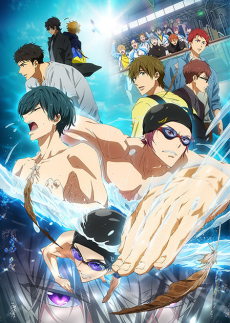
Free! the Final Stroke: The First Volume
📺Anime Details
📝Editorial Analysis
The chlorine sting in your throat as you surface—gasping, blinking saltwater from your eyes—not after a race, but after one. That’s the first breath of Free! the Final Stroke: The First Volume: not victory, not defeat, but the quiet, trembling aftermath of exertion, of commitment finally made visible in muscle and water. Haruka’s hand rests on the pool’s edge, knuckles white, chest rising slow and deep—not because he’s won, but because he’s still here, still choosing to push forward when every fiber whispers enough. It’s not about medals. It’s about the weight of a promise kept to yourself, measured in laps, in shared silence between friends who know exactly how many times you’ve almost stopped.
This isn’t adrenaline-fueled sports spectacle—it’s presence. The air hums with unspoken history: the echo of childhood dives, the rustle of gym bags left open on locker room benches, the way Makoto’s voice drops half a tone when he asks, “You okay?”—not as a question, but as an anchor. Time stretches and compresses: a 50-meter sprint feels like five minutes; a walk home under evening streetlights, like five years. It’s warmth, yes—but warmth layered with fatigue, with tenderness, with the low, persistent thrum of responsibility. You don’t watch these characters grow—you feel their growth settle into your own shoulders, like the ache of unused muscles remembering how to hold weight. It’s college life stripped of grand drama: laundry folded beside textbooks, coffee shared before dawn practice, the way Rin’s laugh cracks just slightly when he admits he missed training with them. Nothing is resolved neatly. Everything matters deeply.
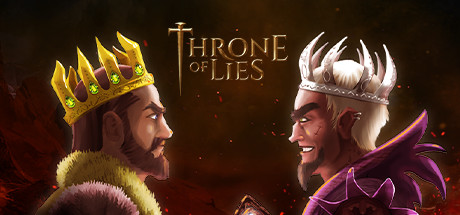
That same emotional resonance flickers in Throne of Lies®: Medieval Politics, where player reviews describe “the exhaustion of maintaining alliances while pretending to trust” and “how much it hurts to betray someone you genuinely like for the throne.” Not power for its own sake—but the weight of choice, the quiet cost of loyalty in a world that demands performance. Like Haruka refusing to swim competitively until he finds his own reason—not for glory, not for legacy, but for the truth of his body in water—Throne of Lies® makes you feel the tremor before a lie, the silence after a betrayal, the sheer effort of holding yourself together in public while your private self frays. Competitive Spirit isn’t about winning—it’s about enduring the arena, whether it’s a pool deck or a council chamber.
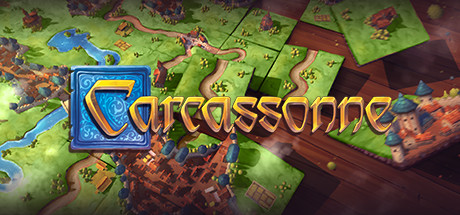
Then there’s Carcassonne - Tiles & Tactics, where players praise “the calm focus of placing one tile just so” and “how satisfying it is to quietly complete a field no one else noticed.” No shouting, no flashy combos—just deliberate, tactile presence. Each tile laid mirrors Haruka’s stroke: precise, rhythmic, deeply personal in its repetition. The JRPG Narrative dimension here isn’t lore—it’s the emergent story of your shared board: the road that snakes between your cities, the cloister your friend claimed three turns ago, the sheep you both quietly nurtured. Like the ensemble cast of Free!, no single tile dominates—the meaning lives in the relationship between pieces, in the unspoken pact of playing together, even when you’re technically opponents. It’s stillness charged with intention.
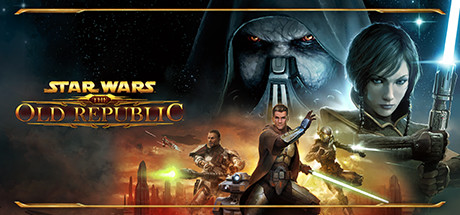
Even STAR WARS™: The Old Republic™, with its sprawling galactic stakes, lands in this same emotional orbit—not through lightsabers, but through player testimonials like “I spent six hours helping a stranger rebuild their ship after a raid—not for credits, but because they looked tired,” and “choosing the ‘good’ path felt less heroic than heavy.” That’s the core: moral weight worn like a second skin. Just as Nagisa’s absence lingers not as plot device but as physical space at the pool’s edge—empty lane, untouched towel—the game’s choices land with the same gravitas: not cosmic, but human-scale. You don’t save the galaxy—you decide whether to hand over medicine to a dying refugee camp knowing your faction will punish you. That’s the same tenderness Haruka shows when he lets Rei float on his back during warm-up—no words, no fanfare, just holding space.
This pairing speaks to the person who cries watching someone tie their shoes before a race—not because of the race, but because of the care in the knot. Who replays a dialogue option in a game not for optimal stats, but to hear the character sigh with relief. Who values shared breath, quiet competence, and the profound dignity of showing up—even when your arms shake, even when the water is cold, even when no one’s watching. Not heroes. Not villains. Just people, trying, together.
🎮3 Games That Match the Vibe
Match Dimensions Explained
❓Frequently Asked Questions
Why does Free! the Final Stroke: The First Volume feel so much like Throne of Lies®: Medieval Politics?
Both lean hard into high-stakes group dynamics where trust and betrayal shape every major moment—think Haruka’s silent tension before the relay vs. a backstabbed alliance during a castle siege vote. They share that same 'Competitive Spirit' + 'JRPG Narrative' blend: emotionally charged character arcs unfolding amid intense, rule-driven competition.
Is there a Carcassonne - Tiles & Tactics anime adaptation?
Nope—Carcassonne is purely a board game with no anime or manga tie-in. But fans of Free!'s quiet intensity (like Rin’s solo training scenes or the meticulous pool prep montages) often love how Carcassonne mirrors that same meditative focus: placing tiles with precision, building something beautiful under quiet pressure, all while jostling for subtle advantage.
How does STAR WARS™: The Old Republic™ compare to Free! the Final Stroke in terms of emotional payoff?
Both deliver huge emotional payoffs through long-simmering character bonds—Free!'s final relay feels earned like SWTOR's class story climax (say, Juhani’s redemption or HK-47’s loyalty mission), where personal growth and team trust collide in one cathartic, high-stakes moment. That shared 'JRPG Narrative' + 'Competitive Spirit' DNA makes both deeply satisfying when the stakes finally snap shut.
What’s the best game like Free! the Final Stroke if I want that bittersweet, 'last summer together' vibe?
Carcassonne - Tiles & Tactics nails it—the way you slowly build a landscape tile by tile, watching your shared field or road grow more intricate and fragile over time, echoes Free!'s tender, fleeting camaraderie (think Makoto packing lunches while everyone’s still asleep). It’s not flashy, but that quiet, collaborative-yet-competitive rhythm hits the exact same nostalgic, melancholy-sweet note.