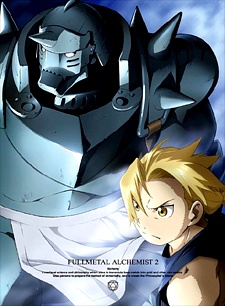
Fullmetal Alchemist: Brotherhood OVA Collection
Amazing secrets and startling facts are exposed for the first time in the Fullmetal Alchemist: Brotherhood OVA Collection, a new assortment of stories set in never-before-seen corners of the FMA universe. Join Ed and Al as they chase rumors of successful human transmutation into a web of shocking family drama and lies. Sneak a glance at hidden sides of Winry and Hawkeye's personalities. Survive the frigid north with a young Izumi Curtis as she fights to gain a deeper understanding of alchemy. Explore the legendary friendship shared by Mustang and Hughes and watch them grow from military school rivals into hardened brothers transformed by the horrors of the Ishvalan War. You thought you knew the whole story. You thought all the tales were told. The Fullmetal Alchemist: Brotherhood OVA Collection offers proof: You were wrong.
(Source: FUNimation)
1. The Blind Alchemist (盲目の錬金術師, Moumoku no Renkinjutsushi)
Based on a side story of the Fullmetal Alchemist manga published in the Fullmetal Alchemist Perfect Guidebook (2003). It's about a blind alchemist named Jude, who serves the Humbergang family. He once violated the taboo of Alchemy.
2. Simple People (シンプルな人々, Simple na Hitobito)
A story about Riza (why she let her hair grow longer) and Winry (why she had her ears pierced and how she got her earrings).
3. The Tale of Teacher (師匠物語, Sensei Monogatari)
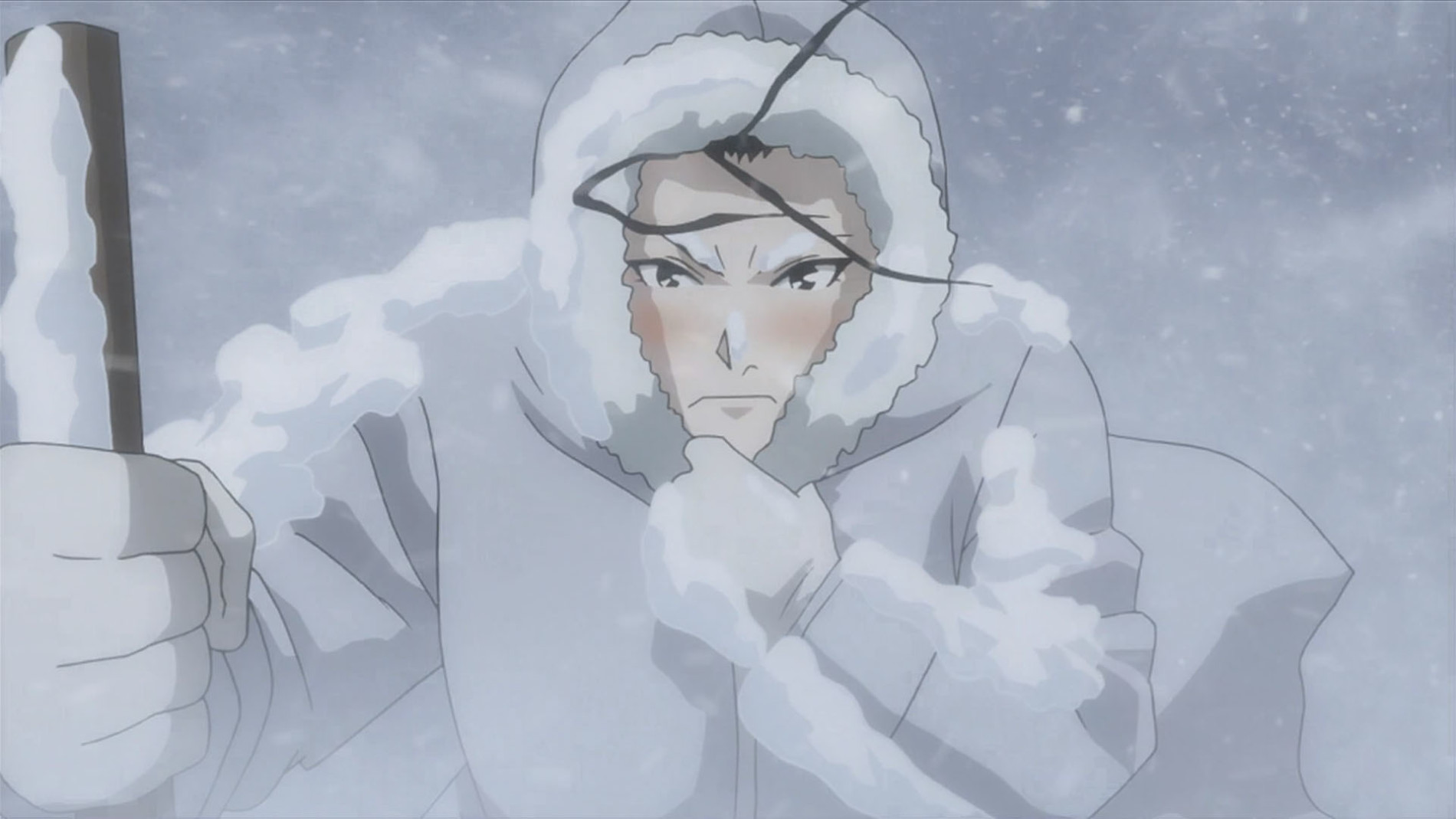
Based on a side story of the Fullmetal Alchemist manga, the third OVA is about Edward and Alphonse's teacher, Izumi Curtis. The story is compiled of two parts. The first part shows how Izumi survived in Mt. Briggs to become an apprentice of a renowned alchemist. The second part shows how Izumi and Sig met and their love at first sight.
4. Yet Another Man's Battlefield (それもまた彼の戦場, Sore mo mata Kare no Senjou)
The story centres around Roy, aged 18, in a military boot camp, how he met an Ishbalan recruit named Heathcliffe Arbor, how he became a friendly rival to Hughes.
📺Anime Details
📝Editorial Analysis
The wind howls across the frozen tundra of Briggs—sharp, thin, unforgiving—as young Izumi Curtis staggers to her knees in the snow, breath pluming white, knuckles split and bleeding against the ice. Her alchemy isn’t flashy here; it’s raw, desperate, a trembling hand pressing into frost-rimed earth—not to transmute, but to understand. No grand array glows beneath her. Just silence, cold, and the weight of a question she can’t yet name. That moment—no music swelling, no exposition, just breath and blood and brittle air—is where Fullmetal Alchemist: Brotherhood OVA Collection lives.
This isn’t the polished war-room strategy or battlefield spectacle of the main series. It’s quieter, colder, closer. The atmosphere hums with the ache of withheld truths—the way Winry’s laugh catches just once before she turns away, the way Hawkeye’s gaze lingers on a photograph not shown, the way Ed’s voice drops half an octave when he says “family” like it’s a wound he’s still learning to stitch. It’s philosophy made tactile: alchemy as grief, as inheritance, as something passed down like a scar. You don’t feel heroic here—you feel responsible, like every choice has already echoed somewhere else, in someone else’s silence. The steampunk gears grind, yes—but what lingers is the weight behind them: the military bureaucracy that files away trauma like paperwork, the tragedy that wears a kuudere’s calm mask, the tomboy’s stubbornness that’s really armor against loss.
That emotional DNA pulses strongest in Dragon Age: Origins, where legacy isn’t earned—it’s inherited, contested, and often buried. Like Izumi wrestling alchemy in the north, the Warden doesn’t begin with mastery—they begin with a blight already festering, a history already written in ash and betrayal. The game’s Emotional Narrative isn’t in cutscenes alone, but in how your dwarf noble’s voice cracks when speaking of Orzammar’s caste laws—or how your elven apostate flinches at the word “templar.” The player review nails it: “the story is great and its pause attack mechanic is amazing… help a lot to strategist your tactic.” That pause isn’t just tactical—it’s moral. You stop time to weigh consequences, just as the OVAs force you to hold still in moments where Ed hesitates before opening a letter, or Hawkeye chooses silence over truth. Both demand that you think while you feel, that strategy and sorrow share the same breath.
And then there’s the Military tag—not as backdrop, but as bone-deep texture. In Dragon Age: Origins, war isn’t abstract. It’s the mud on your boots during the Battle of Ostagar, the way your party’s banter tightens when scouts report darkspawn near the Frostback foothills—echoing Izumi’s isolation in the northern garrisons, where loyalty is measured in shared frostbite and unspoken oaths. The OVA doesn’t glorify command; it shows Hawkeye’s precision as exhaustion masked by posture, Winry’s tomboy energy as a shield against helplessness when the military machinery rolls forward without her consent. Likewise, Dragon Age makes you live inside that machinery—assigning troops, rationing supplies, watching morale dip after a failed siege. Player reviews praise the “pause attack mechanic” not for flash, but because it mirrors real command: the need to breathe between decisions that cost lives.
Who loves this pairing? Not just fans of “alchemy” or “tactics.” It’s the person who rewatched the Briggs arc three times because they needed to see how Izumi’s hands shook before she stood up—not after. It’s the player who spent twenty minutes debating whether to spare Loghain, not for exp, but because their own father once said, “Duty isn’t clean.” It’s the reader who underlines passages about equivalent exchange not as rules, but as lament. They crave stories where philosophy has calluses, where war leaves static in your ears long after the battle ends, where love is shown in how someone holds a wrench—or how they fold a letter before handing it to you, fingers steady, eyes unflinching. They don’t want answers. They want the weight of the question—and the quiet courage it takes to keep walking forward, even when the ground is ice, and the truth hasn’t thawed yet.
🎮4 Games That Match the Vibe
Match Dimensions Explained
❓Frequently Asked Questions
Why is Dragon Age: Origins listed as similar to Fullmetal Alchemist: Brotherhood OVA Collection?
Because both lean hard into morally complex emotional narratives—like when Ed grapples with human transmutation’s consequences, DAO drops you into gut-wrenching choices (e.g., sacrificing the Circle of Magi or the Ferelden army) that reshape relationships and endings. Its pause-attack tactical combat also mirrors the OVA Collection’s deliberate, consequence-heavy pacing—think how the 'Brotherhood' finale forces Ed to weigh sacrifice over victory, just like pausing mid-battle to reposition Alistair before a darkspawn ambush.
Is there a Fullmetal Alchemist: Brotherhood video game adaptation with OVAs included?
No—there’s never been an official FMA: Brotherhood OVA collection adapted into a video game. The closest is Dragon Age: Origins, which shares the same weighty storytelling DNA: layered character arcs (Ed’s grief vs. the Warden’s isolation), thematic stakes about sacrifice and truth, and mechanics that reinforce narrative gravity—like DAO’s pause-tactic system letting you reflect *before* committing to a life-altering decision, much like the OVA ‘The Tale of Scars’ does in quiet, reflective scenes.
Dragon Age: Origins vs. Final Fantasy X — which better captures the brotherly bond and alchemy-themed tragedy of Fullmetal Alchemist: Brotherhood?
DAO wins on both counts—its origin story structure (noble dwarf, mage, rogue companions each carrying deep personal loss) mirrors Ed and Al’s dynamic more closely than FFX’s linear party. You literally rebuild trust through dialogue choices—like convincing Alistair to confront his royal lineage, echoing Ed’s struggle to protect Al while atoning for their past. And the game’s ‘tactical warfare’ dim reflects how FMA treats alchemy: not flashy spells, but precise, rule-bound, high-stakes problem-solving—exactly what DAO’s pause-combat demands in battles like the Landsmeet siege.
What’s the best game like Fullmetal Alchemist: Brotherhood OVA Collection if I want that slow-burn, emotionally heavy vibe with meaningful choices?
Dragon Age: Origins is your match—it’s built for that exact mood. Player reviews call out how its pause-attack mechanic lets you sit with tension like the OVA ‘Tales of the Abyss’ does before a revelation, and the emotional narrative dim shines in moments like the Dalish elf origin, where your choices echo Ed’s guilt and growth. With a Metacritic score of 68 and themes rooted in sacrifice, legacy, and truth, it’s the rare RPG that makes every conversation feel like a scene from the Brotherhood finale.