
Gurren Lagann The Movie: Childhood's End
This is the story of a man who has yet to realize what destiny holds in store for him….
In the distant future, mankind has lived quietly and restlessly underground for hundreds of years, subject to earthquakes and cave-ins. Living in one such village are 2 young men: one named Simon who is shy and naïve, and the other named Kamina who believes in the existence of a “surface” world above their heads. The destiny of these two starts moving drastically when the ceiling of their village falls in, and a gigantic “Gunmen” and a beautiful girl named Yoko, wielding a superconductive rifle, come from the surface. Together, Kamina, Simon and Yoko ride the mecha “Lagann” that Simon digs out of the ground, and fly up to the surface!
However, the surface is not the dreamland that Kamina envisioned. This world is ruled by the Spiral King and his army of beastmen. Kamina and Simon, along with their comrades, challenge the Spiral King in an attempt to change a desperate world to one full of hope for the future with Gurren Lagann!
📺Anime Details
📝Editorial Analysis
The dust doesn’t settle — it hangs, thick and golden, caught in the slant of sunlight breaking through the first crack in the ceiling. Simon’s trembling hand presses against cold stone as Kamina whoops above him, not just shouting “We’re going up!” but launching — a spiral drill tearing upward, not just through rock, but through centuries of silence, fear, and inherited resignation. That moment isn’t hope. It’s rupture: visceral, deafening, almost violent in its refusal to wait.
What makes Gurren Lagann The Movie: Childhood's End ache so deeply isn’t its mecha battles or desert vistas — it’s how it treats scale as emotional architecture. The underground village isn’t just setting; it’s a physical manifestation of stifled breath, of dreams compressed into narrow tunnels where even ambition feels like trespass. When the surface finally floods in — blinding, vast, terrifyingly empty — it doesn’t feel like victory. It feels like exposure. You don’t just watch Simon grow; you feel the vertigo of outgrowing your own gravity, the loneliness of standing where no one before you dared to stand. It’s tragedy woven into triumph, dystopia remembered as texture, coming of age as irreversible severance — not from childhood, but from the safety of smallness.
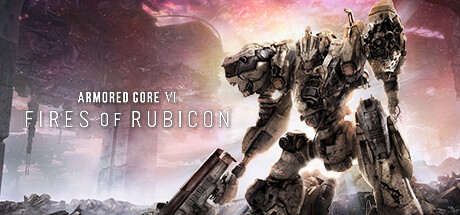
That same emotional resonance hums in ARMORED CORE™ VI FIRES OF RUBICON™, where players don’t pilot machines — they wear them like second skins forged in ash and static. Its Mecha & Military Sci-Fi and Cyberpunk & Dystopia dimensions aren’t aesthetic choices; they’re pressure points. Player reviews describe “the weight of every mission — not just tactical, but existential,” and “a world where hope is rationed, not shouted.” Like Simon drilling upward, ACVI’s pilots move through ruined cities not as heroes, but as survivors carrying the ghosts of collapsed ideologies — their armor scarred, their comms crackling with fractured commands, their victories measured in meters reclaimed, not kingdoms won. The scale isn’t heroic; it’s grueling, intimate, earned in grit and static.
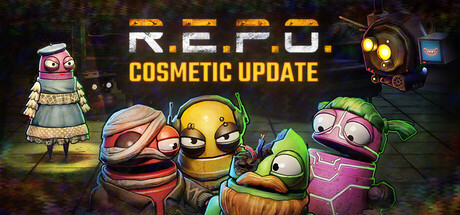
Then there’s R.E.P.O., another match scoring 83, anchored in identical dimensions: Mecha & Military Sci-Fi, Cyberpunk & Dystopia. But where ACVI leans into tactical exhaustion, R.E.P.O. channels the desert and post-apocalyptic rawness of Gurren Lagann’s early chapters — not as backdrop, but as psychological weather. Reviews cite “the silence between gunfire — how loud emptiness gets when your squad’s gone,” and “mechanics that make you feel like you’re holding together a machine and yourself.” That mirrors Simon’s earliest piloting: clumsy, terrified, every lever pull a gamble against collapse. Both anime and game treat machinery not as power fantasy, but as fragile extension — a sword, a drill, an armored frame — all trembling under the weight of what it means to choose to move forward when the ground beneath you has already failed.
None of this is about spectacle. It’s about the tremor in the hand before the first step onto open sand. It’s about how desert isn’t barren — it’s charged, humming with memory and risk. It’s how tragedy and romance share the same breath in a post-apocalyptic love story where holding someone close means acknowledging how easily they could vanish into the dust. These pairings don’t flatter the viewer with catharsis — they demand presence. They’re for the person who watches Simon stare at the sky not to marvel at its blue, but to reckon with the sheer, terrifying space of it — and then boots up a game where every jump, every shot, every decision echoes that same quiet, unavoidable weight of stepping into light you weren’t promised.
🎮2 Games That Match the Vibe
Match Dimensions Explained
❓Frequently Asked Questions
Why is ARMORED CORE VI often compared to Gurren Lagann: Childhood's End despite having no anime-style story?
It’s all about the *feeling*—that explosive, over-the-top mecha combat where you’re piloting a towering, customizable war machine through ruined cityscapes while shouting your own battle cry (just like Simon yelling 'Drill!' before punching through a moon). The game nails Gurren Lagann’s core energy: relentless escalation, mechanical spectacle, and raw, tactile weight in every punch, boost, and missile barrage—especially during boss fights like the ‘Rubicus’ encounter, where scale and defiance mirror the film’s final battle against Anti-Spiral.
Is there a video game adaptation of Gurren Lagann: Childhood's End?
No—there’s never been an official game adaptation of *Childhood’s End* (or any Gurren Lagann movie). Bandai Namco never released one, and no licensed remake or tie-in exists. That’s why fans lean into spiritually resonant alternatives like R.E.P.O., which channels the same underdog-spirit-meets-mecha-epic vibe—think Kiyal’s scrappy, jury-rigged mech upgrades echoing Simon’s evolution from basement drill to galaxy-shaking Spiral King.
ARMORED CORE VI vs R.E.P.O.—which captures Gurren Lagann’s hype better?
If you want *pure adrenaline rush*—massive set-pieces, cinematic camera work, and that chest-thumping ‘I AM THE DRILL’ confidence—go with ARMORED CORE VI. But if you crave the scrappy, heart-on-your-sleeve rebellion and character-driven momentum (like Kamina’s legacy fueling Simon’s resolve), R.E.P.O. delivers more of that emotional spark—especially in its ‘Salvage Run’ missions where your ragtag crew upgrades gear mid-crisis, just like Team Gurren piecing together their next impossible leap.
What’s the best game like Gurren Lagann: Childhood’s End if I want that overwhelming, triumphant, ‘breaking the sky’ feeling?
ARMORED CORE VI is your answer—hands down. When you finally unlock the ‘Astray’ chassis and boost vertically through collapsing orbital debris while your AI shouts ‘TARGET LOCKED—FIRE ALL!’? That’s pure *Childhood’s End* climax energy. It doesn’t copy the anime, but it *embodies* the same cathartic, gravity-defying triumph—especially during the ‘Rubicon’ finale, where scale, music swells, and sheer mechanical audacity hit just like Simon drilling through the Anti-Spiral’s dimensional barrier.