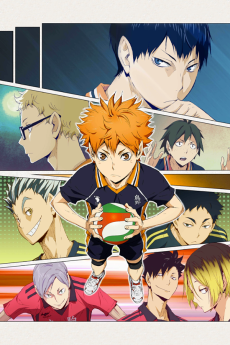
HAIKYU!! 2nd Season
Following their participation at the Inter-High, the Karasuno High School volleyball team attempts to refocus their efforts, aiming to conquer the Spring tournament instead.
When they receive an invitation from long-standing rival Nekoma High, Karasuno agrees to take part in a large training camp alongside many notable volleyball teams in Tokyo and even some national level players. By playing with some of the toughest teams in Japan, they hope not only to sharpen their skills, but also come up with new attacks that would strengthen them. Moreover, Hinata and Kageyama attempt to devise a more powerful weapon, one that could possibly break the sturdiest of blocks.
Facing what may be their last chance at victory before the senior players graduate, the members of Karasuno's volleyball team must learn to settle their differences and train harder than ever if they hope to overcome formidable opponents old and new—including their archrival Aoba Jousai and its world-class setter Tooru Oikawa.
[Written by MAL Rewrite]
📺Anime Details
📝Editorial Analysis
The gym floor is sticky with sweat, the air thick with the crack of a spike and the raw, ragged gasp of a boy pushing past his own limit—Shoyo Hinata, mid-air, eyes locked on the ball, legs burning, heart hammering not just from exertion but from the terrifying, exhilarating weight of trust. He’s not alone up there. Kageyama’s set lands exactly where it needs to be—not because it’s perfect, but because they’ve practiced that split-second understanding until it lives in their muscles. This isn’t just volleyball. It’s the tremor in Tanaka’s voice when he finally owns his role as a leader. It’s Asahi’s quiet, unshakable presence anchoring the back row. It’s the way the entire Karasuno bench erupts—not just for points, but for effort, for growth, for the sheer, defiant joy of showing up again after Inter-High’s crushing loss.
What makes HAIKYU!! 2nd Season vibrate so deeply isn’t its sports mechanics or shounen tropes—it’s the intimacy of collective striving. You feel the warmth of shared exhaustion, the sting of a miscommunication that cuts deeper than any loss, the slow, earned dawning of mutual respect across rival benches. It’s not about winning the Spring tournament—it’s about the Tokyo training camp’s humid locker rooms, the clatter of borrowed shoes, the way Nekoma’s veterans don’t mock Karasuno’s hunger but test it, fiercely, fairly. This season breathes in the quiet moments between rallies: the chalk-dusted silence before serve, the shared water bottle passed without words, the way a single nod from Ushijima can land like a vow. It makes you think about how identity isn’t forged in isolation, but in the friction and fidelity of a group choosing, daily, to lift each other—even when your arms shake.
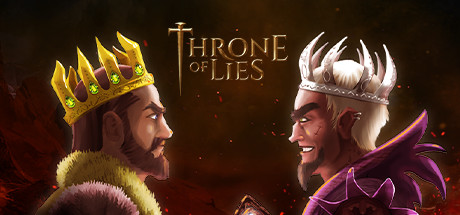
That same electric hum lives in Throne of Lies®: Medieval Politics, where player reviews cite Competitive Spirit and JRPG Narrative as core dimensions. Not because it’s about volleyball—but because its arena is also one of high-stakes, real-time collaboration under pressure: alliances shift, betrayals burn hot, and victory hinges on reading teammates’ intentions in the moment, just like Karasuno reading Kageyama’s flicker of hesitation before a risky set. The tension isn’t in swords clashing—it’s in the charged silence before a vote, the same silence before Hinata leaps. You don’t win by outshining others; you win by holding the line together, even when trust frays.
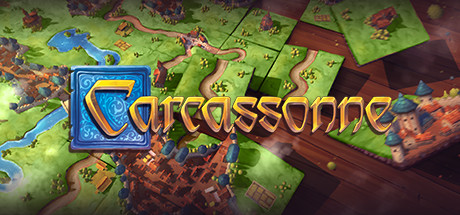
Then there’s Carcassonne - Tiles & Tactics, another match scoring 59 on those exact same dimensions. Its genius is in the quiet, tactile negotiation of space: placing a tile isn’t just strategy—it’s an act of faith in how others will build around you, extend your road, complete your field. When a rival claims your unfinished city at the last second, it stings—not with rage, but with the sharp, familiar pang of a misread play in Karasuno’s third set against Shiratorizawa. It’s competitive, yes—but the drama lives in the shared board, the visible, evolving map of collective effort and inevitable, respectful friction. No lone hero here; just players leaning in, adjusting, adapting—exactly as Karasuno does when Nekoma’s speed forces them to rewire their entire reception rhythm mid-camp.
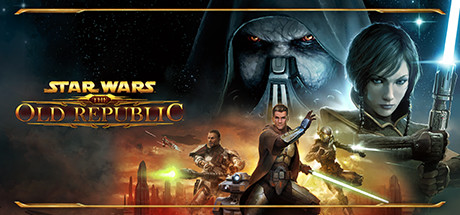
And STAR WARS™: The Old Republic™, with its identical dimensional signature, resonates in a different register: the weight of legacy meeting raw, personal growth. Player reviews highlight how its JRPG Narrative doesn’t just tell stories—it makes you live the consequences of choices within a vast, living world where factions clash, loyalties are tested, and every companion has their own arc of doubt and resolve. That mirrors HAIKYU!! 2nd Season’s quietest power: how Ushijima’s leadership isn’t declared—it’s earned through consistent, unglamorous presence; how Kageyama’s evolution isn’t a solo ascent, but a slow recalibration of how he holds space for others’ potential. Both ask: What does it mean to carry a name—Nekoma, Sith, Karasuno—and not just wear it, but redefine it, alongside people who see your flaws and still pass you the ball?
This pairing sings for the viewer who cries not at victories, but at the first time a timid first-year holds the line in practice; for the player who spends more time strategizing with their guild chat than grinding mobs, savoring the messy, brilliant alchemy of people choosing, again and again, to show up, listen, adapt—and believe, fiercely, in the next point, the next quest, the next shared breath before the whistle blows.
🎮3 Games That Match the Vibe
Match Dimensions Explained
❓Frequently Asked Questions
Why does the Karasuno vs. Aoba Johsai match in HAIKYU!! 2nd Season feel so intense—and is there a game that captures that same pressure-cooker teamwork energy?
That match lives in your chest because of split-second trust, role-specific brilliance (like Kageyama’s pinpoint sets and Hinata’s explosive jumps), and escalating stakes—exactly what Throne of Lies® nails with its real-time deception rounds where you must read teammates’ tells while executing coordinated bluffs under time pressure. The ‘Competitive Spirit’ dimension shines here: every vote, lie, or alliance shift mirrors Karasuno’s on-court communication breakdowns and recoveries.
Is there a HAIKYU!! 2nd Season video game adaptation I can play right now?
No official HAIKYU!! 2nd Season game exists—but fans craving that exact vibe lean into Carcassonne - Tiles & Tactics, where building the board tile-by-tile feels like orchestrating a rally: each placement is a strategic ‘set’, ‘spike’, or ‘block’ with immediate consequences, and the ‘Competitive Spirit’ dimension reflects how Karasuno’s matches hinge on reading opponents’ patterns and adapting mid-flow.
How do Throne of Lies® and STAR WARS™: The Old Republic™ compare for capturing HAIKYU!!’s blend of rivalry and camaraderie?
Throne of Lies® delivers the razor’s-edge tension of Karasuno vs. Nekoma—think Daichi’s leadership under fire and Bokuto’s fiery banter—with its live betrayal mechanics and faction-based teamplay. Meanwhile, SWTOR leans into long-term bonds like Hinata and Kageyama’s growth arc via its companion-driven JRPG Narrative system, where loyalty missions and dialogue choices deepen relationships just like their slow-burn trust-building across seasons.
What’s the best game like HAIKYU!! 2nd Season if I want that uplifting, sweat-and-grit-but-never-give-up vibe?
Carcassonne - Tiles & Tactics is your go-to—it’s got that same infectious energy: placing a tile to complete a city feels like Hinata nailing a last-second spike, and scoring points through tight coordination mirrors Karasuno’s ‘one team, one dream’ ethos. With its 59 score in both Competitive Spirit and JRPG Narrative, it channels the season’s emotional highs without needing cutscenes—just pure, joyful, strategic hustle.