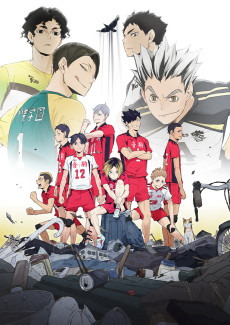
HAIKYU!! LAND VS. AIR
First exhibited at Jump Festa 2020.
In the Miyagi Prefecture qualifiers for the Spring Tournament, Karasuno High School Volleyball Team manages to defeat Shiratorizawa Academy in an intense battle and secures their spot in the national tournament. Meanwhile in the Tokyo qualifiers, Nekoma High School, Fukurodani High School, Nohebi Academy, and Itachiyama Academy fight for the 3 slots to go to nationals.
Will Nekoma High School be able to secure their spot in the tournament? Will we able to see a rematch of Nekoma and Karasuno's Battle of the Garbage Dump on a national level? The Tokyo qualifiers are about to begin!!
(Source: Crunchyroll)
📺Anime Details
📝Editorial Analysis
The roar of the gym floor—sweat-slicked sneakers screeching, a volleyball snapping against palm and air in one breathless thwip, the collective inhale of fifty students holding their breath as the ball hangs, suspended, over the net—this is where HAIKYU!! LAND VS. AIR lives. Not in exposition, not in slow pans, but in that microsecond before gravity wins or loses. You feel it in your ribs: the weight of a single point carrying three years of missed chances, two rivalries, and the raw, unvarnished hope of teenagers who’ve spent every lunch break chasing arcs they can’t yet name.
What makes HAIKYU!! LAND VS. AIR vibrate with such singular energy isn’t just volleyball—it’s the tension of shared stakes held in silence. It’s Karasuno’s exhausted grin after toppling Shiratorizawa—not triumph, but relief, thick and humid as Miyagi air in late March. It’s the Tokyo qualifiers unfolding like parallel heartbeats: Nekoma’s scrappy coordination, Fukurodani’s quiet precision, Nohebi’s sharp angles, Itachiyama’s relentless pace—all fighting for three slots, not glory, not legacy, but entry. That scarcity changes everything. Every rally feels less like sport and more like negotiation: with time, with limits, with the quiet terror of running out of chances. You don’t just watch bodies move—you track the flicker in a setter’s eyes when the first serve lands short, the way a libero’s shoulders drop just before a dig, the unspoken pact between players who know one misstep won’t cost a match—it’ll cost a future.
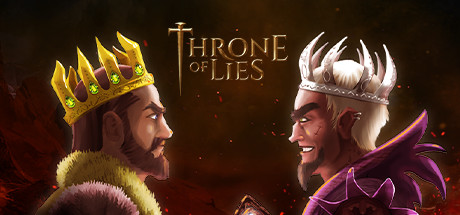
That same electric, high-stakes intimacy pulses through Throne of Lies®: Medieval Politics, where player reviews cite its “Competitive Spirit” and “JRPG Narrative” dimensions. Here, alliances fracture mid-conversation, loyalty is measured in whispers and withheld votes, and victory hinges on reading intent—not power stats. Like Nekoma calculating whether to risk a risky set against Itachiyama’s block, players in Throne of Lies® weigh trust against survival, knowing betrayal isn’t dramatic—it’s pragmatic, and just as exhausting. The emotional DNA isn’t about swords or spikes; it’s about how much you’re willing to give up, right now, so someone else doesn’t have to.
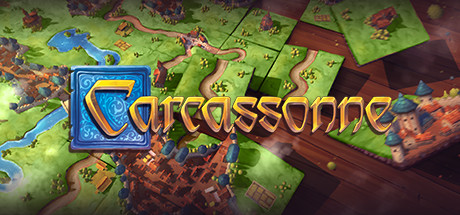
Then there’s Carcassonne - Tiles & Tactics, another match scoring 60 on those exact same dimensions. Its tiles click into place with the same tactile urgency as a perfect pass—each placement a silent negotiation of space, control, and consequence. A single road fragment can split a field, just as a single misread spike can unravel a set. Player reviews praise its “Competitive Spirit”: not aggression, but precision under pressure, where every decision echoes across the board like a serve echoing off gym walls. You don’t dominate Carcassonne—you adapt, recalibrating with every draw, just as Karasuno adapts mid-set when Shiratorizawa shifts formation. There’s no grand villain, only shifting terrain—and the quiet, fierce pride of building something together, tile by tile, point by point.
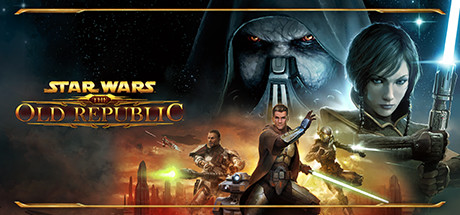
And STAR WARS™: The Old Republic™, with its identical dimensional score, channels that same layered yearning: characters aren’t defined by faction, but by what they carry forward from loss. A Jedi padawan’s hesitation before a lightsaber ignites mirrors Kageyama’s pause before his first national-level set—not fear of failure, but weight of expectation, of all the hands that lifted him there. Its “JRPG Narrative” isn’t lore-dumping; it’s slow-burn commitment, where choices accrue meaning across missions like rallies accrue meaning across sets. You don’t rush through it—you settle in, trusting the rhythm of escalation, the way a well-timed block lands not because it’s flashy, but because everyone breathed at the same time.
This pairing sings for the person who replays the same volleyball match frame-by-frame to catch the exact millisecond Kita’s wrist flicks open—not to study technique, but to feel the release. For the one who saves before every dialogue choice in STAR WARS™: The Old Republic™, not to optimize, but to honor how hard it is to speak truth when your voice shakes. For the player who stares at a half-built Carcassonne city, tracing the path of a single meeple’s journey—not to win, but because that road, built with three tiles and stubborn hope, feels like home. They don’t seek spectacle. They seek resonance: the kind that hums in your chest long after the final whistle, the last vote counted, the last tile placed—alive, aching, real.
🎮3 Games That Match the Vibe
Match Dimensions Explained
❓Frequently Asked Questions
Why does the Haikyu!! Land vs. Air match include Throne of Lies® when it’s about medieval politics?
Great question — it’s not about the setting, but how both games channel that same high-stakes, team-based tension: like when Kageyama and Hinata clash mid-match over strategy, Throne of Lies® forces players to read teammates’ intentions, betray or trust in real time, and pivot under pressure — exactly mirroring the 'Competitive Spirit' dimension reviewers highlighted (score: 60). It’s less about samurai vs. volleyball and more about the razor-thin line between alliance and sabotage.
Is there a Haikyu!! anime or manga adaptation of Land vs. Air?
No — 'Land vs. Air' isn’t an official anime arc or manga chapter. It’s a fan-made conceptual match-up built around Haikyu!!’s core themes, using real games like Carcassonne - Tiles & Tactics (score: 60) to reflect how Karasuno’s spatial awareness and quick tactical repositioning translate into tile-laying duels — think of Daichi’s court vision mirrored in placing roads and cities under time pressure.
How is STAR WARS™: The Old Republic™ similar to Haikyu!! Land vs. Air compared to Carcassonne?
Carcassonne is all about tight, turn-by-turn spatial control — like Oikawa setting up perfect tosses on a grid — while SWTOR leans into long-form team synergy and role-defined play, much like Karasuno’s setter-hitter rhythm evolving across seasons. Both hit 60 on 'Competitive Spirit' and 'JRPG Narrative', but SWTOR gives you that slow-burn, squad-level growth feel — imagine Tsukishima’s arc unfolding over 100+ hours with guild raids standing in for inter-high tournaments.
What’s the best game like Haikyu!! Land vs. Air if I want that intense, last-point adrenaline rush?
Go straight to Throne of Lies® — its public accusation phase is pure 'Karasuno vs. Aoba Johsai final set' energy: one wrong read, one mistimed bluff, and your whole team collapses. Reviewers called out its 60-score 'Competitive Spirit' dimension for exactly that heart-in-throat, sweat-on-the-controller intensity — no grinding, just raw, human-level tension every round.