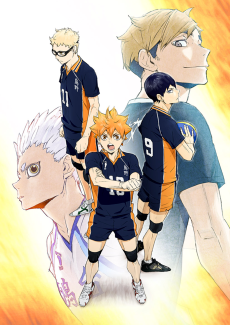
HAIKYU!! TO THE TOP
The fourth season of Haikyuu!!
The Karasuno High School Volleyball Club finally won their way into the nationals after an intense battle for the Miyagi Prefecture Spring Tournament qualifiers. As they were preparing for the nationals, Kageyama is invited to go to All-Japan Youth Training Camp. At the same time, Tsukishima is invited to go to a special rookie select training camp for first-years in Miyagi Prefecture. Hinata feels panic that he’s being left behind as one of the first-years and then decides to show up at the Miyagi Prefecture rookie select training camp anyway...
(Source: Crunchyroll)
📺Anime Details
📝Editorial Analysis
The gym floor is sticky with sweat and adrenaline. Hinata’s breath hitches—not from exhaustion, but from the hollow thud of silence after Kageyama walks out the door, duffel slung over one shoulder, heading to the All-Japan Youth Training Camp. Tsukishima follows minutes later, hoodie up, expression unreadable, off to Miyagi’s rookie select camp. The empty space between them isn’t just physical—it’s the first real crack in the rhythm they’ve spent years stitching together, note by note, jump by jump. That moment—no music swell, no dialogue, just the squeak of sneakers fading down the hallway—is where HAIKYU!! TO THE TOP lives: not in victory, but in the quiet, trembling weight of being left behind while everyone else leaps forward.
What makes this season ache so precisely is how it refuses to treat growth as linear or solitary. It’s not about “getting stronger”—it’s about relearning how to matter when your role shifts, your pace changes, your teammate vanishes into a different tier of expectation. The comedy doesn’t soften the drama; it anchors it—the absurdity of Tanaka’s voice cracking mid-rant, Nishinoya’s frantic shadow drills alone at dawn, the twins’ synchronized sighs as they relearn serve-receive without their usual spiker anchoring the net. This is coming-of-age as collective recalibration: every character’s arc bends not toward individual glory, but toward re-finding their place in the constellation. You don’t just root for Karasuno—you hold your breath waiting for them to recognize each other again, mid-air, mid-doubt, mid-miscommunication.
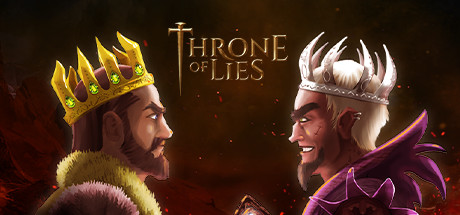
That same emotional architecture pulses through Throne of Lies®: Medieval Politics, where player reviews cite its Competitive Spirit and JRPG Narrative dimensions—not as separate features, but as intertwined forces. Like Hinata watching Kageyama train with elite setters he can’t yet read, players in Throne of Lies® navigate alliances that shift faster than a quick-set spike: trust is earned in real-time, betrayed in whispers, rebuilt through shared stakes—not grand quests, but who sits beside you during council. The tension isn’t “will I win?” but “will they still see me when the vote counts?”—exactly the fear humming beneath Hinata’s silent panic.
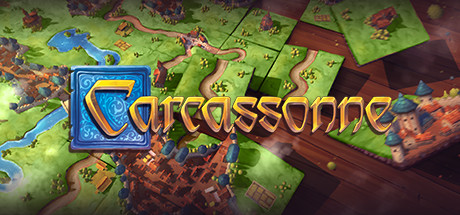
Then there’s Carcassonne - Tiles & Tactics, also scoring 62 on those same two dimensions. Its brilliance lies in how territory isn’t claimed—it’s negotiated. You lay a tile, extend a road, and suddenly your opponent’s meeple is already on your field—not as theft, but as inevitable overlap. That’s Karasuno’s third-year captains mentoring first-years while wrestling their own obsolescence; that’s Yaku adjusting his block timing because Hinata’s jump height changed just enough to alter the entire defensive geometry. No solo heroics—just constant, tactile adjustment, tile by tile, set by set. The game’s quiet intensity mirrors the anime’s unspoken language: presence measured in millimeters, loyalty proven in who covers your rotation when you’re fatigued, not when you’re shining.
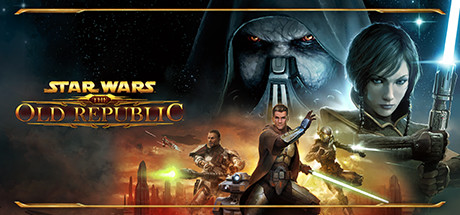
Even STAR WARS™: The Old Republic™, with its identical 62-score alignment, resonates—not through lightsabers or galaxies, but through its Competitive Spirit rooted in factional belonging and its JRPG Narrative built on relational consequence. Players don’t just choose light or dark—they choose who stands with them in the cantina after the mission fails. Like Karasuno’s bench warming during nationals prep, where every unused jersey carries history, every sidelined player’s quiet observation shapes the team’s next move. The game’s emotional weight lands not in epic battles, but in companion dialogues that pivot on whether you remembered their name last time, just as Hinata’s growth hinges on whether he notices Oikawa’s knuckles whitening before a serve—not as rivalry, but as kinship disguised as friction.
This pairing speaks to the viewer who watches volleyball not for spikes, but for the half-second hesitation before a double-block—a hesitation born of knowing your partner’s breath pattern. It’s for the player who replays a Carcassonne match not to win, but to see if they can place the tile that lets someone else score, just once. It’s for anyone who’s ever stood in an empty gym at dusk, heart pounding not from exertion, but from the terrifying, exhilarating certainty that the people you love are rising—and you must rise with them, not ahead, not behind, but in sync, even when the rhythm fractures. That’s the pulse beneath HAIKYU!! TO THE TOP, and the quiet thrum in every game that understands: competition isn’t war—it’s the most intimate form of listening.
🎮3 Games That Match the Vibe
Match Dimensions Explained
❓Frequently Asked Questions
Why does Throne of Lies® feel like watching Karasuno’s match against Aoba Johsai?
Because both hinge on reading your opponents’ tells under pressure—just like Kageyama and Hinata’s misdirection plays, Throne of Lies® forces you to bluff, deduce loyalties, and pivot mid-game like a tense rally. The ‘Competitive Spirit’ dimension shines through its backstabbing diplomacy and last-minute role reveals, mirroring how Aoba Johsai’s calm intensity cracks Karasuno’s composure before Hinata’s final spike.
Is there a Haikyu!! anime-to-game adaptation like TO THE TOP?
No—there’s no official Haikyu!! game based on TO THE TOP or any season. The closest are fan-made mods or mobile rhythm games, but nothing matches the scale or narrative depth you’d expect. Instead, STAR WARS™: The Old Republic™ delivers that same ‘team rising together’ arc—think Tsurumi’s growth mirrored in your Jedi Knight’s crew bonds—but with lightsabers instead of spikes.
How does Carcassonne - Tiles & Tactics compare to STAR WARS™: The Old Republic™ for Haikyu!! fans?
Carcassonne is like Karasuno’s practice sessions—calm, strategic, and deeply satisfying when tiles click into place like perfect sets; STAR WARS™: The Old Republic™ is more like the Nationals finals: high-stakes, character-driven, with party banter echoing Tanaka and Nishinoya’s chemistry. Both hit ‘Competitive Spirit’ and ‘JRPG Narrative’, but Carcassonne leans into quiet mastery while SWTOR leans into epic escalation.
What’s the best game like Haikyu!! TO THE TOP if I want that ‘last-set adrenaline rush’ vibe?
Throne of Lies® nails it—especially during the ‘Loyalty Reveal’ phase, where everyone freezes like the crowd before Hinata’s jump serve, then chaos erupts as alliances shatter. It’s not about stats or levels; it’s about timing, trust, and that gut-drop moment when someone you thought was an ally suddenly blocks your play—exactly like Kiyoko’s fake-out pass or Keiji’s sudden block rotation.