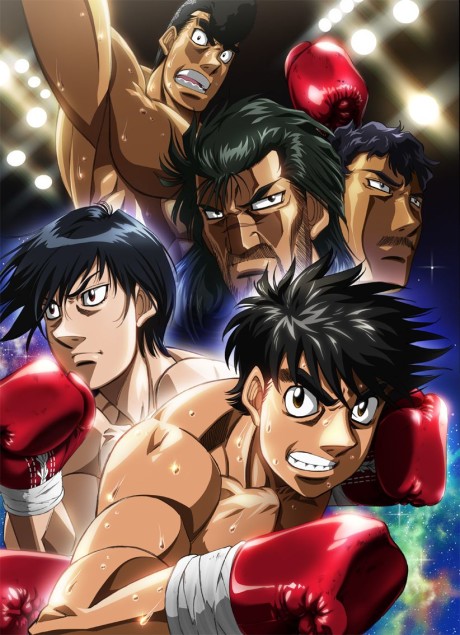
Hajime no Ippo: The Fighting! New Challenger
Ippo Makunouchi continues his boxing career and his goal on knowing the meaning of being strong, and the desire on fighting his idol Ichiro Miyata once again. Along him are pro boxers Takamura, Aoki and Kimura that each one of them aspire to their own dreams.
(Source: Anime News Network)
📺Anime Details
📝Editorial Analysis
The smell of sweat and liniment hangs thick in the air—sharp, medicinal, alive—as Ippo Makunouchi stands alone in the gym after everyone’s gone, gloves still on, knuckles raw, staring at his reflection in the fogged mirror. His breath is shallow but steady. Not triumphant. Not broken. Just there, measuring himself—not against Miyata yet, not even against Takamura—but against the quiet, stubborn weight of his own promise. That moment isn’t about winning a match. It’s about the ache of showing up, day after day, when strength isn’t a finish line but a question you keep asking your own hands.
What makes Hajime no Ippo: The Fighting! New Challenger vibrate so deeply isn’t its boxing choreography or its shounen tropes—it’s the dignity in repetition, the warmth in shared silence between rivals who know each other’s rhythms better than their own heartbeats. You feel the weight of aspiration not as spectacle, but as routine: Aoki adjusting his headgear with quiet focus, Kimura’s nervous grin before a spar, Takamura’s gruff voice cutting through doubt like a cleaver—not to dismiss it, but to name it, then move past it. This isn’t about glory; it’s about continuance. About how ambition lives in the space between punches—in the way a fighter learns to hold still, to listen, to trust the person holding the mitts across from him. It’s human, unvarnished, tender in its discipline.
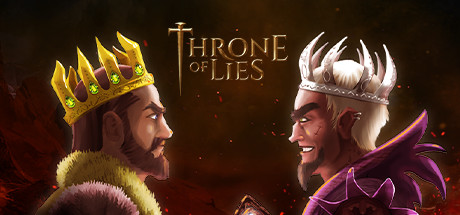
That same emotional texture hums in Throne of Lies®: Medieval Politics, where player reviews cite “Competitive Spirit” and “JRPG Narrative” as core dimensions—not because it’s about jousting or swordplay, but because power here is earned through alliance-building, betrayal weighed in glances and whispered oaths, and identity forged in shifting loyalties. Like Ippo learning to read Miyata’s micro-expressions mid-fight, players in Throne of Lies parse intention through dialogue choices and faction alignment, where every negotiation feels like a spar: tense, consequential, emotionally calibrated. The drama isn’t in grand battles—it’s in the pause before a vote, the hesitation before naming a traitor, the weight of being seen—and choosing who gets to see you.
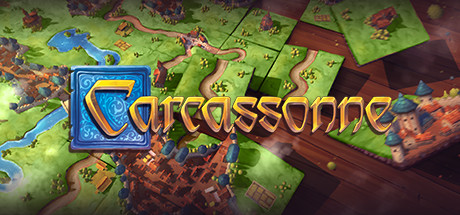
Carcassonne - Tiles & Tactics mirrors this too. Its “Competitive Spirit” isn’t cutthroat—it’s the gentle friction of shared board space, where your meeples nestle beside an opponent’s, claiming fields and roads not with force but with patience and foresight. Player reviews highlight how its “JRPG Narrative” emerges not from lore, but from emergent storytelling: the farmer you placed early becomes pivotal three turns later; the cloister you ignored suddenly anchors your entire strategy. Like Kimura studying film of his next opponent frame-by-frame, or Aoki refining his jab for months just to land one cleaner combination—this game rewards attentive persistence, where growth is visible only in hindsight, stitched together tile by tile.
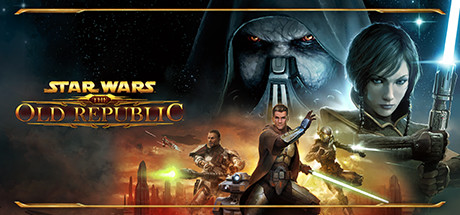
And then there’s STAR WARS™: The Old Republic™, where “Competitive Spirit” manifests not in PvP arenas alone, but in the moral calculus of light-side choices that cost you influence, or dark-side paths that isolate you—even as your companions lean in, argue, stay. Its “JRPG Narrative” thrives on relational consequence: Takamura’s loyalty isn’t given—it’s earned through shared training, through showing up when someone else stumbles. So does Kira’s faith in your Jedi Knight, or Vette’s sarcasm softening only after you’ve taken her seriously—not as a sidekick, but as someone whose survival hinges on your restraint. Strength here, like in New Challenger, is measured in how you carry others’ hopes without breaking your own spine.
This pairing sings loudest for the viewer who watches Ippo’s hands tremble after a win—not before—and recognizes that as triumph. For the player who replays a Carcassonne round not to crush opponents, but to finally close that perfect city; who chooses a companion’s quest over XP in Old Republic because their story matters more than the level-up chime; who understands that “Competitive Spirit” doesn’t mean rivalry—it means witnessing, fiercely and fairly, the effort it takes to become someone worthy of your own respect. They don’t crave victory—they crave vibration: the shared pulse of effort, the hush before the bell, the quiet certainty that showing up—still, again, with care—is where meaning lands, glove-first, in the center of the ring.
🎮3 Games That Match the Vibe
Match Dimensions Explained
❓Frequently Asked Questions
Why does Hajime no Ippo: The Fighting! New Challenger feel so different from Throne of Lies® even though both have Competitive Spirit and JRPG Narrative?
Because Throne of Lies® is all about backstabbing nobles and lying your way to the throne—think scheming as Lord Varys, not throwing hooks like Ippo. Its 'Competitive Spirit' comes from bluffing and alliances, not training montages or clinch mechanics, and its 'JRPG Narrative' leans into political intrigue rather than underdog boxing arcs.
Is there an anime or manga adaptation of Carcassonne - Tiles & Tactics?
Nope—Carcassonne is purely a tile-laying strategy game with zero anime tie-ins. It shares Hajime no Ippo’s 'Competitive Spirit' dimension through head-to-head scoring tension (like a close round against Miyata), but its 'JRPG Narrative' is abstract—story emerges from placing roads and cloisters, not character-driven drama like Ippo’s gym sessions or Takamura’s trash talk.
How accurate is STAR WARS™: The Old Republic™ compared to Hajime no Ippo in terms of boxing mechanics?
Not accurate at all—it has zero boxing mechanics. SWTOR is an MMORPG where you swing lightsabers as a Jedi or Sith, not wrap hands and shadowbox with Coach Kamogawa. Its 'Competitive Spirit' shows up in PvP arenas and guild wars, while its 'JRPG Narrative' delivers epic galactic storytelling—not gym sweat, sparring drills, or the emotional weight of a title fight.
What’s the best game like Hajime no Ippo if I want that intense, focused underdog-training vibe?
None of the matched games nail that exact vibe—Throne of Lies® is too chaotic, Carcassonne too cerebral, and SWTOR too galaxy-sized. But if you crave that tight-knit team energy and rising-tension arc, Carcassonne’s slow-burn tile-building can mimic the satisfaction of Ippo’s meticulous footwork drills—each placed meeple feels like another rep toward mastery.