
High School DxD HERO
The fourth season of High School DxD.
Issei and the 2nd years attend a class trip to Kyoto for well-deserved relaxation, leaving the senior and junior class students of the Gremory family behind. However, once there, they fall under attack and must win without Rias or their other powerhouses.
(Source: Anime News Network)
Includes episode 0, Taiikukan-ura no Holy.
📺Anime Details
📝Editorial Analysis
The scent of rain on hot stone, the sharp crack of a demonic barrier shattering under Issei’s Boosted Gear—then silence, just for half a second—before the Kyoto temple grounds erupt in crimson light and panicked shouts. No Rias. No Akeno. Just second-years scrambling, breath ragged, uniforms torn, bodies bruised but alive, leaning on each other as they stagger out of smoke, grinning through split lips. That’s not victory—it’s recognition: they’re no longer sidekicks. They’re the ones holding the line.
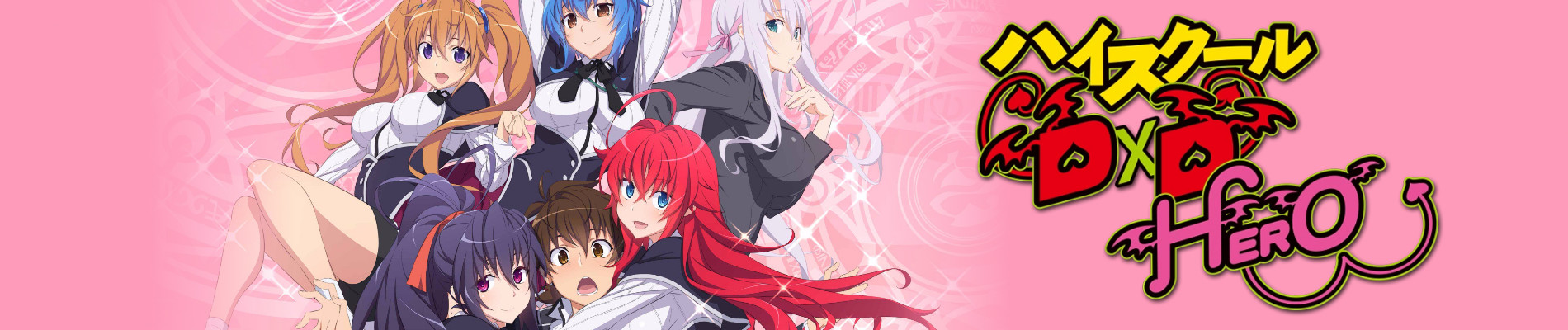
What makes High School DxD HERO vibrate with such particular warmth isn’t its dragons or its ecchi gags—it’s the weight of found family forged mid-crisis. This season doesn’t trade power-ups for plot armor; it trades safety for stake. The Kyoto trip isn’t backdrop—it’s pressure-cooker intimacy. You feel the exhaustion in their shoulders, the quiet pride when Xenovia catches Koneko mid-fall without a word, the way Asia’s healing glow trembles—not from weakness, but from care held so tightly it aches. It’s urban fantasy where magic isn’t spectacle first—it’s glue. Where nudity isn’t titillation divorced from context, but a raw, unguarded physicality that mirrors emotional exposure: characters literally shedding layers—clothes, pretense, old roles—to stand bare, flawed, and together. It makes you think about how loyalty isn’t declared in speeches—it’s measured in who stays when the heavy hitters are gone.
That same emotional DNA hums in Dark Messiah of Might & Magic, not because of dragons or demons—but because of body horror as consequence. Its description names “Body Horror & Occult” as core dimensions—and player reviews praise its “ferocious combat” where every swing hurts, where limbs twist, wounds linger, and power feels earned through visceral, almost grotesque effort. Like High School DxD HERO, it refuses to sanitize struggle. When Issei’s arm cracks under strain during his solo fight in episode 3, or when Ravel’s regeneration flickers with visible pain, it resonates with Dark Messiah’s philosophy: strength isn’t clean—it’s bodied, messy, vulnerable. The game’s “dark and im…” universe (cut off in the description, but implied by its tone and review context) mirrors the anime’s willingness to let beauty and brutality occupy the same frame—silk robes stained with blood, holy light casting long, jagged shadows.
Then there’s Strong Bad's Cool Game for Attractive People: Season 1, which shares the exact same score (52) and identical dimensional tags: Emotional Narrative, Body Horror & Occult. On paper, it’s absurd—a cartoon wrestling with poker and poetry—but the player review nails its heart: “Strong Bad’s wacky comedic adventures.” That’s the key. High School DxD HERO pivots on tonal whiplash that lands: one moment, Kiba’s sword is sheathed in demon blood; the next, he’s awkwardly trying to fold laundry while everyone teases him about his “mysterious aura.” The anime’s comedy isn’t relief from tension—it’s woven into it, like Strong Bad’s fourth-wall-breaking chaos grounding existential stakes in something deeply, stupidly human. Both treat the occult not as distant myth, but as domestic clutter—grimoires left open beside snack bowls, cursed artifacts used as doorstops. Their “Emotional Narrative” isn’t whispered—it’s shouted, sung off-key, or delivered while tripping over a stray tail.
This pairing sings for the viewer who cries at group dinners in anime—not because the food looks good, but because someone remembered to save the last mochi for the quietest one. For the player who replays Dark Messiah’s sewer levels not for loot, but to feel the grit underfoot again, or who still quotes Strong Bad’s “Trogdor!” rant after a bad day—not for irony, but because it fits. These aren’t stories about saving worlds. They’re about saving each other’s dignity, one clumsy, earnest, occasionally naked, always defiant act at a time.
🎮17 Games That Match the Vibe



Match Dimensions Explained
❓Frequently Asked Questions
Why does Dark Messiah of Might & Magic feel like a spiritual cousin to High School DxD HERO's power escalation scenes?
Because both lean hard into visceral, over-the-top bodily transformation during climactic moments—like when Issei’s Boosted Gear triggers dragon-scale eruptions or Rias’s peerage summoning warps reality with occult energy. Dark Messiah mirrors that with its bone-breaking melee combos, dismemberment physics, and grotesque magical mutations (think necromancer cultists sprouting extra limbs mid-fight), all wrapped in an emotional narrative where power comes at a physical cost.
Is there a High School DxD HERO anime or visual novel adaptation I can play instead?
No—there’s no official anime or VN adaptation of HERO specifically, and none of the games on this list are licensed DxD titles. But Strong Bad’s Cool Game for Attractive People nails the tonal whiplash you love: rapid-fire absurd humor, fourth-wall breaks, and emotionally grounded character moments (like Coach Z’s vulnerable confession in Episode 3) that weirdly echo DxD’s balance of lewd comedy and heartfelt loyalty.
How does Dark Messiah of Might & Magic compare to Strong Bad’s Cool Game for Attractive People in terms of ‘occult’ vibes?
Dark Messiah delivers gritty, body-horror occultism—blood rituals, cursed artifacts, and demonic invocations that twist flesh and bone—while Strong Bad’s game uses occult as satire: think fake tarot readings, haunted vending machines, and 'Satan’s Little Helper' as a gag character. Both hit the 'Occult' dimension on the match list, but one goes full Lovecraftian gore, the other goes full cartoonish parody.
What’s the best game like High School DxD HERO if I want something that’s equal parts chaotic, emotionally sincere, and weirdly horny?
Strong Bad’s Cool Game for Attractive People is your answer—it’s got the same whiplash between slapstick flirtation (Strong Bad’s 'attractive people only' schtick) and sudden sincerity (like The Poopsmith’s quiet loneliness in Episode 5), plus interactive choices that make you *feel* the awkward, hormonal energy of DxD’s harem dynamics—all without needing combat or lore dumps.