
I’m a Noble on the Brink of Ruin, So I Might as Well Try Mastering Magic
📺Anime Details
📝Editorial Analysis
The scent of burnt sugar and ozone hangs in the air—not from a spell gone wrong, but from the quiet, precise heat of a copper alembic as the protagonist adjusts the flame beneath it. His fingers, still too young for the weight of his family’s crest, steady over a vial of silver-tinged mercury. Outside the workshop window, snow falls on crumbling stone towers—walls that once held royal decrees, now patched with mismatched mortar and whispered-about alchemical seals. There’s no fanfare, no dramatic incantation—just the weight of consequence, the tremor of hope, the exhaustion of rebuilding something sacred from fragments nobody else believes is worth saving.
This isn’t magic as spectacle. It’s magic as maintenance. As mending. I’m a Noble on the Brink of Ruin, So I Might as Well Try Mastering Magic doesn’t trade in cataclysmic battles or world-ending prophecies—it trades in ledgers, soil pH readings, the fatigue of negotiating grain tariffs while secretly stabilizing a destabilized ley-line conduit under the east granary. The fantasy here is domestic, not distant: a kingdom’s survival measured in stabilized crop yields, repaired aqueducts humming with residual mana, and the slow, unglamorous reclamation of dignity—not through conquest, but through consistency. You don’t feel awe watching it—you feel resonance. Like recognizing the quiet pride in your own hands after fixing a leaky faucet, only scaled to a realm where failure means famine, not inconvenience. It makes you think about stewardship as an act of love—not grand, not flashy, but relentless.
That emotional texture—mythic-scale stakes folded into intimate, tactile labor—echoes powerfully in Black Myth: Wukong, whose real-world descriptor names Mythology & Folklore and Dark Fantasy as core dimensions. Player reviews consistently praise its “devastating beauty in decay”—how ancient temples sag under moss and memory, how divine statues weep rust instead of tears, how every boss fight feels less like domination and more like reconciliation with inherited ruin. That’s the same heartbeat: the protagonist of I’m a Noble… doesn’t seek to overthrow the old order—he seeks to restore its grammar, just as Wukong doesn’t reject heaven’s architecture, but relearns its broken syntax. Both ache with dignity-in-decay, both find holiness in repair.
Then there’s the Black Myth: Wukong Benchmark Tool, oddly matching at the same score (63) and identical dimensions. Yes—it’s a utility, not a game—but player reviews note how even this tool evokes ritual: loading screens pulse with ink-wash textures; benchmark progress bars mimic scroll-unfurling; the interface breathes like an incense burner. That’s the shared DNA again—not content, but ceremony. In I’m a Noble…, alchemy isn’t just formula—it’s bowing before the crucible, aligning planetary glyphs before distillation, reciting lineage oaths while calibrating a pressure valve. The Benchmark Tool’s quiet reverence for craft mirrors the anime’s treatment of administration, diplomacy, and even tax reform as sacred acts. Both treat process as liturgy.
What binds them isn’t genre—it’s gravity. A refusal to let scale erase intimacy. When the noble protagonist measures soil acidity before planting winter rye, he’s doing what Wukong does when he pauses mid-combat to trace a faded mural of his own forgotten name: honoring the layered time embedded in things. Neither story lets you forget that magic, myth, and governance are all technologies of memory—and that preserving them requires the same kind of attention you’d give a dying ember in a storm.
This pairing sings to the player who replays Stardew Valley’s first year just to watch the community center rebuild, brick by pixelated brick. To the viewer who rewatches K-On!’s club room cleanup scene—not for the jokes, but for the way dust motes catch light as four girls pass a broom in silence. To anyone who’s ever felt their chest tighten not at a victory, but at the sight of a repaired hinge, a stabilized ledger, a single restored glyph glowing softly in the dark. They’re the ones who know care is the rarest magic—and that its most powerful spells are always whispered, not shouted.
🎮2 Games That Match the Vibe
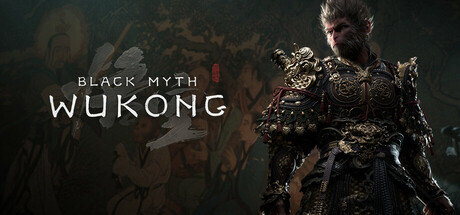
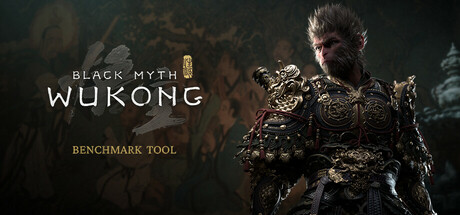
Match Dimensions Explained
❓Frequently Asked Questions
Why does I’m a Noble on the Brink of Ruin, So I Might as Well Try Mastering Magic match with Black Myth: Wukong?
Because both lean hard into mythic worldbuilding where magic feels ancient, dangerous, and tied to cosmic stakes—not just spell slots. In I’m a Noble, you’re rebuilding a crumbling noble house while unraveling forbidden lore; in Black Myth: Wukong, you’re Sun Wukong confronting divine betrayal and decaying heavenly order—same vibe of tragic grandeur and mythological weight.
Is there an anime or manga adaptation of I’m a Noble on the Brink of Ruin, So I Might as Well Try Mastering Magic?
No—there’s no official anime, manga, or live-action adaptation yet. The title only appears in our match list alongside Black Myth: Wukong (and its Benchmark Tool), both scored 63 for Mythology & Folklore + Dark Fantasy—so right now, the closest visual counterpart is Wukong’s haunting, lore-dense cutscenes and ruined celestial architecture.
How does I’m a Noble compare to Black Myth: Wukong in terms of tone and pacing?
I’m a Noble is slow-burn, introspective, and politically layered—think tense council scenes where your magic use risks sparking civil war—while Black Myth: Wukong is visceral, action-forward, and mythically operatic, like when Wukong shatters a jade palace mid-battle. But both share that ‘fallen glory’ core: one in decaying nobility, the other in shattered heavens.
What if I love dark fantasy with deep mythological roots but hate combat-heavy games?
Then I’m a Noble fits perfectly—it’s narrative-first, choice-driven, with magic systems rooted in real East Asian cosmology and moral trade-offs. Black Myth: Wukong *is* combat-heavy (you’ll spend hours mastering staff combos and boss patterns), but its Mythology & Folklore depth—and how it treats gods as flawed, fallible beings—mirrors I’m a Noble’s thematic rigor, even if the delivery differs.