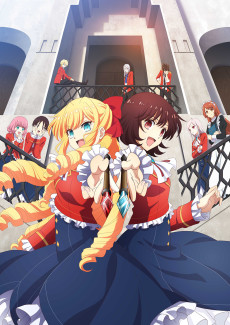
I'm in Love with the Villainess
The world turns upside down when a corporate drone wakes up as Rae Taylor, the heroine in her favorite otome game, Revolution. Rae is elated at the opportunity to court Claire François, the game’s villainess and the object of her affection. Armed with her knowledge of the game and events to come, Rae sets out to make Claire fall for her. But how will the villainess take Rae’s romantic advances?
(Source: Crunchyroll)
📺Anime Details
📝Editorial Analysis
The first time Rae Taylor—still blinking awake in a silk-draped bed, still tasting the metallic tang of corporate burnout on her tongue—sees Claire François across the ballroom, it’s not the villainess’s sharp cheekbones or the way her silver hair catches candlelight that stops Rae’s breath. It’s the recognition. Not Claire recognizing Rae—but Rae recognizing herself, suddenly, violently, as someone who gets to choose. Her fingers curl into the velvet of her sleeve, not in fear, but in giddy, trembling permission.
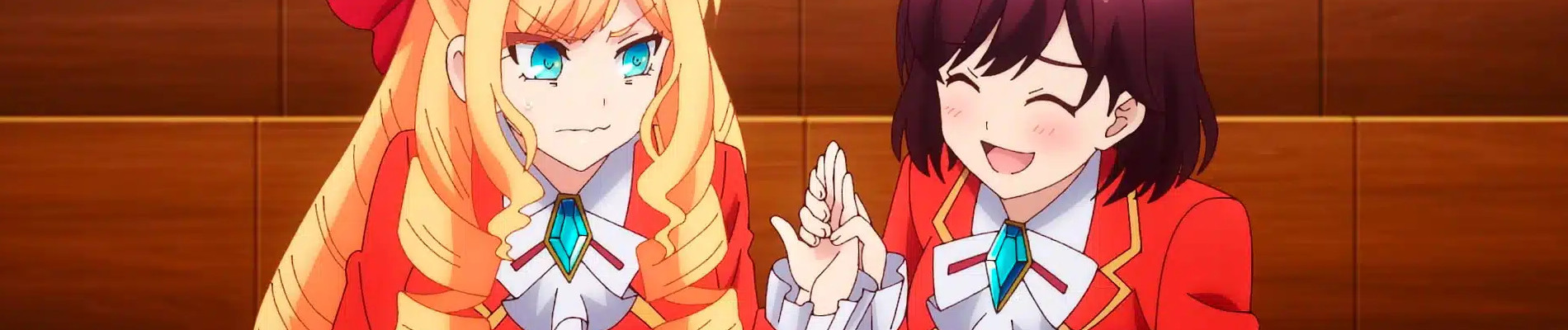
That feeling—that electric, almost dizzying sense of agency reclaimed—is the atmosphere of I'm in Love with the Villainess. It’s not just about romance or isekai wish-fulfillment. It’s the quiet, radical warmth of being seen by yourself, after years of performing competence, suppressing desire, editing your voice until it sounds like everyone else’s. Rae doesn’t want to win the game’s “good ending”—she wants to rewrite the rules of affection itself. She leans into Claire’s icy glares not to melt them, but to witness them, to hold space for contradiction: a woman who wields power like a blade and flinches at tenderness; who calls Rae “annoying” while memorizing the exact shade of her favorite tea. The anime makes you feel safe in your own softness—even when the world insists you be sharp.
Which is why Dragon Age: Origins hums with the same emotional frequency. Its description frames legacy not as conquest, but as determination: “Determine your legacy and fight for Thedas…” That verb—determine—lands with the same weight as Rae choosing to kneel not before royalty, but before Claire’s guarded heart. The player review praises the “pause attack mechanic” as vital for strategy—but what’s truly strategic in both Dragon Age: Origins and I'm in Love with the Villainess is timing intimacy. Pausing mid-battle to assess an ally’s stance mirrors Rae pausing mid-conversation to read the micro-tremor in Claire’s hand when she’s handed a rose. Both demand patience—not as passivity, but as active, attentive care. And the shared tag “Romance & Shoujo” isn’t about tropes; it’s about centering emotional labor as heroic labor. When Rae rehearses how to phrase a confession without triggering Claire’s defenses, she’s doing the same work the Warden does when choosing whether to comfort Morrigan in her tower or let her armor stay intact—a choice that reshapes trust, slowly, deliberately.
None of this works without the grounding weight of consequence—and that’s where the “Dark Fantasy” tag in Dragon Age: Origins resonates so deeply. Claire isn’t softened by love; she’s complicated by it. Her cruelty isn’t performative—it’s survivalist, forged in a world that punishes vulnerability. Just as the Blight in Dragon Age: Origins isn’t a backdrop but a suffocating reality that bends every relationship, Claire’s status as “villainess” isn’t a costume—it’s systemic pressure made flesh. Rae doesn’t ignore that darkness; she leans into its texture, learning its contours like terrain. That’s the quiet bravery both share: loving not despite the shadows, but with full knowledge of their depth.
You’d love these pairings if you’ve ever rehearsed a text three times before sending it—not out of insecurity, but because you care how your words land on someone who’s been told their heart is dangerous. If you’ve paused a game not to optimize damage, but to watch a companion blink slowly in firelight, wondering what memory just flickered behind their eyes. If you believe romance is less about grand declarations and more about the precise, tender violence of saying, “I see the version of you no one else is allowed to witness—and I’m staying.” That’s the shared pulse: not escapism, but reclamation. A slow, glittering, defiant unspooling of self—thread by thread, pause by pause, confession by quiet, careful confession.
🎮3 Games That Match the Vibe


Match Dimensions Explained
❓Frequently Asked Questions
Why is Dragon Age: Origins listed as similar to I'm in Love with the Villainess?
Because both lean hard into morally complex romance within dark fantasy worlds—like how Raeliana’s twisted affection for the villainess mirrors Alistair or Morrigan’s emotionally charged, consequence-heavy relationship arcs. Plus, DAO’s pause-attack combat lets you strategize like you’re plotting your next manipulative confession scene, and its ‘noble dwarf or elven apostate’ origin stories echo the isekai identity crisis vibe.
Is there an anime or game adaptation of I'm in Love with the Villainess?
There’s a confirmed anime (2023), but no official game adaptation yet—though fans often reach for Dragon Age: Origins when they crave that same blend of sharp-tongued villainess energy and romantic tension. Its ‘Romance & Shoujo’ tag on match lists isn’t accidental: Morrigan’s sardonic wit and morally gray choices feel like a Western-coded cousin to Claire’s self-aware scheming.
Dragon Age: Origins vs. I'm in Love with the Villainess—how do their romance systems compare?
Both treat romance as high-stakes narrative architecture—not just stat checks. In DAO, sleeping with Morrigan triggers a world-altering ritual scene that reshapes your ending, much like Claire’s confession scene pivots the entire story’s emotional gravity. Neither lets you romance everyone without consequences: DAO locks out certain pairings if you flirt with rivals, just like Claire’s jealousy mechanics gatekeep her true route.
What’s the best game like I'm in Love with the Villainess if I want brooding atmosphere and slow-burn villain romance?
Dragon Age: Origins—especially the Morrigan route. Her tower scenes drip with gothic tension, her dialogue cuts like glass, and her romance unfolds through layered choices (like helping her steal the grimoire or refusing), not just affection points. That ‘Dark Fantasy’ tag? It’s earned—think candlelit confrontations, morally grey bargains, and a love story that feels dangerous, not just dramatic.