
K-ON!: The Movie
With graduation right around the corner, every member of the Light Music Club except for Azusa will be leaving for good. But the girls aren’t going to let something as silly as graduation tear them apart! For their final hurrah, the girls are going on the ultimate vacation tour— all the way to London! Their overseas journey will lead them on a trip of discovery and friendship as they take the stage one last time for their final encore together.
(Source: Sentai Filmworks)
📺Anime Details
📝Editorial Analysis
The last chord fades—not with a crash, but with a soft, suspended strum of Yui’s guitar as the girls stand on the London rooftop at dusk, wind tugging at their hair, laughter dissolving into quiet breaths. No grand speech. No tearful breakdown. Just Azusa’s fingers tightening around her bass strap, Mio blinking slowly against the golden light, Ritsu humming off-key while staring at the distant Thames—and the sudden, aching awareness that this lightness won’t last. That this shared breath, this unspoken rhythm between them, is already slipping through their fingers like sand.
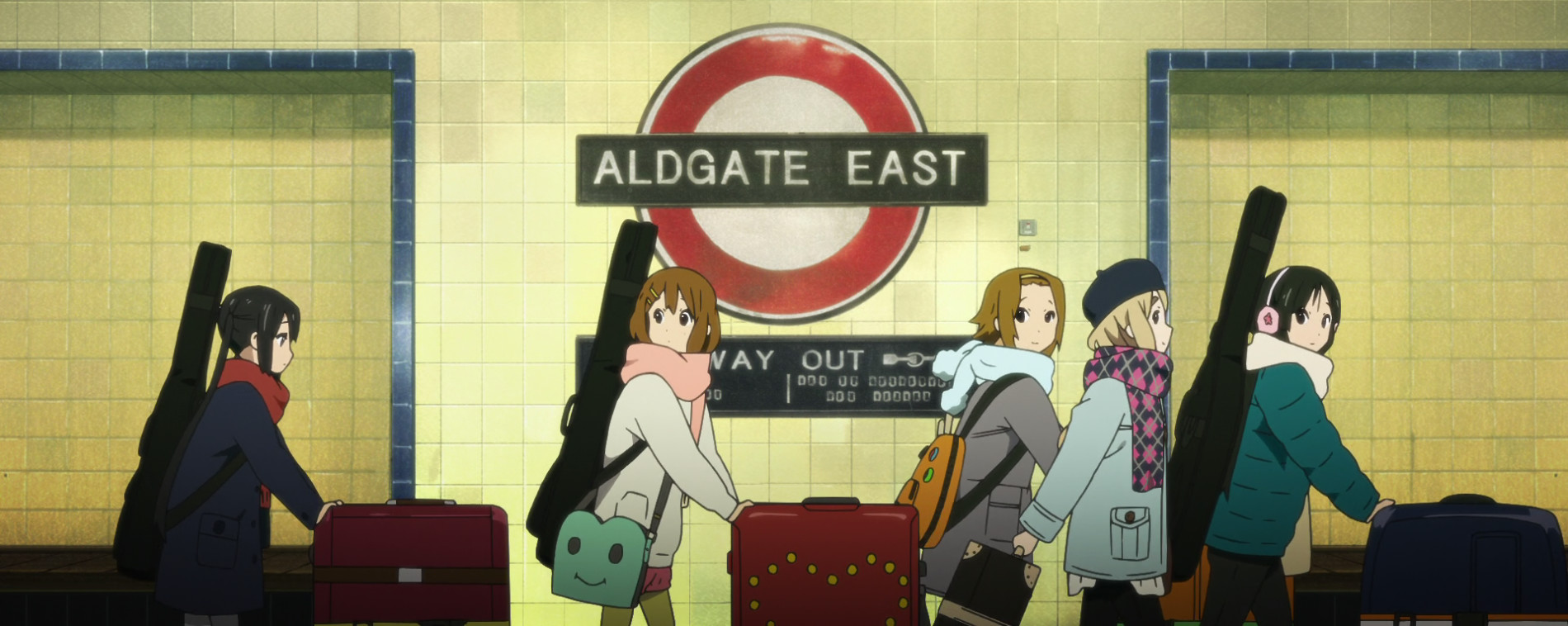
What makes K-ON!: The Movie vibrate so deeply isn’t its music or its travel—it’s the weightlessness it cultivates even as time presses in. It doesn’t dramatize goodbye; it holds space for it. Every shot lingers just long enough—on steam curling from a London café cup, on the way sunlight catches dust motes in the band room back in Japan, on the quiet pause before someone says “Let’s go” and no one moves yet. There’s no urgency, no villain, no ticking clock beyond the calendar itself. Instead, there’s presence: the tactile warmth of shared headphones, the slight stumble of a joke landing differently abroad, the way a familiar song feels both comforting and strangely fragile when played for the last time. It’s not nostalgia—it’s anticipatory tenderness, the kind that makes your chest tighten because you know, deep down, that some harmonies only exist in one precise configuration, for one brief season.
That emotional DNA—the hush before the ending, the beauty in gentle motion, the reverence for small, irreplaceable rhythms—echoes in unexpected places. Take Prince of Persia, whose description names Healing & Slow Life and Melancholic Exploration as core dimensions. Its player review notes how it introduces “a new prince, new lands and a brand new story”—yet the game’s soul lives in the deliberate cadence of movement: the glide across crumbling arches, the pause to watch light fracture through ancient stone, the way time itself feels porous, thick with memory and quiet consequence. Like the Light Music Club wandering London’s backstreets without destination, the Prince doesn’t sprint toward resolution—he moves through loss, grace, and impermanence with the same unhurried reverence. Both ask you to feel time not as pressure, but as texture: grainy, luminous, fleeting.
Then there’s the resonance in what isn’t said. Prince of Persia’s tagline calls it Adult & Dark Seinen—yet its melancholy isn’t grim. It’s tender, like the moment in K-ON!: The Movie when the girls sit silently on the grass near the Thames, not talking, just watching boats drift—no dialogue, no score, just ambient wind and water. That silence isn’t emptiness. It’s full. Similarly, Prince of Persia’s Melancholic Exploration isn’t despair—it’s the ache of recognizing beauty because it’s temporary. You explore ruins not to conquer, but to witness. You heal not to erase pain, but to carry it with care. Just as the club’s final performance isn’t about perfection—it’s about showing up, together, one last time, in all their imperfect, breathing humanity.
Who would feel this? Not just fans of “cute girls doing cute things.” Not just players who chase high scores or lore dumps. It’s the person who replays the same 30 seconds of a game just to watch rain fall on a cobblestone street. The one who saves concert footage not for the songs, but for the way Mio’s hand trembles slightly before she starts playing—or how Ritsu’s grin falters, just once, mid-joke, when she sees Azusa’s eyes glisten. It’s the viewer who cries not at the farewell, but at the ordinary—the sight of Yui’s worn guitar case zipped shut, the sound of four pairs of shoes echoing down an empty school hallway after graduation. They don’t want closure. They want continuity. They want to believe that love lives in the space between notes—and that some journeys are measured not in miles, but in breaths held, together, before the world pulls you apart.
🎮4 Games That Match the Vibe



Match Dimensions Explained
❓Frequently Asked Questions
Why is Prince of Persia listed as similar to K-ON!: The Movie?
It’s not about the genre—it’s about the *melancholic exploration* and quiet, healing pacing that mirrors the emotional core of K-ON!’s graduation arc. Like when Yui stares at the empty clubroom after the movie’s finale, Prince of Persia has long, wordless sequences—walking through ruined gardens or watching dust motes drift in sunlit ruins—that evoke the same bittersweet stillness and adult reflection.
Is there a K-ON! visual novel or rhythm game adaptation?
No official K-ON! rhythm or visual novel exists—but Prince of Persia (2024) shares that same 'healing & slow life' dimension fans love in K-ON!, just translated into atmospheric traversal and environmental storytelling instead of cherry-blossom guitar practice. It’s the closest you’ll get to that gentle, character-driven weight without anime licensing.
Prince of Persia vs. Spirit Island—which is better for K-ON! fans who want calm but meaningful gameplay?
Go with Prince of Persia—it’s built for the exact vibe: no frantic combat, just deliberate movement, reflective pauses, and melancholic beauty (like the prince tracing faded murals in abandoned temples). Spirit Island is brilliant, but its cooperative chaos and high-stakes defense clashes with K-ON!’s soft, intimate energy.
What’s the best game like K-ON!: The Movie if I just want to feel peaceful and nostalgic?
Prince of Persia nails it—especially its ‘Healing & Slow Life’ mode where time slows during exploration, letting you linger on sun-dappled courtyards or wind-chime–filled balconies. Reviewers even compared its quiet moments to ‘watching a sunset with old friends,’ which hits the same emotional sweet spot as Yui and Mio sharing tea before their final performance.