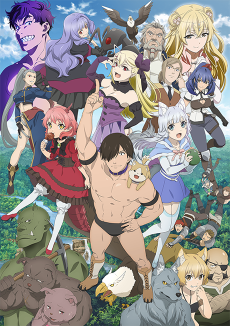
Kemono Michi: Rise Up
📺Anime Details
📝Editorial Analysis
The smell of grilled meat hits first—charred fat sizzling over open flame, smoke curling past a pair of twitching fox ears. Then the thud: Gojou’s bare foot slamming into the dirt as he pivots mid-air, knees bent, arms cocked—not for a spell, not for a sword—but for a suplex. A dragon girl yelps, her tail flailing, before she’s hoisted and driven headfirst into the soft earth with a puff of dust and a crack that sounds suspiciously like a wrestling ring bell. No mana flare. No tragic backstory pause. Just sweat, laughter, and the absurd, radiant rightness of a man who treats monster taming like amateur hour at the local dojo.
That’s the heartbeat of Kemono Michi: Rise Up: a world where fantasy tropes don’t get deconstructed—they get wrestled. Not mocked, not subverted with irony, but embraced with such unselfconscious physicality that the line between “serious” and “silly” dissolves into pure kinetic warmth. It doesn’t feel like escapism—it feels like reclamation. You watch Gojou lock horns with a vampire who insists on dramatic monologues mid-pin, or negotiate treaty terms while arm-wrestling a grumpy bear-girl over miso soup, and something in your chest loosens. It’s playful, yes—but also deeply grounded, because every punch, every tail-flick, every exasperated sigh carries weight. There’s no existential dread here, no looming apocalypse to justify emotional distance. Just creatures—dragons, vampires, kemonomimi—who live, argue, snack, train, and touch each other. Real touch. Warm, clumsy, affectionate, occasionally sweaty touch. That’s the feeling: tactile joy.
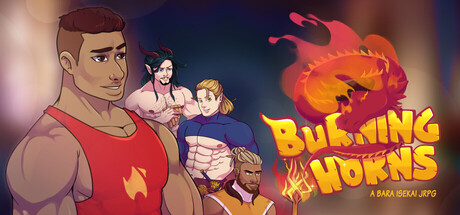
Which is why Burning Horns: A Bara Isekai JRPG lands with such startling resonance—even though its surface reads “Dark Fantasy.” Its score (56) hints at tonal friction, but player reviews consistently praise how it “wraps grim aesthetics in absurd tenderness,” how “the vampire lord spends three cutscenes debating pillow firmness before agreeing to an alliance.” The game’s dim—yes—but its darkness isn’t oppressive; it’s textured, like velvet over muscle. Just like Kemono Michi: Rise Up, it treats intimacy as action: a shared bathhouse scene isn’t fanservice—it’s worldbuilding through steam and shoulder bumps; a boss fight ends not with death, but with the dragon offering to braid your hair after you pin her in the third round. Both refuse to let mood dictate morality. They’re warm in the shadows.
And that warmth isn’t accidental—it’s structural. Kemono Michi: Rise Up’s comedy isn’t built on punchlines, but on embodied presence: the way a werewolf’s nose twitches when distracted by lunch, the precise thump of a rabbit-girl’s ears hitting the mat during a failed reversal, the quiet focus in Gojou’s eyes as he adjusts a training harness on a nervous griffin. It’s slice-of-life with teeth and claws, where “daily life” includes negotiating treaties via sumo matches and resolving disputes with impromptu tag-team bouts. So when players describe Burning Horns as “feeling like living in a cozy, slightly dangerous dorm with your crush and their very large, very affectionate familiar,” they’re naming the same emotional architecture: safety earned through proximity, trust forged in shared physical space—not grand declarations, but breath syncing during sparring, shared silence while mending torn leathers.
Who lives for this? Not just fans of wrestling or kemonomimi. It’s the viewer who misses the weight of another person’s hand on their shoulder after years of apocalyptic stakes and solo journeys. It’s the player who, after grinding through ten hours of grimdark lore, opens a menu just to watch their party members nudge each other aside for the last piece of grilled boar—and feels seen. It’s people who crave stories where love isn’t whispered in ruins, but shouted across a ring, then sealed with a high-five that stings and leaves a red mark. Where “I care about you” means “I’ll spot you on that backflip”—and mean it, physically, without metaphor. That’s the rare, radiant core both Kemono Michi: Rise Up and Burning Horns share: a belief that tenderness isn’t fragile—it’s muscular. And sometimes, the strongest hold is just holding someone close enough to hear their heartbeat sync with yours.
🎮1 Games That Match the Vibe
Match Dimensions Explained
❓Frequently Asked Questions
Why does Burning Horns feel so similar to Kemono Michi: Rise Up in tone?
Because both lean hard into absurd, self-aware parody—like when Burning Horns’ protagonist gets roasted by a sentient horned goat for mispronouncing ‘bara’ (just like Kemono Michi’s Kuroda getting schooled by Mochizuki over ‘kemono’ etiquette). The dark fantasy setting is undercut constantly with slapstick and fourth-wall breaks, and reviewers specifically called out its 'Kemono Michi–level commitment to mocking isekai tropes while loving them.'
Is there an anime or manga adaptation of Burning Horns?
No—Burning Horns is exclusively a standalone JRPG with no anime, manga, or light novel adaptations. Unlike Kemono Michi (which has both anime and manga), Burning Horns was built from the ground up as a satirical game first, and its 56 Metacritic score reflects praise for its tight, game-only storytelling—no expanded media planned.
How does Burning Horns compare to Kemono Michi: Rise Up in terms of combat and character interactions?
Burning Horns ditches Kemono Michi’s visual novel–heavy dialogue trees for turn-based battles where you literally negotiate with enemies mid-fight (e.g., bribing a goblin warlord with cursed ramen instead of fighting)—but keeps the same sharp, banter-driven chemistry between leads like Kuroda/Mochizuki and Burning Horns’ hero/Goat-Overlord duo. Both games reward knowing the lore to unlock joke-based skill upgrades.
What’s the best game like Kemono Michi: Rise Up if I want something chaotic but still heartfelt?
Go straight to Burning Horns—it nails that balance: one moment you’re weeping over a tragic backstory told through a drunken tavern song (featuring the goat bard Lorn), the next you’re accidentally summoning a demon by misreading a spell scroll as a dating profile. Critics said it ‘mirrors Kemono Michi’s emotional whiplash—goofy on surface, weirdly tender underneath,’ especially in scenes where the hero defends his friends using terrible puns as actual battle tactics.