
KONOSUBA -God's blessing on this wonderful world! 3
The third season of Kono Subarashii Sekai ni Shukufuku wo!
The dysfunctional party is back, but they may be short a member soon ’cause Kazuma is over it. Disillusioned with adventure, he wants to become a monk, but Aqua, Megumin, and Darkness call bull. However, the career dispute gets put on hold when a princess requests to hear all about their tales. Will the taste of fame at the royal castle keep them together or will this mark their farewell tour?
(Source: Crunchyroll)
📺Anime Details
📝Editorial Analysis
The smell of burnt toast hangs in the air—not from a kitchen, but from Megumin’s latest explosion, which just vaporized half the royal banquet hall’s tapestry and the princess’s ceremonial teacup. Kazuma is already on his knees, not in prayer, but in frantic, groaning supplication to whatever deity might forgive collateral damage before dessert arrives. Aqua’s shrieking about “sacrilege against pastry,” Darkness is blushing furiously while adjusting her armor away from the smoke, and the princess—still holding her empty saucer—just sighs, smiles, and asks, “So… tell me again how you defeated that dragon with a tax audit?”
That’s KONOSUBA -God's blessing on this wonderful world! 3 in one breath: absurdity so grounded in emotional truth it lands like a slapstick punchline and a quiet ache. It’s not just parody—it’s exhaustion wearing a jester’s hat. Kazuma doesn’t want to be a monk because he’s spiritually awakened; he wants out because he’s tired. Not of magic or monsters—but of being the only one who remembers rent is due and that dragons file quarterly reports. His disillusionment isn’t apathy—it’s the quiet, desperate gasp of someone who’s loved his chaos family too hard to keep pretending it’s sustainable.
What makes this season vibrate with such strange warmth is its refusal to choose between sincerity and satire. The slapstick isn’t just noise—it’s the sound of people fumbling through love they won’t name. The arranged marriage subplot isn’t played for cheap tension; it’s a mirror held up to how deeply these four have entangled their survival, their shame, their laughter—and how terrifying it is to imagine life without the shared language of mutual disaster. You don’t laugh at them—you laugh with the kind of relief that comes when someone finally admits, “Yes, I also cried while folding laundry after saving the kingdom.” It’s fractured, tender, unhinged—a fantasy where heroism looks like arguing over whose turn it is to clean the slime off the floorboards after defeating a god-tier boss.
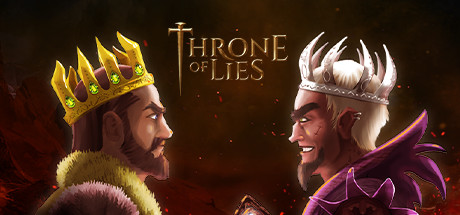
That same emotional DNA pulses in Throne of Lies®: Medieval Politics, where player reviews call it “a JRPG narrative that treats court intrigue like a group project gone horribly right—and horribly wrong.” Its Political Thriller dimension isn’t about cold Machiavellian calculation—it’s about characters constantly misreading each other’s motives, accidentally revealing affection while drafting tax reform proposals, and choosing loyalty over logic because someone remembered your favorite wine during the famine arc. Like Kazuma trying (and failing) to meditate while Aqua hurls sacred water at a pigeon she’s convinced is a spy, Throne of Lies® trades epic stakes for human-scale consequences: a misplaced signature derails a peace treaty; a well-timed joke defuses a duel; a confession slips out mid-debate on grain tariffs. Its Comedy & Parody isn’t detached—it’s born from characters who care too much about things no one else takes seriously, just like Megumin reciting her incantation like scripture while the castle burns behind her.
And then there’s the ensemble cast rhythm—the way KONOSUBA -God's blessing on this wonderful world! 3 lets every character breathe in the margins: Darkness polishing her greaves while listening to Kazuma complain about monastery robes; Aqua drunkenly singing sea shanties in the royal archives, accidentally unlocking an ancient ward; even the dragon—yes, that dragon—showing up not to menace, but to demand royalties for unauthorized use of its likeness on tavern coasters. This isn’t ensemble-as-plot-device. It’s ensemble-as-family, messy and unbalanced and utterly irreplaceable. That texture echoes in how players describe Throne of Lies®’s faction system: “You don’t pick a side—you get adopted by one, warts, rivalries, and all-night strategy sessions fueled by terrible ale.” The game’s JRPG Narrative doesn’t gatekeep emotion behind cutscenes—it bakes it into dialogue trees where choosing to share a meal instead of delivering a speech changes trust meters and unlocks hidden lore about your companion’s childhood fear of bad poetry.
This pairing sings for the viewer who’s ever paused a show to text a friend: “They just made fun of the ‘chosen one’ trope AND made me cry about his student loan debt—how is that legal?” It’s for the player who reloads a save not to win, but to hear one more line of banter between the knight who cries at tax audits and the bard who writes ballads about municipal zoning laws. They’re the ones who recognize fractured as a form of devotion, slapstick as a love language, and disillusionment not as an ending—but the first honest breath before choosing, again, to stay.
🎮1 Games That Match the Vibe
Match Dimensions Explained
❓Frequently Asked Questions
Why is Throne of Lies®: Medieval Politics considered similar to KONOSUBA Season 3?
Because both lean hard into chaotic party dynamics and satirical takes on fantasy tropes—like Kazuma’s deadpan scheming and the Throne of Lies® 'Liar' role, where players bluff like Megumin blowing up everything for dramatic effect. The game’s political backstabbing and sudden tonal whiplash (e.g., a solemn council meeting devolving into slapstick betrayal) mirror Season 3’s tavern brawls and Aqua’s ‘divine’ incompetence.
Is there a Throne of Lies® anime adaptation like KONOSUBA?
No—Throne of Lies® is strictly a multiplayer social deduction game with no anime, manga, or official animated adaptation. Unlike KONOSUBA’s three seasons and films, it lives entirely in its live-service, player-driven chaos: think Discord-organized lynch mobs and voice-chat betrayals instead of studio animation.
How does Throne of Lies® compare to KONOSUBA in terms of humor and tone?
Both weaponize absurdity and self-aware genre deconstruction—KONOSUBA mocks RPG logic with Kazuma’s ‘cheapest resurrection spell’ hustle, while Throne of Lies® mocks medieval power structures with nobles faking divine visions just to get extra dessert privileges. But Throne of Lies® trades anime-style visual gags for real-time, emergent comedy: imagine Megumin yelling ‘EXPLOSION!’ mid-trial, only for three players to simultaneously accuse *her* of being the Demon Lord… and all be wrong.
What’s the best game like KONOSUBA Season 3 if I want that same mix of cringe comedy and high-stakes chaos?
Throne of Lies® is your best bet—it nails the ‘desperate idiots pretending to be competent’ vibe, especially during its ‘Inquisition Phase’ where characters like the corrupt Bishop or paranoid Knight spiral into increasingly unhinged accusations, just like Kazuma trying (and failing) to run a guild while Aqua ‘blesses’ the ale supply. Its 72 Metacritic score reflects how well it balances scripted satire with unpredictable, player-fueled disaster.