
Kuroko's Basketball 2
With the Interhigh Championship finally over, Seirin's basketball team refocuses their efforts, training harder than ever to get the chance to participate in the Winter Cup. Both Kuroko and Kagami see old friends walk back into their lives, providing a challenge both on and off the court.
As new skills are developed and new alliances created, enemies from various teams—giants of high school basketball such as Yousen, Shuutoku and Touou—stand in the way of Seirin's steadfast attempts to get to the top. All of these schools prove to be formidable foes whose abilities progress exponentially, while Kuroko struggles to find a balance between his resolve to play as part of a team and his desire to win.
With old wounds reopening, new challenges to face on the court, and a new set of foes—the "Uncrowned Kings"—vowing to defeat the new hopefuls, will Seirin ever be able to achieve their dream of beating the Generation of Miracles?
(Source: MAL Rewrite)
📺Anime Details
📝Editorial Analysis
The gym floor smells like sweat and old rubber, the fluorescent lights hum just a little too loud, and Kuroko Tetsuya stands perfectly still—no motion, no breath, just presence as absence—while Kagami Taiga explodes past him in a blur of muscle and momentum. That split second before the pass lands: not silence, but tension, thick and electric, where every teammate’s heartbeat syncs to the same rhythm they’ve built through exhaustion, repetition, and quiet trust. It’s not about winning yet—it’s about holding the line together, even when the opponent’s shadow looms larger than life.
What makes Kuroko's Basketball 2 vibrate with such unmistakable energy isn’t its basketball choreography or shounen escalation—it’s the weight of belonging. This is a world where growth isn’t solitary; it’s measured in shared breaths during sprints, in the way a glance across the court replaces ten lines of dialogue, in how rivals become anchors—not because they’re kind, but because they refuse to let you lie to yourself. The “Dissociative Identities” tag isn’t metaphorical flair—it’s structural: Kuroko’s invisibility, Kagami’s raw instinct, Midorima’s precision, Aomine’s defiance—they’re not quirks. They’re psychological architectures forged in competition, each one a response to pressure, expectation, and the terrifying freedom of being seen. You don’t just watch them play—you feel the relief when someone finally names what another has been carrying silently. That’s the atmosphere: urgent, tender, and fiercely communal.
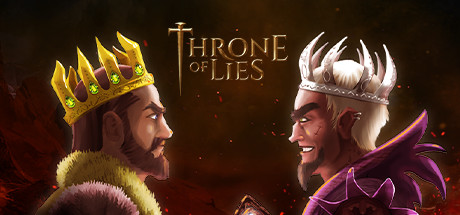
Throne of Lies®: Medieval Politics shares that same competitive spirit—not as spectacle, but as social architecture. Its player reviews cite “JRPG Narrative” alongside “Competitive Spirit,” and that duality mirrors Seirin’s locker room: alliances shift like weather, loyalty is tested not by grand oaths but by who covers your blind spot during a fast break—or who lies to protect your weakness. In Throne of Lies®, deception isn’t villainy—it’s survival strategy, layered and necessary, just like Kuroko’s misdirection or Kagami’s feigned frustration masking vulnerability. Both demand reading people before they speak, trusting intuition over certainty—and both make you ache for the moment when masks drop, not because truth wins, but because exhaustion finally gives way to honesty.
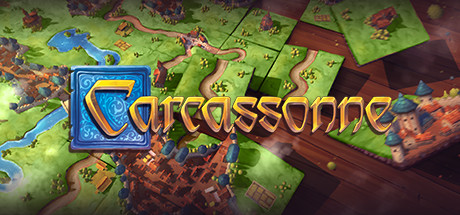
Carcassonne - Tiles & Tactics lands with the same quiet intensity. Its “Competitive Spirit” isn’t shouted—it’s in the millimeter of tile placement, the hesitation before claiming a field, the silent calculation of who benefits most from your move. Like Seirin’s off-season training drills, every action feels deliberate, every point earned feels earned, not gifted. Player reviews highlight “JRPG Narrative”—not story in the traditional sense, but narrative emergence: the tale told by how roads snake toward castles, how monks stand alone while farmers cluster. That’s Seirin’s dynamic in miniature—the way Kuroko’s passes build invisible pathways, how Hyuga’s leadership isn’t command but continuity, how even rivalry with Yousen or Shuutoku becomes part of a larger, unfolding map of growth. No single tile defines the board. No single game defines the season. It’s all accumulation.
STAR WARS™: The Old Republic™, with its identical score and dimensions, taps into the same emotional core: identity forged in opposition. Its “JRPG Narrative” doesn’t just deliver lore—it forces alignment choices that reshape relationships, not through cutscenes, but through consequence-laden dialogue trees and companion reactions. That’s Kuroko facing Murasakibara again—not as a rematch, but as a reckoning with his own definition of strength. It’s Kagami confronting his past self in Touou’s shadow, realizing power isn’t dominance—it’s responsibility. The game’s competitive spirit lives in faction tension, yes—but more deeply, in the quiet friction between who you were trained to be and who you choose to become. Just like Seirin’s Winter Cup prep: less about trophies, more about who shows up when the lights dim and the crowd fades.
This pairing sings for the viewer who replays the same five-minute sequence three times—not to memorize plays, but to catch the flicker in Kuroko’s eyes when he chooses to be seen. For the player who spends twenty minutes negotiating a truce in Throne of Lies® not to win, but to understand the other’s fear. For the one who saves before every companion conversation in SWTOR, not out of perfectionism, but because what you say matters—not to the plot, but to the person listening. These aren’t stories about victory. They’re about showing up, again and again, in the same room, with the same people, until the weight of being known stops feeling like exposure—and starts feeling like home.
🎮3 Games That Match the Vibe

Match Dimensions Explained
❓Frequently Asked Questions
Why does Kuroko's Basketball 2 feel so much like Throne of Lies® even though one's about basketball and the other's medieval politics?
Because both lean hard into 'Competitive Spirit' — think Kuroko’s intense, high-stakes matches where characters like Kagami and Kise clash under pressure, mirrored in Throne of Lies®’s tense backstabbing rounds where alliances shift mid-game like a sudden alley-oop reversal. The JRPG Narrative dimension also connects them: just as Kuroko’s story unfolds through emotional cutscenes and character growth arcs, Throne of Lies® delivers layered lore and faction-driven storytelling between rounds.
Is there an anime-style RPG adaptation of Kuroko's Basketball 2 with voice acting and visual novel elements?
No — Kuroko's Basketball 2 itself isn’t an anime adaptation or visual novel; it’s a sports sim. But if you’re craving that anime-RPG vibe with voiced drama and narrative depth, STAR WARS™: The Old Republic™ nails it: full voice acting, branching dialogue (like Asuma’s mentorship moments), and cinematic cutscenes that hit the same emotional beats as Kuroko’s locker-room speeches or Tetsuya’s silent resolve scenes.
How do Carcassonne - Tiles & Tactics and Kuroko's Basketball 2 compare when it comes to team strategy and reading your opponent?
Both reward razor-sharp anticipation: in Kuroko’s ‘Misdirection’ plays, you time passes based on opponents’ positioning — just like Carcassonne’s tile placement, where you block rivals’ city expansions by predicting their next move (e.g., denying a 4-tile cathedral by dropping a road tile at the perfect moment). Their shared 'Competitive Spirit' dimension means every decision feels like a psychological duel — no RNG, just pure read-and-react tension.
What’s the best game like Kuroko's Basketball 2 if I want that hype, fast-paced energy but without needing real-time reflexes?
Carcassonne - Tiles & Tactics — it captures the same electric pacing and tactical escalation (think Seirin vs. Rakuzan’s momentum swings) but in thoughtful, turn-based bursts. You’ll still get that ‘oh snap!’ thrill when you complete a massive field or sabotage an opponent’s scoring play — just with time to savor the setup, like watching Kuroko calculate his phantom pass before it happens.