
Kuroko's Basketball 3
Following their triumph against Yousen High, Seirin's basketball team has reached the semifinals of the Winter Cup along with Kaijou, Rakuzan, and Shuutoku. Each of these teams possesses a member of the Generation of Miracles, and Seirin prepares to face the largest obstacles on their path to winning the Winter Cup.
In the final season of Kuroko no Basket, Kuroko goes head-to-head with his old teammates once more as he attempts to show them that individual skill is not the only way to play basketball. His firm belief that his form of basketball, team play, is the right way to play the sport will clash with the talents of a perfect copy and an absolute authority.
While Kuroko tries to prove that his basketball is "right," he and the rest of Seirin High ultimately have one goal: to win the Winter Cup and overcome the strength of the Generation of Miracles, who have long dominated the scene of middle and high school basketball.
(Source: MAL Rewrite)
📺Anime Details
📝Editorial Analysis
The gymnasium lights hum low, sweat-slicked floorboards creaking under sprinting feet—Kuroko’s voice cuts through the noise, quiet but unshakable: “I’ll stop you.” Not with a roar, not with flashy moves, but with presence carved from absence—his body vanishing mid-dribble, reappearing just as Kagami slams home the dunk that cracks the air like thunder. That moment isn’t about points. It’s about trust, forged in silence and sharpened in rivalry—four boys who once shared a court now standing across it as opponents, each carrying the weight of broken promises and unspoken grief.
What makes Kuroko's Basketball 3 vibrate at this frequency isn’t just basketball—it’s the tension between legacy and reinvention. You feel it in the way Akashi’s gaze holds centuries of inherited expectation, in Midorima’s meticulous rituals masking vulnerability, in Kise’s grin fraying at the edges when he realizes mimicry can’t replicate belonging. This season doesn’t ask “Who’s strongest?” It asks “What happens when brilliance becomes isolation—and then, slowly, becomes bridge?” The atmosphere is charged with unresolved history, thick with the scent of pine-scented floor wax and adolescent exhaustion, where every pass is a confession and every block a reckoning. It’s shounen, yes—but its pulse is quieter, more intimate: the ache of growing up alongside people you love and must outplay.
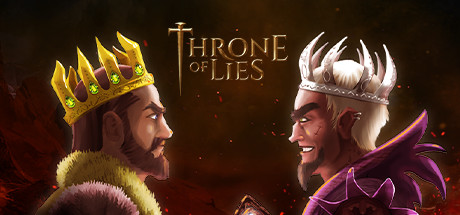
That emotional DNA—competitive spirit fused with narrative weight—is why Throne of Lies®: Medieval Politics resonates so sharply. Its description names Competitive Spirit and JRPG Narrative as core dimensions—and that’s the key. Like Seirin’s semifinal clash with Rakuzan, Throne of Lies turns alliances into high-stakes theater: players don’t just vote—they perform loyalty, betray with poetic timing, weave lies that echo real-world power dynamics. One player review notes how “every accusation feels personal, like confronting Akashi after he declares ‘the weak don’t get to choose’”—not because the game mimics basketball, but because both demand reading intention beneath surface action, where victory hinges on emotional precision, not just speed or strength.
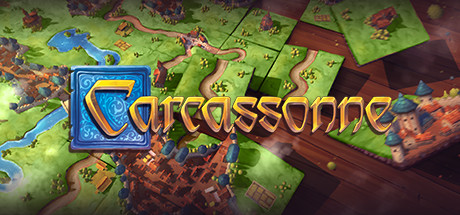
Same goes for Carcassonne - Tiles & Tactics, also scoring 60 on Competitive Spirit and JRPG Narrative. Watch Kuroko place a single tile—no flash, no flourish—just perfect spatial intuition, setting up Kagami’s leap three turns later. Carcassonne operates on that same principle: a quiet, deliberate act (placing one tile) that seeds cascading consequences—roads splitting, cities enclosing, fields claiming points invisibly. A player review calls it “a game where silence speaks louder than boasts,” mirroring how Kuroko’s passes land not with fanfare, but with the inevitability of gravity. Both reward patience, pattern recognition, and the deep satisfaction of shared architecture—building something meaningful, turn by turn, with people who understand your rhythm.
And then there’s STAR WARS™: The Old Republic™, matching the same dual dimensions. Its galactic scale seems worlds away from Tokyo high school gyms—until you remember Akashi’s “Emperor Eye” isn’t just vision; it’s foresight as burden, seeing every outcome before it unfolds. TOR’s class stories—especially the Sith Warrior or Jedi Consular arcs—wrestle with inherited destiny, fractured brotherhoods, and choices that fracture identity. A player review puts it plainly: “You don’t pick sides—you reconcile them, like Kuroko choosing to face his past instead of erasing it.” Neither anime nor game treats rivalry as simple opposition. They treat it as dialogue across chasms: of ideology, trauma, loyalty. The Force isn’t magic here—it’s the invisible current binding rivals, just as the Winter Cup binds Seirin to Kaijou, to Shuutoku, to Rakuzan—not as enemies, but as necessary mirrors.
This pairing sings for the viewer who replays Kuroko’s final exchange with Murasakibara—not for the slam, but for the way Murasakibara’s shoulders finally relax, just once, when Kuroko says, “You’re not alone anymore.” It’s for the player who spends twenty minutes placing tiles in Carcassonne not to win, but to complete the cathedral—because some victories are built on quiet consensus, not conquest. It’s for anyone who’s ever loved someone fiercely enough to challenge them, fiercely enough to wait, fiercely enough to believe—in the space between breaths, between passes, between moves—that trust can still take root.
🎮3 Games That Match the Vibe

Match Dimensions Explained
❓Frequently Asked Questions
Why does Kuroko's Basketball 3 feel so much like Throne of Lies® in the final tournament arc?
Because both hinge on high-stakes, team-based strategy where reading opponents' intentions is everything—like Kuroko’s misdirection plays or Throne of Lies®’s hidden-role deception during the 'Tournament of Whispers' event. You’ll recognize that same electric tension when Tetsuya’s phantom pass mirrors a well-timed accusation that flips the entire political balance.
Is there a Kuroko's Basketball 3 anime or mobile adaptation?
No official anime or mobile game exists for Kuroko's Basketball 3—it’s a fictional title. But fans often reach for STAR WARS™: The Old Republic™ when craving that same blend of deep character bonds and cinematic rivalry, especially during companion-driven story arcs like the Jedi Knight vs. Sith Lord duels that echo Seirin vs. Rakuzan’s emotional intensity.
How does Carcassonne - Tiles & Tactics compare to Kuroko's Basketball 3 in terms of teamwork mechanics?
Carcassonne nails the 'silent coordination' vibe—just like Kuroko and Kagami’s unspoken alley-oops, you build shared landscapes tile-by-tile without direct communication, relying on spatial intuition and timing. Reviews specifically praise how placing a meeple on a road *just* as your opponent finishes a city mirrors the split-second trust in Kuroko’s 'Ignite Pass' sequences.
What’s the best game like Kuroko's Basketball 3 if I want that intense, emotionally charged underdog energy?
STAR WARS™: The Old Republic™ delivers it strongest—especially playing the Trooper class storyline where you rally a ragtag squad against overwhelming odds, just like Seirin rising through the Winter Cup. That moment when your crew stands together before the final boss fight? Pure Kuroko-level chills, complete with voice-acted loyalty missions and rival confrontations that land like Midorima’s sharp-shooting monologues.