
Legend of the Galactic Heroes
For decades, the Galactic Empire has been locked in an interstellar war with the Free Planets Alliance, a conflict that involves thousands of spaceships and millions of soldiers on both sides. Two new commanders enter the conflict with great hopes: Imperial Admiral Reinhard von Lohengramm and the FPA's Yang Wen-Li. As they deal with superiors and subordinates, maneuver through complicated political arrangements, plot strategies, and win battles, each will be tested, and ultimately, changed, by the reality of war.
(Source: Anime News Network)
📺Anime Details
📝Editorial Analysis
The bridge of the Attila shudders—not from impact, but from silence. Reinhard von Lohengramm stands motionless as reports flood in: another fleet obliterated, another world pacified, another loyal officer dead not to enemy fire but to imperial intrigue. No triumphant music swells. No close-up lingers on his face. Just the low hum of machinery, the flicker of tactical displays, and the weight of a victory that tastes like ash. That silence—that unbearable, resonant stillness—is where Legend of the Galactic Heroes lives.
It doesn’t feel like war as spectacle. It feels like war as erosion: of ideals, of time, of people. You don’t cheer the battles—you watch them unfold with the dread of someone reading an autopsy report mid-surgery. The scale is cosmic—thousands of ships, millions of lives—but the focus is relentlessly human: a staff officer calculating casualty ratios while wondering if his sister survived the last bombardment; a politician drafting a peace treaty he knows will be voided before ink dries; Yang Wen-Li staring at a star chart not as a strategist, but as a man who’s already buried too many friends in vacuum. There’s no hero’s journey here—only trajectories bending under gravity you can’t see: bureaucracy, legacy, grief, the slow, grinding pressure of systems too vast to reform and too entrenched to break. It makes you feel exhausted, hollow, resigned—and yet, weirdly, awake. Like staring into a mirror held up to history and recognizing your own reflection in the cracks.
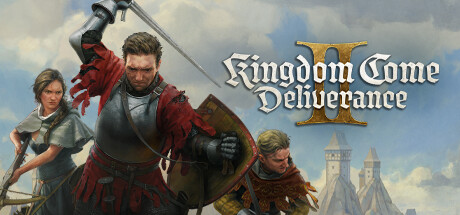
That emotional DNA—the quiet devastation of principled people failing within flawed institutions—echoes unmistakably in Kingdom Come: Deliverance II, whose description names it outright: Political Thriller, Tactical Warfare, Emotional Narrative. Not fantasy escapism, but a world where every sword swing carries consequence, every alliance is transactional, and every “victory” leaves scars on land and soul. Player reviews call it “a story where winning feels like losing,” mirroring how Reinhard’s ascension hollows him out or how Yang’s brilliance isolates him further. The tactical warfare isn’t about flashy combos—it’s about fatigue, terrain, supply lines, and the brutal arithmetic of attrition, just like LOGH’s fleet engagements where logistics decide battles more than lasers do. And the Emotional Narrative? It’s not in monologues—it’s in a peasant’s trembling hands as he’s forced to swear fealty, in the way Henry’s voice cracks when he lies to protect someone he loves—exactly the kind of understated, aching humanity that makes Yang’s final moments land like a physical blow.
This resonance isn’t accidental. Both works treat power not as a tool but as a corrosive medium: something that distorts vision, bends loyalty, and turns even noble intentions into instruments of control. They share a moral architecture where compromise isn’t weakness—it’s the only breathing room left in a collapsing system. Where characters aren’t defined by what they achieve, but by what they withhold, what they refuse to become, what they carry silently across decades of service. That shared texture—the weight of duty without glory, the dignity of endurance without reward—is why Kingdom Come: Deliverance II lands with such uncanny familiarity for anyone who’s watched Reinhard walk alone through the Imperial Palace after the Goldenbaum Dynasty falls, or seen Yang quietly erase his own name from the official record of a battle he won.
You’d love this pairing if you’ve ever paused a scene—not to admire the animation, but because the silence between lines made your chest tighten. If you replay a game not for loot or leveling, but to hear a side character’s offhand remark about harvest yields—and realize it’s the only moment they mention their dead child. If you’re drawn to stories where the most devastating line isn’t shouted in anger, but whispered over tea, heavy with everything unsaid. This isn’t for fans of catharsis. It’s for those who find truth in weariness, meaning in maintenance, and profound beauty in the stubborn, unglamorous act of staying human—even as galaxies burn, empires crumble, and the only thing left standing is the quiet, unbroken gaze of someone who remembers what mercy looks like.
🎮1 Games That Match the Vibe
Match Dimensions Explained
❓Frequently Asked Questions
Why is Kingdom Come: Deliverance II recommended for Legend of the Galactic Heroes fans?
Because both hinge on intricate political maneuvering where characters like Reinhard von Lohengramm and Henry of Skalitz rise through calculated alliances—not just brute force. KC:DII’s Tactical Warfare system mirrors LoGH’s fleet-level command decisions, like choosing when to feint at Rattay’s gates instead of a direct assault, while its Emotional Narrative delivers the same weighty moral ambiguity as the Battle of Amritsar.
Is there a Legend of the Galactic Heroes video game adaptation?
No official LoGH video game exists—only anime, novels, and manga. That’s why fans turn to Kingdom Come: Deliverance II (score 73), which channels LoGH’s core DNA: layered faction politics, morally gray leadership choices, and large-scale battles where strategy trumps spectacle—like negotiating with the Burgrave of Uzhitz while managing troop fatigue across Bohemian provinces.
How does Kingdom Come: Deliverance II compare to Mount & Blade II: Bannerlord for LoGH-style storytelling?
Bannerlord leans into sandbox chaos and emergent empire-building, while KC:DII commits hard to Political Thriller pacing—think tense council scenes with Lord Capon mirroring the Imperial Court’s power plays, or tactical pauses mid-battle that echo Yang Wen-li’s calm recalculations before the Iserlohn Fortress siege. It’s LoGH’s tone, not just scale, that KC:DII nails.
What’s the best game like Legend of the Galactic Heroes if I want slow-burn political tension and emotional weight?
Kingdom Come: Deliverance II is your pick—it’s built for exactly that vibe. You’ll feel the quiet dread of Henry’s loyalty crisis like Reinhard’s isolation after the coup, or the gut-punch of a failed negotiation with the Church echoing the New Galactic Empire’s fragile legitimacy. Its 73 Metacritic score reflects how well it balances Tactical Warfare with raw Emotional Narrative.