
Log Horizon: Destruction of the Round Table
The third season of Log Horizon.
It’s been a year since Shiroe and his friends were trapped in Akiba due to the Catastrophe. Their forging of the Round Table has brought order and prosperity to its people. But fracturing political alliances and the constant menace of the Genius monsters threaten to destabilize all they’ve fought for and built. Can faith be restored and they persevere, or is its destruction truly inevitable?
(Source: Funimation)
📺Anime Details
📝Editorial Analysis
The scent of burnt parchment and damp earth hangs in the air—not from a battlefield, but from the council chamber in Akiba’s rebuilt guild hall. Shiroe traces a finger along the cracked edge of the Round Table’s surface, his voice low, measured, not with authority but exhaustion. Around him, allies shift in their seats: a kemonomimi diplomat tenses her ears; an assassin watches the rafters, not the speakers; a merchant’s ledger lies open beside a half-drawn map of contested farmlands. No grand spell flares. No sword is drawn. Just silence thick with the weight of trust—fragile, fraying, desperately held.
That’s the heart of Log Horizon: Destruction of the Round Table: not the spectacle of magic or monster-slaying, but the quiet, grinding labor of keeping faith alive. It’s the feeling of building something real—laws, trade routes, shared meals—only to watch it tremble under the strain of human doubt and systemic rot. You don’t feel heroic here. You feel responsible. You think about how infrastructure isn’t just pipes and roads—it’s trust encoded in contracts, enforced by reputation, sustained by daily choices. The fantasy isn’t dragons or spells; it’s the possibility that cooperation can outlast betrayal—that economics, politics, and empathy might be the most potent magic of all.
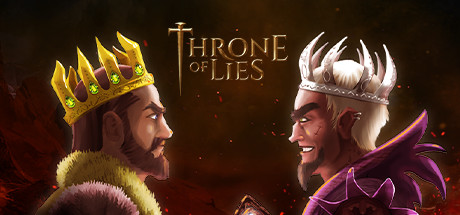
Throne of Lies®: Medieval Politics resonates with this exact frequency. Its official description names it a Political Thriller nested inside a JRPG Narrative—and that duality mirrors Log Horizon: Destruction of the Round Table’s core tension. In both, power isn’t seized in duels but negotiated over grain quotas, whispered alliances, and the careful framing of public statements. Player reviews for Throne of Lies® repeatedly praise its “unrelenting moral ambiguity” and “consequences that ripple across seasons”—not unlike how a single misstep in Akiba’s diplomacy triggers supply shortages, refugee flows, and fractured guild loyalties. The genius monsters aren’t just boss fights; they’re systemic pressures—like inflation, drought, or misinformation—forcing characters to choose between short-term survival and long-term cohesion. That’s why players describe Throne of Lies® as “feeling like you’re governing, not just questing”: same as Shiroe drafting emergency ration protocols while listening to a bard sing ballads about broken oaths.
The ensemble cast tag isn’t decorative—it’s structural. Every major character carries economic or political weight: the kemonomimi diplomat negotiates resource treaties; the assassin mediates between outlaw factions and city watch; even the male protagonist’s intellect is weaponized not in combat, but in forecasting market collapse. That interdependence echoes in how Throne of Lies® forces players to manage faction reputations, trade embargoes, and succession crises—all while knowing no one is purely loyal, and no decision is isolated. One review nails it: “You don’t win by being strongest—you win by being least hated when the next crisis hits.” Exactly like Akiba’s fragile peace.
This pairing isn’t for fans of power fantasies or lone-wolf triumphs. It’s for the viewer who leans forward when Shiroe pauses mid-sentence—not waiting for a spell, but wondering if he’ll revise his proposal to include the leatherworkers’ union. It’s for the player who spends twenty minutes debating whether to publicly censure a corrupt steward or quietly replace him, knowing either choice will shift three guilds’ voting blocs. They’re people who find dignity in bureaucracy, tension in tax reform, and catharsis not in victory—but in the quiet moment after a hard-won compromise, when someone finally passes the salt across the table without looking away. They love stories where the real magic isn’t in the wand—it’s in the will to sit down, again and again, and try to rebuild the table.
🎮1 Games That Match the Vibe
Match Dimensions Explained
❓Frequently Asked Questions
Why is Throne of Lies®: Medieval Politics compared to Log Horizon's political intrigue?
Because both dive deep into backstabbing alliances and factional power plays—like when Shiroe negotiates the Round Table's charter, Throne of Lies has players roleplay as nobles scheming in a medieval court, forging temporary pacts while plotting betrayals. Its 82-scored 'Political Thriller' dimension mirrors Log Horizon’s emphasis on diplomacy over dungeon-crawling, not just combat.
Is there an anime or manga adaptation of Throne of Lies®: Medieval Politics?
No—Throne of Lies® is an original indie game with no anime, manga, or light novel adaptations. Unlike Log Horizon (which has multiple anime seasons and novels), it stands alone as a self-contained JRPG Narrative experience focused on player-driven politics.
How does Throne of Lies®: Medieval Politics compare to Log Horizon in terms of party-building mechanics?
Log Horizon leans on structured guild roles (like Shiroe’s strategist or Nyanta’s tank), while Throne of Lies® ditches classes entirely—your 'party' is built through shifting political alliances: one moment you’re allied with the Blacksmith Guild against the Church, the next you’re leaking secrets to the Royal Spies. It’s less about DPS/tank/healer synergy and more about trust meters and rumor systems.
What’s the best game like Log Horizon if I want that slow-burn, cerebral vibe of rebuilding society after the apocalypse?
Throne of Lies®: Medieval Politics—it nails that same grounded, thoughtful energy: no flashy magic explosions, just tense council-room negotiations, resource scarcity, and moral compromises (like choosing whether to execute a traitor or use them as leverage). Its 82-scored 'JRPG Narrative' layer delivers Log Horizon’s weighty worldbuilding without needing a fantasy MMO setting.