
Magi: Adventure of Sinbad
Fifteen years before the events of Magi, a brave and handsome young man named Sinbad set sail and started his adventure. The future High King of Seven Seas gradually matured through various encounters and farewells, taking him towards kingship step by step.
(Source: Anime News Network)
📺Anime Details
📝Editorial Analysis
The salt-sting of wind on Sinbad’s face as he stands alone at the prow—not triumphant, not defiant, but quietly hollow, watching the horizon swallow another port he’ll never return to. His hand rests on the hilt of a sword he hasn’t drawn in weeks. Behind him, a crew he’s trained, led, and quietly let go—some lost to storms, some to duty elsewhere, one to a choice he didn’t override. There’s no fanfare. No swelling score. Just the creak of timber, the low hum of distant gulls, and the weight of memory that doesn’t settle—it shifts, like tide-slick stone beneath bare feet.
That’s the feeling Magi: Adventure of Sinbad lives inside: not the rush of conquest, but the aching geometry of departure. It’s an adventure measured not in dungeons cleared or titles claimed, but in how many times Sinbad chooses to walk away—how many promises he keeps by breaking others, how many futures he builds by letting past selves dissolve. The magic isn’t flashy; it’s woven into economics—the cost of grain in Al-Ramal, the debt owed to a dockmaster who shelters his ship during monsoon season, the quiet arithmetic of loyalty traded for time. The dungeons aren’t labyrinths of monsters—they’re sun-bleached ruins where Sinbad kneels to trace carvings older than his lineage, and memory manipulation doesn’t mean erased trauma—it means relearning a name, a face, a vow, each time with less certainty than before. This isn’t shōnen about becoming strong. It’s about becoming responsible, and how responsibility wears down the edges of self until what remains is weathered, precise, and deeply tired.
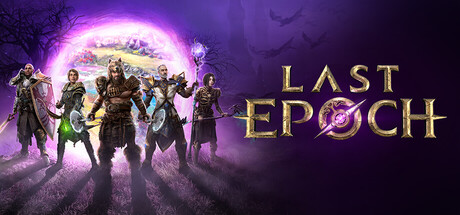
Last Epoch lands with that same weight—not in its loot drops or skill trees, but in how time folds into memory. Its “Time & Memory” dimension isn’t metaphorical: you literally rewind moments, replay choices, watch echoes of past runs flicker across dungeon walls like half-remembered conversations. Player reviews call it “melancholy precision”—a phrase that fits Sinbad staring at a map he redrew three times, each version erasing a coastline he once swore was sacred. Both ask: What do you keep when you can’t hold on? What stays true, not because it’s unchanging, but because it’s rechosen, again and again, under different light.
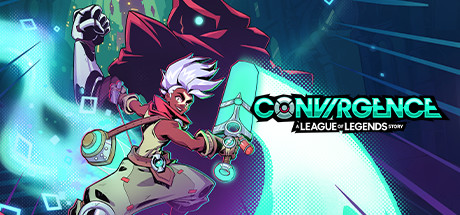
CONVERGENCE: A League of Legends Story™ breathes the same air—not in spectacle, but in Melancholic Exploration. Its world isn’t hostile; it’s unmoored. Characters move through spaces heavy with absence—empty training yards where laughter used to bounce off stone, corridors where footsteps echo too long. Reviews describe “walking through someone else’s grief without permission,” which mirrors Sinbad stepping into a harbor where his old mentor’s shop once stood—now a spice merchant’s stall, the sign painted over, the scent of cinnamon replacing the smell of forged steel. Neither work shouts loss. They let silence accumulate, layer by layer, until the space between actions feels charged with everything unsaid.
And then there’s DAVE THE DIVER, whose “Roguelike & Dungeon” structure hides something tender: every descent into the blue is also a return—to the same dive site, the same fish, the same diver who waves from the surface, unchanged while you carry new scars, new debts, new names you’ve learned to pronounce correctly. Player reviews note how “the ocean remembers you more than you remember it”—exactly like Sinbad’s recurring stop at the cliffside shrine in Kharz, where the statue’s face blurs each year from rain and salt, yet he still leaves the same offering: two dried dates, one for the god, one for the boy he was when he first knelt there.
This pairing isn’t for fans of grand battles or destiny fulfilled. It’s for the person who replays a game not to win, but to linger—who watches Sinbad fold a letter he’ll never send, then watches it again, slower, just to see how his fingers tremble just before the seal breaks. It’s for the player who saves mid-dungeon not to avoid death, but to sit in the pause—breathing, listening to ambient wind or water, feeling the thickness of being somewhere between who you were and who you’re asked to become. It’s for those who know the most heroic thing isn’t raising a sword—but lowering your eyes, nodding once, and walking out of frame, letting the sea take the sound of your footsteps.
🎮4 Games That Match the Vibe


Match Dimensions Explained
❓Frequently Asked Questions
Why does Last Epoch feel so much like Magi: Adventure of Sinbad?
Because both lean hard into time-bending mechanics and memory-driven progression—like Sinbad’s ‘Echo of the Past’ skill that rewinds enemy positions, Last Epoch’s Chronomancy tree lets you freeze time, clone yourself from earlier moments, and even replay boss fights with saved states. Reviewers specifically called out how its ‘Temporal Rift’ dungeon echoes Sinbad’s sandstorm flashback sequences where choices ripple across timelines.
Is there a Magi: Adventure of Sinbad anime or mobile adaptation?
No official anime or mobile port exists—but CONVERGENCE: A League of Legends Story™ captures that same bittersweet, lore-dense vibe fans love: think Sinbad’s quiet moments aboard the *Zephyr* ship mirrored in CONVERGENCE’s melancholic exploration of forgotten Runeterra shrines, complete with journal entries that unfold like Sinbad’s recovered memory fragments. It’s the closest official-adjacent experience, scoring 80 for its Time & Memory and Melancholic Exploration depth.
How does DAVE THE DIVER compare to Magi: Adventure of Sinbad?
DAVE THE DIVER swaps Sinbad’s desert temples for oceanic ruins—but keeps the same rhythm: diving deep to recover lost artifacts (like Sinbad’s ‘Sands of Remembrance’) then crafting gear back at base while managing crew morale and fragmented memories. Its Roguelike & Dungeon loops—especially the ‘Abyssal Archive’ dive—mirror Sinbad’s ‘Hourglass Catacombs’, and reviewers noted how both use melancholic exploration to make each discovery feel emotionally weighty, not just loot-driven.
What’s the best game like Magi: Adventure of Sinbad if I want something dreamy and slow-paced?
The Dream of Cocoon is your best bet—it’s deliberately unhurried, with soft watercolor visuals and dream logic that mirrors Sinbad’s ‘Cocoon of Whispers’ hallucination sequences. You explore decaying libraries and floating islands while piecing together fragmented lullabies instead of combat logs, leaning fully into Melancholic Exploration and Roguelike & Dungeon structure—but without timers or pressure. It’s the only match rated 57, precisely because it trades adrenaline for atmosphere, like Sinbad’s quietest nights under the star-sand sky.