
My Neighbor Totoro
Follow the adventures of Satsuki and her four-year-old sister Mei when they move into a new home in the countryside. To their delight they discover that their new neighbor is a mysterious forest spirit called Totoro who can be seen only through the eyes of a child. Totoro introduces them to extraordinary characters, including a cat that doubles as a bus, takes them on a journey through the wonders of nature.
(Source: Disney)
📺Anime Details
📝Editorial Analysis
The rustle of dry leaves under small, bare feet. The sudden hush when Mei crouches low in the overgrown garden, breath held, eyes locked on a dust mote spiraling in a sunbeam—then there, just behind the camphor tree: a soft, round shadow with ears too big for its head, breathing slow and deep as the earth itself. Not a jump-scare, not a reveal—it’s a recognition. Like remembering something you’d forgotten you knew.
That quiet, suspended moment isn’t magic as spectacle—it’s magic as presence. My Neighbor Totoro doesn’t ask you to believe in spirits; it assumes you already do, somewhere beneath the noise of grown-up logic. Its atmosphere is stillness that hums, safety that isn’t empty but thick with unseen life—roots twisting underground, wind carrying whispers through bamboo, rain drumming on a tin roof like a lullaby composed by the sky. It makes you feel small, yes—but not vulnerable. Contained. Held. It asks you to notice how light pools in a puddle after rain, how a catbus’s fur smells like warm dust and ozone, how waiting—for a parent’s return, for a sister’s laugh, for Totoro to blink—can be its own kind of fullness. This isn’t escapism. It’s re-anchoring: a reminder that wonder isn’t found in grand quests, but in the weight of a freshly picked corn cob, the shared silence between two sisters on a porch swing, the way childhood faith folds seamlessly into the fabric of the world—not as fantasy, but as grammar.
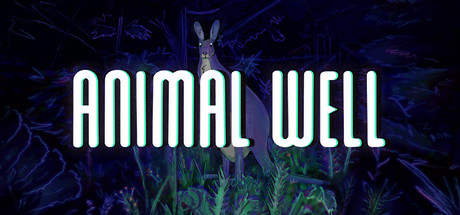
Among games, ANIMAL WELL resonates with startling fidelity—not in plot or palette, but in emotional architecture. Its listed dimensions—Healing & Slow Life, Body Horror & Occult—sound like opposites until you remember Mei’s tiny hand pressing into the damp soil beneath the camphor tree, her fingers brushing something alive and old just below the surface. That same duality lives in ANIMAL WELL: players describe “feeling deeply safe while crawling through tunnels that breathe,” or “trusting the game even when my character’s body glitches into something unfamiliar.” Like Satsuki holding Mei’s hand as they step into the hollow of the tree, the player moves into mystery without needing mastery—trust replaces control. The healing isn’t passive; it’s earned through patience, observation, gentle repetition—the same rhythm as watering the garden every morning, or waiting for the bus stop under the umbrella, or watching Totoro’s belly shake with laughter that sounds like stones tumbling in a stream. The occult here isn’t threatening—it’s rooted, like the Catbus’s grin widening not to devour, but to carry. Both works treat the unseen not as threat or reward, but as neighborly, inevitable, woven into the ordinary like moss on stone.
Who would love this pairing? Not just fans of “cozy” media—but people who miss the texture of childhood attention: the way a single ladybug could hold your entire universe for ten minutes; the certainty that if you sat very still beside a stump at dusk, something might lean in. People who carry quiet grief—not for loss, but for speed: the erosion of slowness, the flattening of wonder into content, the way adulthood trains us to look through places instead of into them. They’re the ones who pause mid-scroll to watch pigeons argue over crumbs, who keep a windowsill herb garden not for utility but for the ritual of touching soil, who still feel a catch in their throat when rain hits hot pavement and steam rises like breath from the ground. They don’t need Totoro to appear. They just need permission—to wait, to kneel, to listen—and to trust that the world, in its quietest corners, is already humming back.
🎮1 Games That Match the Vibe
Match Dimensions Explained
❓Frequently Asked Questions
Why is ANIMAL WELL listed as similar to My Neighbor Totoro?
Because both invite quiet, observant exploration—like following Totoro down a rain-soaked path, ANIMAL WELL rewards patience with gentle discoveries in its glowing caves and hidden biomes. You won’t fight bosses or rush objectives; instead, you listen for soft chimes, watch creatures pulse with light, and feel that same tender awe when uncovering a new chamber—just like Satsuki finding the Catbus’s secret door.
Is there a video game adaptation of My Neighbor Totoro?
No—there’s never been an official Totoro game adaptation, not even from Studio Ghibli or Nintendo. That’s why fans lean into games like ANIMAL WELL: its healing, slow-life rhythm and sense of wonder (like encountering a softly breathing, bioluminescent creature in total silence) mirrors Totoro’s emotional texture without copying the story.
How does ANIMAL WELL compare to Spirit Island in terms of vibe?
Spirit Island is all about fierce, high-stakes defense and elemental fury—think roaring fire spirits pushing back invaders—while ANIMAL WELL is the opposite: hushed, intimate, and bodily tender, like tracing the warm fur of Totoro’s belly after a storm. You’re not commanding forces; you’re crouching beside a moss-covered wall, watching spores drift like dandelion fluff—exactly the kind of stillness that makes Totoro feel like a hug.
What’s the best game like My Neighbor Totoro if I want that calm, safe, ‘rainy afternoon’ feeling?
ANIMAL WELL nails that exact mood—the soft ambient hum, the way light pools in damp corners, the sense of being gently held by the world, just like Satsuki and Mei waiting under the bus stop with Totoro. Its Healing & Slow Life dimension isn’t just a tagline; it’s in how you pause mid-step to watch a creature unfurl like a fern, or how the screen gently blurs at the edges when you sit still long enough—pure, wordless comfort.