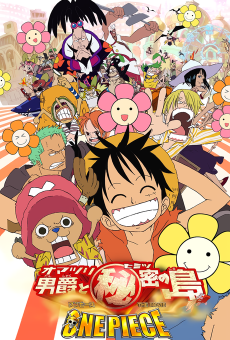
One Piece: Baron Omatsuri and the Secret Island
The Straw Hat crew obtain an advertisement for a recreational island on the Grand Line run by the Baron Omatsuri. Luffy decides to take this opportunity to kick back and relax. Unfortunately, when they arrive at the island, they are asked to compete in contests through unity for access to relaxation. However, there seems to be a mysterious air on the island, as the Straw Hat Pirates begin to fight amongst themselves, while Robin, Chopper, and Luffy individually search for the secret behind Baron Omatsuri's island.
(Source: Anime News Network)
📺Anime Details
📝Editorial Analysis
The scent of salt and burnt sugar hangs thick in the air as Luffy’s straw hat tilts back—just for a second—while he watches Robin step into the fog-shrouded archway of Baron Omatsuri’s island. Her fingers brush the moss-covered stone, not with curiosity, but with recognition. Not of place, but of loss. That pause—so quiet it almost drowns beneath the cheerful carnival music piped through hidden speakers—is where the warmth cracks. The island smiles too wide. The laughter echoes just a beat too long. And you feel it: the slow, cold slide from vacation to violation.
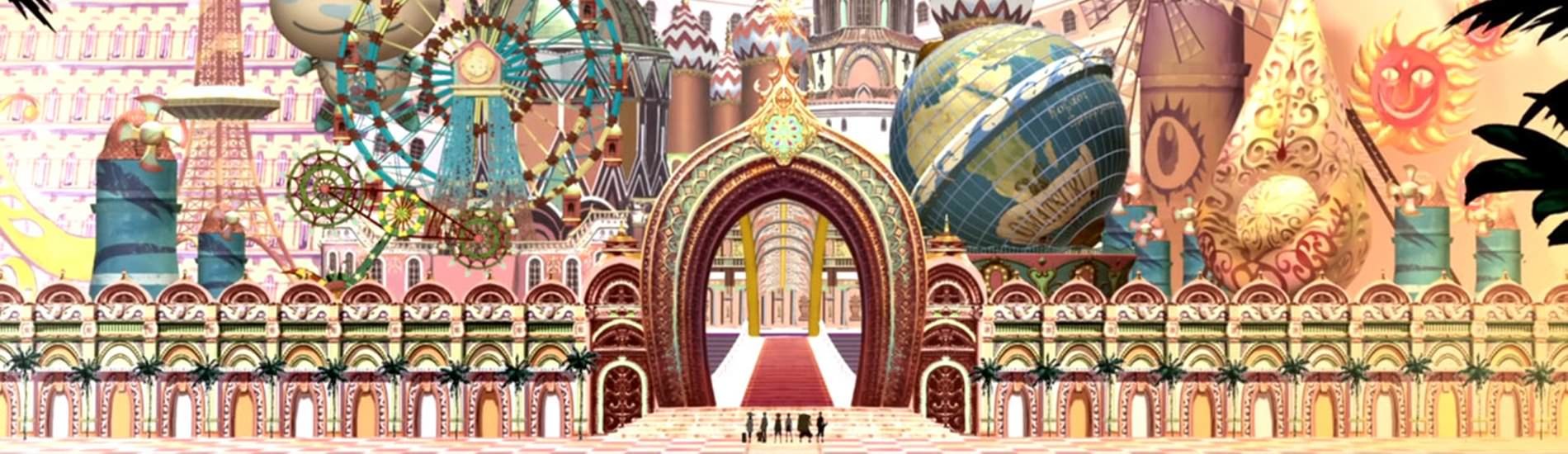
This isn’t dread built on jump scares or gore—it’s the weight of suppressed memory pressing down like humid air before lightning. One Piece: Baron Omatsuri and the Secret Island wraps tragedy in pastel bunting and forced mirth. Its atmosphere is uncanny tenderness: every bow of a servant, every ribbon tied around a prize, every archery contest judged by smiling dolls—all stitched together with invisible thread pulled taut over grief. You don’t fear the Baron’s powers; you ache for the boy who became him. You don’t flinch at the body horror—it’s the erosion of self that lingers—the way Chopper’s voice wavers when he sees his own reflection ripple in a still pond, or how Robin’s calm unravels not in panic, but in silence, as if words might shatter something already too thin. It’s a story about how love, when starved and twisted, grows thorns—and how unity doesn’t mean agreement, but choosing to hold hands while walking through the same storm.
That emotional architecture—layered sorrow masked by ritual, identity fraying at the edges, relationships tested not by betrayal but by misremembered intimacy—resonates sharply with Persona 5 Royal. Its description names “Emotional Narrative” and “JRPG Narrative” as core dimensions—and yes, the Phantom Thieves wear masks, but so does Baron Omatsuri, and so do Luffy’s crew when they turn on each other mid-contest, their voices echoing with borrowed anger. A player review praises its “Stunning Soundtrack” and “seamless transition between daily life”—exactly the tonal whiplash this film uses: jaunty calliopes undercutting Robin’s solitary walk through mirrored halls, where every reflection shows someone she once knew, or almost did. Both works treat time as porous: past trauma bleeds into present action not as flashback, but as texture—in the grain of a wooden arrow, in the static hum beneath Tokyo’s train announcements.
Jade Empire™: Special Edition, tagged with “Emotional Narrative” and “JRPG Narrative”, shares that same reverence for embodied consequence. Its description invites you to “step into the role of an aspiring martial-arts master and follow the path of the open palm or the closed fist.” That duality—openness versus closure—is Baron Omatsuri’s entire tragedy. His island is a closed fist disguised as an open palm: contests promise unity, but demand surrender of memory; archery targets aren’t bullseyes—they’re mirrors. A player review mentions technical hurdles (“copy and paste ‘steam.dll’”), but what lingers is the effort required to enter—just as the Straw Hats must push past disorientation, mistrust, and their own fractured reflections to reach the island’s heart. Both ask: what does it cost to keep your center when everything around you bends perception?
And then there’s Dragon Age: Origins, also scoring 75 in “Emotional Narrative” and “JRPG Narrative”. Its description asks: “When history tells the story of the Fifth Blight, what will be said about the hero who turned the tide?” That’s the question humming beneath Baron Omatsuri’s island—not who wins the contest, but who survives the telling. A player review notes the “pause attack mechanic” helps “strategist your tactic”—but what’s more tactical than choosing when to speak, when to listen, when to let Robin walk alone because she needs the silence? Like the Warden assembling companions whose loyalties are written in scars and half-truths, the Straw Hats reassemble—not by defeating the Baron, but by witnessing him. Their victory isn’t power. It’s continuity: carrying his sorrow forward without letting it become theirs.
This pairing sings for the viewer who cries during a cooking minigame in Stardew Valley, who replays the final corridor of Shadow of the Colossus just to feel the weight of footsteps again, who saves before talking to a companion in Mass Effect—not to avoid consequences, but to savor the gravity of choice. It’s for those who know joy and grief aren’t opposites—they’re the same breath, drawn deep, held too long, then released—not as relief, but as recognition.
🎮13 Games That Match the Vibe









Match Dimensions Explained
❓Frequently Asked Questions
Why is Persona 5 Royal often recommended for fans of One Piece: Baron Omatsuri and the Secret Island?
Because both lean hard into emotional, character-driven JRPG storytelling with vibrant personalities and high-stakes personal growth—like watching Luffy’s raw grief over his crew’s betrayal in Baron Omatsuri mirrored in Joker’s quiet resolve during the Shibuya Jail arc. Plus, Persona 5’s seamless blend of daily life (building Confidants like Ryuji or Ann) and surreal dungeon crawling echoes Baron Omatsuri’s mix of heartfelt island exploration and dreamlike, symbolic set-pieces.
Is there a Dragon Age: Origins mod or remake that captures Baron Omatsuri’s whimsical tone?
No—Dragon Age: Origins stays grounded in gritty, morally complex fantasy (think Alistair’s tragic humor or Morrigan’s sharp wit), not Baron Omatsuri’s playful surrealism. Its pause-and-attack combat and party banter deliver emotional weight, but the vibe is more 'dripping castle corridors' than 'floating carnival island'—so no mod bridges that tonal gap.
How does Jade Empire compare to Baron Omatsuri in terms of story and combat flow?
Jade Empire shares Baron Omatsuri’s emphasis on martial arts spectacle and emotional narrative—especially in its branching paths (Open Palm vs. Closed Fist) and mentor-student bonds like Master Li’s guidance—but swaps Baron Omatsuri’s cinematic cutscenes for real-time kung fu combos and environmental acrobatics. It lacks the island’s dream logic, but nails that same earnest, mythic heart.
What’s the best game like Baron Omatsuri if I want something deeply emotional but with stylish, modern presentation?
Persona 5 Royal—hands down. Its Tokyo feels as alive and layered as Baron Omatsuri’s island, with characters like Ann Takamaki or Futaba Sakura echoing the film’s themes of hidden pain and found family. The UI pops, the soundtrack slaps (just like Baron Omatsuri’s haunting score), and every Confidant scene lands with the same emotional sincerity as Luffy’s final stand on the island.