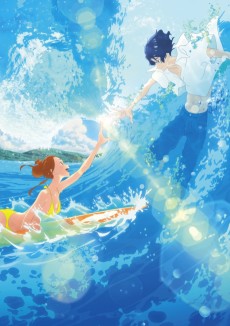
Ride Your Wave
Upon entering university, Hinako moves to a coastal town. She loves surfing, and when she's on the waves she's fearless, but still feels uncertain about her future. When a fire wreaks havoc in the town, Hinako encounters young firefighter Minato. As they surf and spend more time together, Hinako feels drawn to someone like Minato who devotes himself to helping other people. Hinako also holds a special place in Minato's heart.
(Source: Toho)
📺Anime Details
📝Editorial Analysis
The salt-stung silence after the wave breaks—Hinako’s board skimming flat water, her breath catching not from exertion but from the sudden, hollow absence where Minato’s laugh used to rise over the crash of surf. She doesn’t scream. She doesn’t collapse. She just holds—knees bent, fingers curled white around the rails—as if the ocean itself has paused mid-breath, waiting for something it knows won’t return.
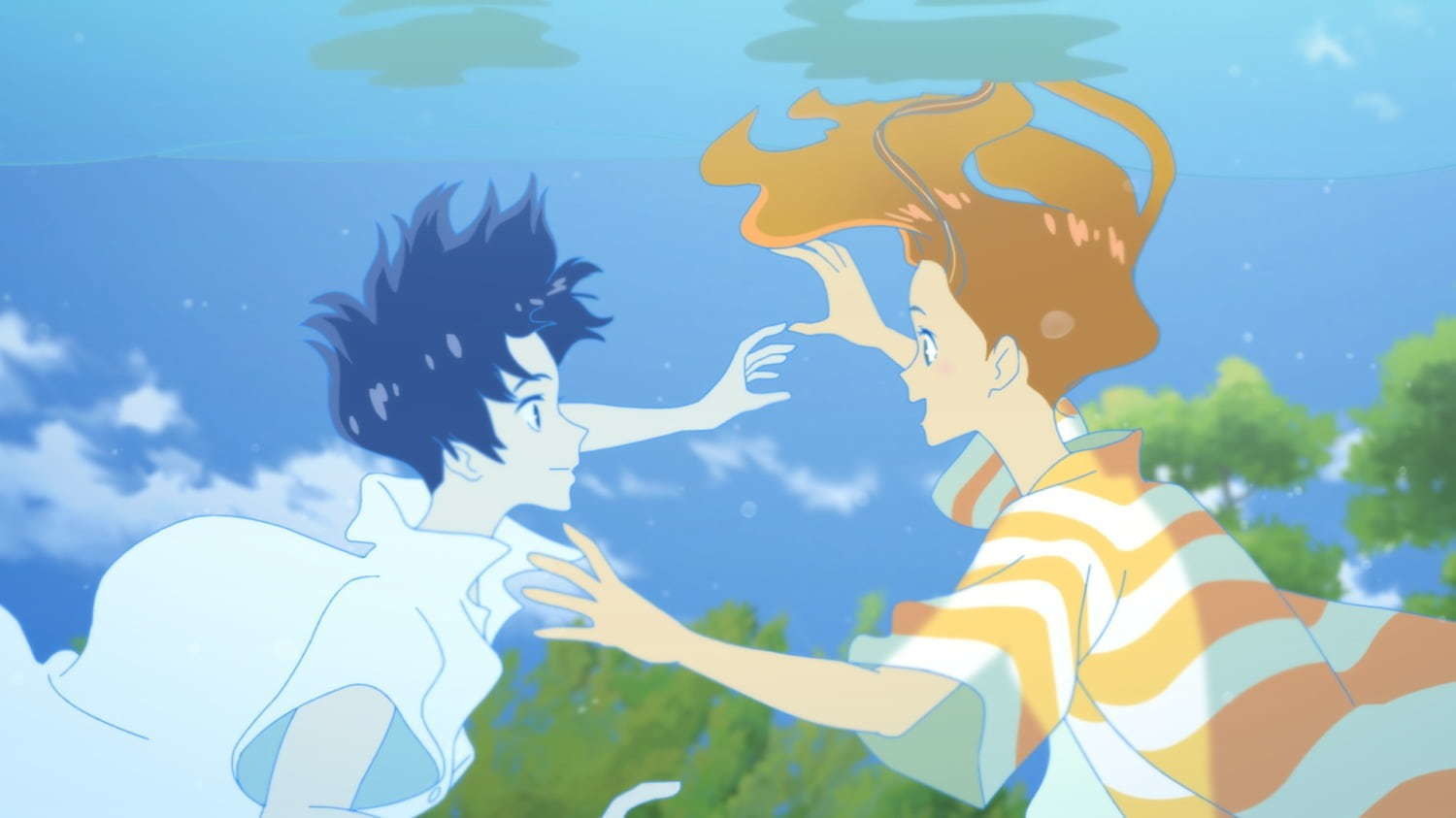
That quiet is Ride Your Wave’s true heartbeat: not the fantasy of a ghost returning, but the unbearable lightness of grief that refuses to settle into weight. It’s coastal air thick with sunscreen and sorrow, urban alleyways that smell of damp concrete and unspoken goodbyes, the way Hinako’s hands keep reaching—not for Minato’s ghost, but for the habit of his presence, like muscle memory misfiring in slow motion. This isn’t tragedy as spectacle; it’s tragedy as weather—persistent, humid, reshaping the contours of daily life until even brushing your teeth feels like navigating low tide. You don’t think about loss here—you taste it in the metallic tang of rain on hot pavement, feel it in the way sunlight glints off wet asphalt like shattered glass.
Which makes the game matches startling—not because they’re tonally similar, but because they share that same emotional grammar: the way trauma lives in the body before it settles in the mind. Dark Messiah of Might & Magic, for all its ferocious melee combat and occult dread, carries the same raw nerve of physical vulnerability. Its description names “Body Horror & Occult” as core dimensions—and in Ride Your Wave, Hinako’s body remembers Minato before her mind accepts he’s gone: her shoulders still drop into the curve of his embrace when she hears sirens; her feet automatically shift stance on dry land as if bracing for swell. The player review calls it “a fantastic melee combat game that still holds up pretty well today”—and yes, the visceral impact of collision, the way damage registers in posture and gait, mirrors how Hinako’s grief isn’t abstract—it’s tendon-deep, knee-joint-aching, salt-cracked-lips real.
Then there’s Strong Bad's Cool Game for Attractive People: Season 1, a title so absurdly dissonant you almost miss the resonance—until you read its description: “Enjoy Strong Bad's wacky comedic adventures over 5 full episodes!” And the player review, wistful and precise: “With the recent remake of Poker Night, I hope Skunkape considers bringing this game back next…” That longing—not for nostalgia, but for reconnection—is the exact frequency Ride Your Wave hums on. Hinako doesn’t rebuild Minato; she rebuilds herself around the shape he left behind, just as Strong Bad’s humor never erases the loneliness underneath the nonsense—it frames it, gives it rhythm, lets it breathe without collapsing. Both works treat emotional survival as an act of stubborn, slightly ridiculous continuance: surfing the same break, typing another email to no one, delivering another fourth-wall-breaking monologue into the void.
These aren’t pairings for fans of “sad stories” or “ghost romances.” They’re for the person who’s ever washed a coffee mug twice because the first time felt wrong, who’s walked past a certain streetlamp at dusk and had their throat tighten for no reason, who understands that healing isn’t linear—it’s tidal. The viewer who watches Ride Your Wave and doesn’t reach for tissues but for their own surfboard, or their old journal, or the playlist they haven’t opened in months. The player who boots up Dark Messiah not for loot, but for the way a parry shudders up the controller—like grief echoing in the collarbone. The one who laughs out loud at Strong Bad’s nonsense because it’s the only thing holding back the quiet. These are works for people who know that love and loss don’t cancel—they coast, side by side, on the same unbroken wave.
🎮17 Games That Match the Vibe

Match Dimensions Explained
❓Frequently Asked Questions
Why does Dark Messiah of Might & Magic show up in 'Games Like Ride Your Wave' matches?
Because both lean hard into emotionally resonant character arcs amid surreal, high-stakes moments—like Hinako’s surfing-as-coping-mechanism mirroring Dark Messiah’s intense, vulnerable first-person melee combat where every swing feels personal and consequential. The shared 'Emotional Narrative' dimension connects Hinako’s grief journey with the protagonist’s morally fraught rise in a crumbling, occult-tinged world.
Is there a Ride Your Wave anime adaptation or game remake in the works?
No official adaptation exists—but Strong Bad's Cool Game for Attractive People: Season 1 shows up in the same match list (score 51, same 'Emotional Narrative' + 'Body Horror & Occult' dimensions), proving how unexpected emotional sincerity can thrive even in absurdist, dialogue-driven formats—kinda like how Ride Your Wave balances sun-drenched charm with raw, quiet heartbreak.
How is Strong Bad's Cool Game for Attractive People similar to Ride Your Wave?
Both use quirky, stylized presentation to deliver surprisingly grounded emotional beats—Hinako’s silent tears after Minato’s accident hit just as hard as Strong Bad’s uncharacteristically tender moment comforting Pom-Pom in Episode 4. They share that rare 'Emotional Narrative' spark where humor and vulnerability aren’t opposites—they’re the same language.
What’s the best 'Ride Your Wave'-like game if I want something heartfelt but not sad?
Go with Strong Bad's Cool Game for Attractive People: Season 1—it’s got the same warm, character-driven soul and tonal whiplash (silly → sincere in a blink), but wraps its emotional core in absurdity and rapid-fire jokes instead of melancholy. Player reviews even call out its 'wacky comedic adventures' across 5 episodes—perfect if you love Ride Your Wave’s heart but crave more levity.