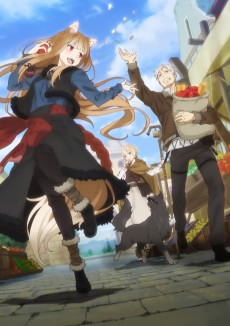
Spice and Wolf: MERCHANT MEETS THE WISE WOLF
Lawrence is a traveling merchant selling various goods from a horse-drawn cart. One day, he arrives at a village and meets a beautiful girl with the ears and tail of an animal! Her name is Holo the Wisewolf and she brings bountiful harvests. She wishes to return to her homeland, and Lawrence offers to take her. Now, the once-lonely merchant and the once-lonely wisewolf begin their journey north.
(Source: Crunchyroll)
📺Anime Details
📝Editorial Analysis
The scent of warm rye bread rising in a clay oven, the creak of leather harnesses under a late-summer sun, the quiet shush of wheat stalks bending as Lawrence’s cart rolls past a field just beginning to blush gold—this is where Spice and Wolf: MERCHANT MEETS THE WISE WOLF lives. Not in battle cries or grand declarations, but in the weight of a ledger page turned slowly, the pause before Holo speaks—not as deity or beast, but as someone who remembers what it means to be listened to, truly.
What makes this anime breathe so differently isn’t its kemonomimi charm or its rural setting—it’s the stillness between transactions. It’s how economics here isn’t abstraction; it’s barley sacks stacked with care, coin counts whispered like prayers, harvest forecasts weighed against memory and myth. You feel the loneliness of motion—the road stretching north, not as escape, but as slow, deliberate reconnection. Lawrence doesn’t chase destiny—he negotiates for fair grain prices. Holo doesn’t wield divine wrath—she watches clouds and corrects his arithmetic with a sigh that smells faintly of orchards. This is melancholic warmth: the ache of time passing, yes—but also the deep, quiet satisfaction of work done well, trust earned over shared meals, and wisdom passed not in scrolls, but in the way Holo’s tail flicks when Lawrence finally understands a market’s hidden rhythm.
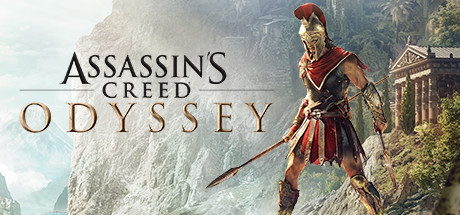
That emotional resonance echoes unmistakably in Assassin's Creed® Odyssey, whose player reviews highlight “Melancholic Exploration” as a core dimension. Not the rush of conquest, but the hush of walking through an abandoned Mycenaean tomb, the weight of choices that linger like dust in sunbeams—where gods are distant, myths are half-remembered, and every olive grove you pass feels like a quiet conversation with time. Like Lawrence and Holo, Kassandra moves through a world thick with legacy, not power. Her journey northward (to Pylos, to Sparta, to the edge of known maps) mirrors theirs—not as flight, but as pilgrimage shaped by patience, barter, and the slow unfurling of belonging. The game’s emotional DNA isn’t in its combat, but in those long walks where the wind carries both history and hunger—and where every decision carries the quiet gravity of what endures.
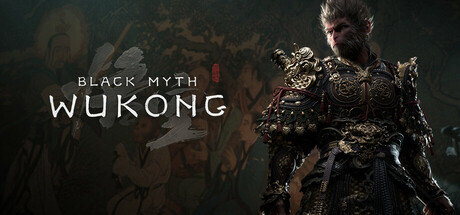
Then there’s Black Myth: Wukong, tagged with “Mythology & Folklore” and “Dark Fantasy”, scoring 78 across two entries. At first glance, its thunderous spectacle seems galaxies away from Lawrence’s cart—but look closer. Wukong isn’t just breaking mountains; he’s retracing a fallen pantheon, confronting deities who once demanded worship but now demand accountability. That same tension pulses beneath Spice and Wolf: Holo is worshipped, feared, forgotten—her divinity measured not in miracles, but in rustling fields and empty shrines. When she tells Lawrence, “I am no longer needed,” it lands with the same hollow resonance as Wukong staring at a crumbling celestial gate. Both stories treat myth not as static legend, but as living, fraying, bargaining currency—and both locate their deepest emotion not in triumph, but in the dignity of negotiation: between mortal and god, merchant and wolf, monkey king and heaven’s bureaucracy.
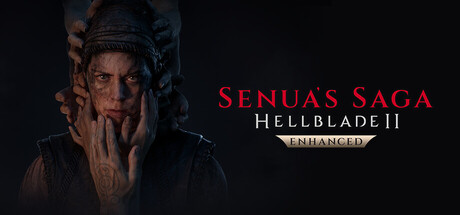
And Hellblade II: Senua’s Saga, also scored 73 with “Mythology & Folklore” and “Dark Fantasy”, shares that same reverence for interior terrain. Senua doesn’t walk roads lined with wheat—she walks cliffs where voices coil like mist, where every step is a reckoning with loss made manifest. Yet her journey, like Holo’s, is profoundly northward—toward origin, toward voice, toward a self no longer defined by others’ fear or faith. Neither character seeks to conquer myth—they seek to reclaim language within it. When Holo sings an old harvest song off-key, laughing, or when Senua names her darkness aloud for the first time, the feeling is identical: fragile, human, sacred.
This pairing belongs to the person who keeps a notebook of market prices and folk songs, who pauses mid-stride to watch sparrows argue over crumbs, who finds profound comfort in the rhythm of routine—and deeper meaning in the moments it cracks open. It’s for the reader who underlines passages about soil pH in agricultural manuals and dog-ears poetry collections, for the player who lingers at a ruined well not to loot, but to imagine whose hands drew water there centuries ago. They don’t crave spectacle without silence, or lore without labor. They love stories where the most revolutionary act is choosing, again and again, to travel together—not toward glory, but toward understanding, one honest transaction, one shared loaf, one quiet mile at a time.
🎮4 Games That Match the Vibe
Match Dimensions Explained
❓Frequently Asked Questions
Why does Assassin's Creed Odyssey keep showing up in Spice and Wolf game recommendations?
Because both lean hard into melancholic exploration—like wandering through ancient Greek ports or medieval trade routes, watching sunsets while weighing moral choices about debt, loyalty, or cultural exchange. Odyssey’s Kassandra navigating philosophical debates with Socrates or negotiating trade deals in the Agora mirrors Holo’s sharp-witted bartering and Lawrence’s quiet reflection on consequence—plus both games treat economics and folklore as living, breathing parts of their worlds.
Is there a Spice and Wolf visual novel adaptation with branching merchant paths like the anime?
No official visual novel exists—but Hellblade II: Senua’s Saga delivers that same emotionally grounded, myth-drenched storytelling where every dialogue choice reshapes your relationship with lore and memory, much like how Holo and Lawrence’s trust deepens through layered conversations. It doesn’t simulate trade, but its intimate, voice-driven narrative and Norse myth integration hit the same thoughtful, character-first vibe fans love.
Black Myth: Wukong vs. Assassin's Creed Odyssey—which one feels more like Spice and Wolf’s calm, dialogue-heavy travel vibe?
Odyssey wins hands-down for that slow-burn, conversation-rich journey: think sitting at a tavern table with Hippokrates debating ethics, or haggling over grain prices in Megara—very Lawrence-and-Holo energy. Wukong is breathtakingly mythic, but it’s action-forward and visually intense (those boss fights!), whereas Odyssey gives you time to pause, listen, and let relationships unfold like chapters in a well-worn ledger.
What’s the best Spice and Wolf-like game if I want quiet moments of wisdom and folklore, not combat?
Assassin’s Creed Odyssey—especially its ‘Discovery Tour’ mode—is perfect: no combat pressure, just walking ancient streets, listening to historians unpack myths, or overhearing merchants debate barley tariffs in Ephesus. It nails the same gentle reverence for knowledge-as-currency that makes Holo’s wolf-lore lectures and Lawrence’s ledger-scrawling so satisfying—no swords, just stories and substance.