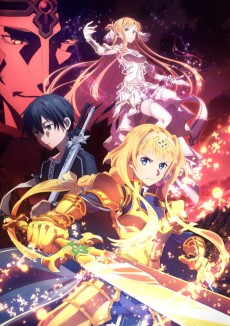
Sword Art Online: Alicization - War of Underworld
Kirito, Eugeo, and Alice. Six months have passed since the two disciples and an Integrity Knight brought down the pontifex, Administrator. With the fighting over, Alice has been living in her hometown of Rulid Village. Beside her is Kirito, who has not only lost his arm and soul, but also his dear friend. As Alice devotes herself to looking after Kirito, she too has lost the will to fight she once had as a knight.
Nevertheless, the time for the final stress test – one which will engulf the entire Underworld with tragedy – draws relentlessly closer.
Meanwhile, in the deepest areas of the Dark Territory, the Dark God Vecta has resurrected, as if to have waited for this very moment. Leading an army of dark forces, they begin their invasion into the human empire in hopes of attaining the Priestess of Light. The human empire force led by the Integrity Knight Bercouli prepares for a war of an unimaginable scale against the army of the Dark Territory. Even then, Alice is nowhere to be seen, nor the two heroes that saved the realm...
(Source: Official Website)
📺Anime Details
📝Editorial Analysis
The silence after the bell stops ringing. Not the clean hush of a cathedral, but the thick, suffocating quiet of Rulid Village at dusk—woodsmoke curling from chimneys, Kirito’s breath shallow and uneven as Alice adjusts the blanket over his legs, her fingers trembling just once before stilling. His left arm is gone. His soul feels fractured. And Eugeo—gone too, not in death alone, but in the erasure of memory, of voice, of presence that lingers like a phantom limb no one else can see. That silence isn’t peace. It’s the weight of survival pressed into soil, into skin, into every unspoken word between two people who’ve watched the world they believed in shatter—not once, but twice: first by Administrator’s godlike cruelty, then by the hollow victory that followed.
What makes Sword Art Online: Alicization - War of Underworld ache so deeply isn’t its war scenes—though they’re staggering—or even its swordplay, precise and brutal. It’s the aftermath. The way trauma settles not in screams, but in Alice’s quiet withdrawal from her own reflection in a rain-puddled cobblestone; how Kirito’s eyes flicker past real people as if scanning for glitches in a world he no longer trusts as real. This isn’t dystopia as spectacle—it’s dystopia as domestic erosion. Memory manipulation isn’t abstract code here; it’s the reason Alice forgets how to hold a sword without flinching. Artificial intelligence isn’t distant servers—it’s the ghost of Eugeo’s laugh echoing in Kirito’s mind, weaponized by the very system meant to protect them. You don’t feel excited watching this arc—you feel tender, worn, watchful, like you’re holding your breath beside someone who might break if you exhale too loud.
That emotional DNA—the slow burn of moral exhaustion, the intimacy of shared grief under siege, the quiet horror of systems turning on those who built them—resonates sharply with FINAL FANTASY XVI, whose Action Spectacle and Emotional Narrative collide in moments like Clive’s silent walk through a ruined capital, where every fallen banner and scorched wall echoes Rulid’s fragile calm before the storm. Player reviews note how “the weight of legacy sits heavier than any magic spell”—exactly how Alice carries Eugeo’s name like a vow she doesn’t know how to keep. Then there’s XCOM® 2, where Tactical Warfare meets JRPG Narrative: soldiers aren’t stats—they’re faces you memorize, voices you learn to recognize mid-battle, and losing one doesn’t just lower morale—it unravels trust in command, in time itself. One review says, “You don’t mourn a soldier. You mourn the future you imagined with them.” That’s Kirito staring at his empty sleeve, imagining Eugeo’s hand gripping his wrist in training—gone, not erased cleanly, but unwritten, leaving jagged edges no healing spell can smooth. Even The Legend of Heroes: Trails through Daybreak, tagged with Cyberpunk & Dystopia and Tactical Warfare, mirrors the anime’s layered tension—where conspiracies don’t explode in headlines, but seep into tea served in a sunlit café, where every ally might be compromised, and loyalty is measured in seconds of hesitation before drawing steel. Its players describe “a world where hope isn’t shouted—it’s whispered across a dinner table, fragile as steam rising from a cup.”
This pairing speaks to the person who watches Kirito’s first attempt to stand—and doesn’t cheer, but holds their breath until his knees lock. Who replays XCOM’s last mission not for strategy, but to hear a squadmate’s final line again. Who saves before every major choice in Trails through Daybreak, not out of fear of failure, but because choosing means accepting consequence—and consequence, in these worlds, is always personal, always intimate, always carried. They don’t want escapism. They want resonance. They want stories where the greatest battle isn’t against an empire or a god—but against the quiet, daily act of remembering how to be human when the world has rewritten your heart’s source code.
🎮8 Games That Match the Vibe
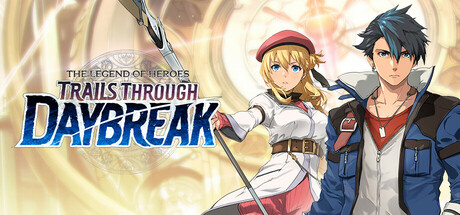


Match Dimensions Explained
❓Frequently Asked Questions
Why is FINAL FANTASY XVI on lists of games like Sword Art Online: Alicization - War of Underworld?
Because both lean hard into emotionally charged, character-driven JRPG storytelling—think Kirito’s moral crises mirrored in Clive’s tragic arc and the weight of his 'Dominance' powers. The action spectacle in FFXVI (like the Eikon battles against Ifrit or Garuda) delivers that same high-stakes, cinematic intensity as the War of Underworld’s cathedral siege or the final duel in the Central Cathedral.
Is there a Sword Art Online: War of Underworld game adaptation?
No—there’s no official SAO: War of Underworld game. But fans seeking that blend of tactical depth and narrative weight often turn to The Legend of Heroes: Trails through Daybreak, which nails the grounded political intrigue, factional warfare, and slow-burn character reveals (like Cassius’ past or Roer’s hidden loyalties) that made Underworld’s layered conflict so gripping.
XCOM 2 vs. Trails through Daybreak—which better captures War of Underworld’s vibe?
Trails through Daybreak wins for tone and pacing: its cyberpunk city of Liberl, morally grey guild politics, and party banter during train rides or bar scenes echo Underworld’s blend of intimate drama and systemic world-building. XCOM 2 leans harder into dystopian urgency and permadeath—great for tension, but less about the quiet, human moments like Eugeo’s memories or Alice’s internal conflict.
What’s the best game like War of Underworld if I want that melancholy, morally complex, slow-burn feel?
Goetita: Turn-based City—it’s built around quiet despair, fractured identities, and choice-driven consequences in a decaying cyberpunk metropolis, with mechanics that force tough trade-offs (like sacrificing NPC trust to unlock key intel). Its narrative dimension matches War of Underworld’s emotional gravity, especially scenes where characters confront betrayal or ideological collapse—think Administrator’s fall or the Integrity Knights’ unraveling.