
The Apothecary Diaries
Maomao lived a peaceful life with her apothecary father. Until one day, she’s sold as a lowly servant to the emperor’s palace. But she wasn’t meant for a compliant life among royalty. So when imperial heirs fall ill, she decides to step in and find a cure! This catches the eye of Jinshi, a handsome palace official who promotes her. Now, she’s making a name for herself solving medical mysteries!
(Source: Crunchyroll)
📺Anime Details
📝Editorial Analysis
The scent of bitter herbs clings to Maomao’s fingers—not the perfumed incense of the inner palace, but crushed qing hao, dried huang lian, the sharp, medicinal tang that lingers like truth in a room full of lies. She kneels on cold marble, not in obeisance, but to examine a child’s pulse—her eyes narrow, her mind already dissecting symptoms no court physician dares name aloud. This isn’t just diagnosis. It’s quiet defiance: a woman using knowledge as a scalpel to cut through layers of silence, hierarchy, and poison disguised as protocol.
What makes The Apothecary Diaries ache with such particular weight isn’t its setting—it’s how it holds tension. Not explosive, but submerged: every bow hides a withheld breath; every scroll delivered carries unseen consequence; every dosage is both care and calculus. You feel the weight of being seen—but only for what you can fix, never who you are. You think about how power doesn’t always roar—it often whispers through dosage logs, inventory ledgers, and the precise angle of a servant’s wrist as she pours tea. It’s intimate danger: one misstep in measurement could mean death, one misread expression could mean exile. The palace isn’t a backdrop—it’s a living, breathing diagnostic chart, where politics and pathology share the same grammar.
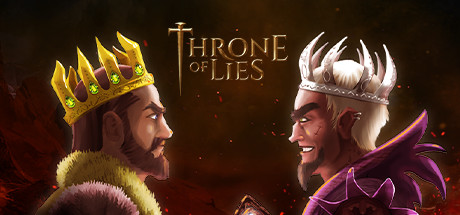
That same submerged tension lives in Throne of Lies®: Medieval Politics, where players don’t wield swords—they wield ambiguity. Its description names it outright: Political Thriller, Mystery & Detective. Reviews echo Maomao’s reality: “Every conversation feels like triage—you’re diagnosing loyalty while pretending to flirt,” and “You learn who’s lying not by catching them, but by noticing whose story doesn’t shift when the wind changes.” Like Maomao cross-referencing symptom patterns across three imperial heirs, players in Throne of Lies® triangulate motive from inconsistent alibis, shifting alliances, and the unspoken subtext of a raised eyebrow during feast-time debate. Both trust silence as data—and treat social ritual like a pharmacopeia: each gesture, each title, each gift has dosage, side effects, contraindications.
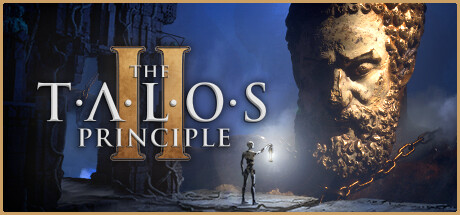
Then there’s The Talos Principle 2, scored 73 and tagged Political Thriller, Mystery & Detective—a jarring pairing at first glance, until you remember Maomao’s real weapon isn’t her mortar and pestle, but her reason. In The Talos Principle 2, players navigate philosophical labyrinths where truth isn’t revealed—it’s constructed, tested, discarded, and rebuilt. Reviews reflect Maomao’s process: “Solving isn’t about finding answers—it’s about rejecting false premises until only coherence remains,” and “The most dangerous moment isn’t when the system malfunctions—it’s when you realize your own assumptions were the flaw.” Just as Maomao reinterprets fever charts not as symptoms but as evidence of systemic neglect—or traces mercury residue not to a poisoner, but to a flawed purification ritual—The Talos Principle 2 demands the same forensic clarity: logic as lifeline, epistemology as survival.
These aren’t stories about heroes who break systems. They’re about people who navigate them—precisely, patiently, perilously—with tools society didn’t intend for them: botanical knowledge, rhetorical sleight-of-hand, recursive logic. The resonance isn’t in spectacle—it’s in the stillness before insight, the way a single observation—a tremor in the hand, a discrepancy in grain records, a paradox in ancient scripture—unlocks everything.
This pairing sings to the viewer who watches Maomao stir a decoction and thinks, She’s not just mixing herbs—she’s compiling evidence. To the player who spends twenty minutes parsing NPC dialogue trees not for romance options, but for semantic inconsistency. To anyone who finds thrill in the slow burn of a mind refusing to accept surface explanations—who feels alive when deduction becomes devotion, and care becomes conspiracy. Not the kind who wants to rule the palace or overthrow the gods—but the ones who’d rather map its veins, dose its fevers, and whisper the truth in the language it least expects: precision.
🎮2 Games That Match the Vibe
Match Dimensions Explained
❓Frequently Asked Questions
Why is Throne of Lies® recommended for fans of The Apothecary Diaries?
Because both hinge on navigating layered court intrigue through dialogue choices and hidden agendas—like when Lady Jin-ah uncovers poison plots in the imperial harem, Throne of Lies® drops you into a medieval royal court where every NPC (like Lord Varek or Lady Seraphine) has shifting loyalties and secret motives you must deduce via interrogation and evidence logs.
Is there an official anime or game adaptation of The Apothecary Diaries?
No—there’s no official game or anime adaptation yet, but Throne of Lies® and The Talos Principle 2 capture its core appeal: one nails the political thriller vibe with betrayal-driven roleplay, while the other mirrors its cerebral mystery pacing through environmental puzzles and fragmented narrative logs that slowly reveal systemic corruption.
How does Throne of Lies® compare to The Talos Principle 2 for mystery lovers?
Throne of Lies® leans hard into interpersonal deception—think tense balcony confrontations and forged letters—while The Talos Principle 2 builds mystery through philosophical world-building and logic-based clue assembly, like reconstructing suppressed memories from corrupted data fragments in the AI archive scenes. Both score high in Mystery & Detective, but Throne delivers human-scale tension; Talos 2 goes cosmic and abstract.
What’s the best game like The Apothecary Diaries if I want slow-burn palace scheming with zero combat?
Throne of Lies® is your match—it’s entirely dialogue-driven, with no combat mechanics whatsoever. You’ll spend hours cross-referencing alibi timelines, spotting contradictions in noble testimonies (like Chancellor Dain’s ‘illness’ alibi), and leveraging social standing to force confessions—all mirroring how Lady Jin-ah manipulates perception without ever drawing a sword.