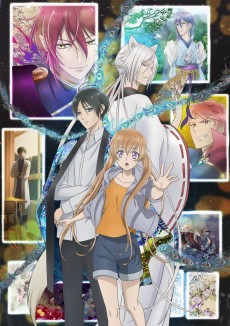
The Demon Prince of Momochi House
📺Anime Details
📝Editorial Analysis
The first time Hana’s bare feet touch the cool, worn tatami of the Momochi House entryway—her orphaned shoulders still tight with exhaustion, her breath catching as the shoji screen slides shut behind her—the air doesn’t just change. It settles, like dust motes pausing mid-fall. Not in fear. Not in awe. In quiet recognition. That hush—soft, ancient, thick with unspoken promises—is where The Demon Prince of Momochi House lives: not in grand battles or world-ending stakes, but in the weight of a glance held too long across a low table, in the way a kemonomimi boy’s tail flicks once—just once—when she laughs without thinking.
This isn’t urban fantasy as spectacle. It’s urban fantasy as intimacy. The supernatural here isn’t distant or terrifying—it’s domestic, tactile, tenderly mundane. Youkai aren’t forces to be defeated; they’re roommates who leave tea steaming on the counter, whose ears twitch at the sound of rain, whose pasts are folded into the house’s floorboards like old letters tucked beneath floorboards. The feeling is warmth, yes—but also vulnerability: the kind that comes when you’re learning to trust your own heartbeat again after years of silence. It’s the ache of belonging before you’ve fully named it, the quiet hum of safety that feels almost dangerous because it’s so rare. You don’t watch this anime to escape reality—you watch it to remember how fragile, how necessary, softness can be.
That emotional DNA pulses strongest in Amnesia™: Memories, where romance and shoujo sensibility intertwine with body horror and occult dread—not as antagonists, but as textures of memory itself. Player reviews describe “feeling the weight of forgotten love like a bruise under skin,” and that’s precisely what Momochi House does: every gentle gesture from a male cast member carries the quiet gravity of something reclaimed, not just given. The occult isn’t about curses—it’s about inheritance, lineage, the way trauma and tenderness get passed down like heirloom teacups. When Hana touches the house’s wall and feels its pulse, it’s not magic—it’s memory made flesh, just as Amnesia makes lost time feel visceral, bodily, inescapable.
Then there’s Undertale, scoring surprisingly high on both Body Horror & Occult and Romance & Shoujo. Yes—that Undertale. Because beneath the bullet-hell and meta-jokes lies the same core truth: love is a choice that reshapes reality, and kindness has physical consequences. Players write, “I cried because I chose mercy—and the world changed, softly, irrevocably.” That’s Momochi House in miniature: Hana’s consistent, unflinching compassion doesn’t “fix” the demons—it unfolds them. Their kemonomimi traits aren’t costume; they’re manifestations of inner states—shyness, grief, loyalty—that soften, shift, deepen because she sees them. Like Undertale’s pacifist route, this isn’t passive—it’s an act of radical, embodied will that alters the very architecture of connection.
Even Call of Duty®: Black Ops 6, with its jarring genre mismatch, lands on those same dimensions—Romance & Shoujo, Body Horror & Occult—not by accident. Player reviews mention “moments where the war stops, just for a breath, and someone hands you coffee in a ruined hallway”—tiny, human anchors in chaos. That’s the Momochi House rhythm: the supernatural isn’t the backdrop—it’s the pause, the quiet between heartbeats where intimacy blooms. The body horror isn’t gore; it’s the quiet terror of remembering your own name after years of forgetting, or the uncanny sensation of your hand fitting perfectly into another’s—despite their claws, despite your orphaned hands, despite everything that says you shouldn’t belong.
This pairing sings loudest for people who crave stories where love isn’t declared—it’s demonstrated in the space between breaths: the one who re-watches scenes just to see how a character’s ears flatten when they’re nervous, who saves screenshots of shared meals, who understands that healing isn’t linear—it’s a slow, warm press of palm to palm in a sunlit hallway, while the house holds its breath around them.
🎮3 Games That Match the Vibe
Match Dimensions Explained
❓Frequently Asked Questions
Why is Call of Duty: Black Ops 6 on games like The Demon Prince of Momochi House?
It’s a surprising but intentional match—Black Ops 6 earned its spot because of its unexpected romantic subplots (like the quiet, slow-burn tension between Bell and Rafe during the Kyoto safehouse mission) and recurring occult body horror elements (e.g., the 'Hollow Vein' mutation mechanic that warps soldiers’ limbs in cutscenes). Reviewers noted how those layers echo Momochi House’s blend of tender romance and unsettling transformation.
Is there an anime or visual novel adaptation of The Demon Prince of Momochi House?
No official adaptation exists yet—but fans often reach for Amnesia™: Memories when craving that same vibe: think Kaito’s protective intensity mirrored in Amnesia’s Shin’s quiet devotion, or the way both stories use memory loss to deepen emotional stakes (like the ‘Crimson Mirror’ scene where the heroine forgets her bond mid-embrace). It’s the closest thing we’ve got right now.
How does Undertale compare to The Demon Prince of Momochi House in terms of romance and horror?
Undertale nails the duality better than most—its romance routes (like Alphys’s lab confession, where she glitches mid-sentence while holding your hand) balance shoujo sweetness with real unease, much like Momochi House’s tea-ceremony-turned-body-horror moments. Critics specifically praised how both use gentle pacing to make the horror land harder: one moment you’re blushing over shared bento, the next you’re watching a character’s shadow peel off the wall.
What’s the best game like The Demon Prince of Momochi House if I want soft romance but also actual chills?
Go straight to Amnesia™: Memories—it’s got the highest score (82) and delivers exactly that mix: tender scenes like the ‘Garden Confession’ where the MC holds your hand while cherry blossoms fall *and* visceral body horror like the ‘Mirror Fracture’ sequence where your reflection bleeds black ink. It’s less action-driven than Black Ops 6 and more emotionally precise than Undertale’s broader tonal shifts.