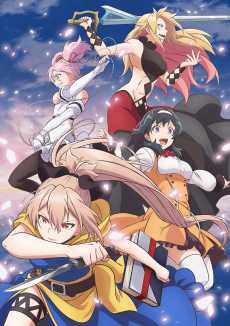
The Executioner and Her Way of Life
When interdimensional travelers from an otherworldly land known as “Japan” appear, they often bring death and destruction. It’s up to Executioners like Menou to track and exterminate the Lost Ones before they wreak havoc. When Menou encounters a beguiling Lost One named Akari, it’s bloody business as usual… until Menou discovers Akari can cheat death, that is. Even so, Menou has a job to do, and she is committed to her executioner’s mission come hell or high water — provided her newly stirring feelings don’t get in the way.
(Source: Sentai Filmworks)
Note: The first two episodes received an advance release on Abema on March 20, 2022. The regular TV broadcast started on April 2, 2022.
📺Anime Details
📝Editorial Analysis
The rain in The Executioner and Her Way of Life doesn’t fall—it hesitates. It hangs suspended midair the moment Menou’s blade leaves its sheath, time stuttering like a scratched record just before violence erupts. That split-second suspension isn’t magic for spectacle; it’s the breath held before grief becomes irreversible. You feel it in your sternum—not as tension, but as dread, quiet and cold, because you already know Akari will smile right after the cut, unharmed, and Menou’s hand won’t tremble—not yet.
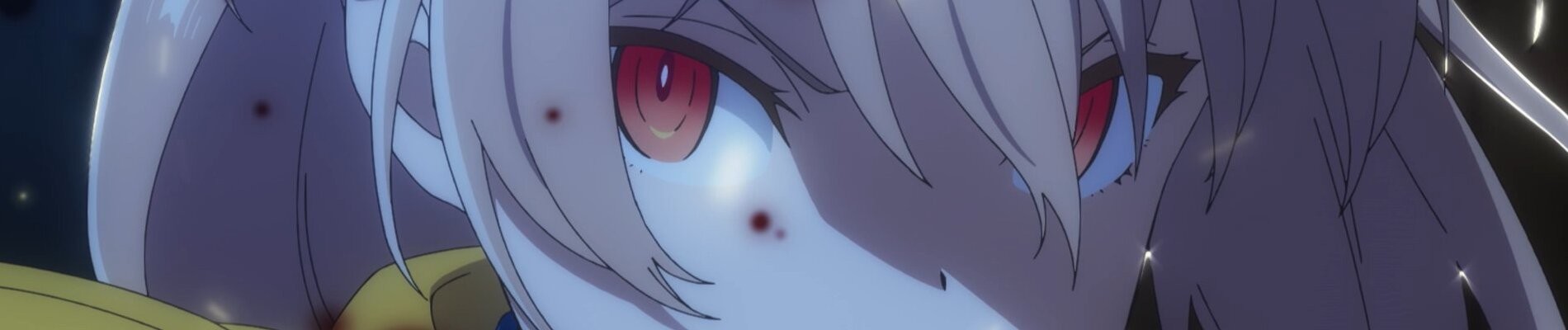
This isn’t a world where magic dazzles. It weighs. Every spell is a ledger entry: memory erased, time bent, identity dissolved. The atmosphere hums with exhaustion—not of bodies, but of will. Menou moves like someone who’s buried too many versions of the same girl, each funeral identical in ritual, different only in how much her own heart cracks open. There’s no grand prophecy here, no chosen-one fanfare—just duty performed with surgical precision and private erosion. What lingers isn’t wonder, but resonance: the quiet horror of loving someone whose existence violates every law you swore to uphold. It makes you think about loyalty not as devotion, but as self-erasure, repeated until nothing remains but the shape of the oath.
That emotional architecture—the interplay of tactical rigor and intimate, devastating romance—finds an uncanny echo in Dragon Age: Origins. Its description frames legacy as something forged in battle, not birthright, and its player review praises the pause attack mechanic—a tool that forces deliberate, almost ritualistic decision-making, mirroring Menou’s methodical tracking and execution. When you pause mid-combat to reposition Alistair, order Morrigan to hold fire, then command Leliana to draw aggro—you’re not just optimizing damage. You’re rehearsing control over chaos, just as Menou rehearses detachment before facing Akari again. Both ask: How much of yourself do you sacrifice to keep the world intact? And both answer in silence, in the space between commands.
Then there’s Mass Effect (2007)—not the trilogy, but this game, singled out by a player who insists nothing else “captured what this game did.” Its description casts Shepard as a leader navigating galactic stakes, but the review’s specificity matters: it’s the first game’s tonal singularity—the raw immediacy of choice before consequence calcifies into canon. Like Menou, Shepard operates in moral proximity, not absolutes. You don’t debate ethics in lecture halls; you decide in the heat of a firefight whether to spare a rogue AI or execute a genophage carrier—and live with the weight of that call long after the screen fades. Both works treat romance not as reward, but as complication: Akari’s yuri bond with Menou destabilizes the mission; Shepard’s relationships fracture under the pressure of duty. Neither softens the cost.
And yes—both games share that rare, unflinching commitment to female interiority as narrative engine. Not just women in the story, but stories built from their grief, their strategies, their withheld tears. The anime’s primarily female cast isn’t demographic packaging—it’s structural. Every Executioner’s past is a wound dressed as discipline. Every Lost One’s charm is a survival tactic. Just as Dragon Age’s party banter reveals trauma through sarcasm and silence, or Mass Effect’s squad dialogues expose vulnerability in clipped exchanges aboard the Normandy—so too does Menou’s restraint speak louder than any confession.
This pairing isn’t for fans of “strong female leads” as marketing shorthand. It’s for the person who replays the Matriarch’s garden scene in Dragon Age three times—not for lore, but to hear Flemeth’s voice crack on the word “remember.” It’s for the one who still scrolls through old Mass Effect save files, not to reload, but to reread Liara’s final message before the suicide mission, fingers hovering over the delete key. It’s for anyone who’s ever loved someone so fiercely they’d rewrite time itself—then paused, blade drawn, and asked: What if love is the first betrayal? That hesitation? That’s where the magic lives. Not in the spell, but in the choice not to cast it.
🎮2 Games That Match the Vibe

Match Dimensions Explained
❓Frequently Asked Questions
Why does Dragon Age: Origins keep coming up in 'Games Like The Executioner and Her Way of Life' lists?
Because both lean hard into morally gray romance with high-stakes political intrigue—like Morrigan’s Fade ritual or Alistair’s crown dilemma—and that pause-and-plan tactical combat mirrors how the anime frames tense, life-or-death decisions. Players love how DA:O lets you weigh consequences mid-battle (thanks to its pause-attack mechanic), just like how Anice weighs every spell and sacrifice in her quiet, devastating way.
Is there an anime or game adaptation of The Executioner and Her Way of Life?
No official adaptation exists yet—but fans keep drawing parallels to games that nail its tone, like Mass Effect (2007), where Shepard’s quiet authority, loyalty-driven choices, and intimate squad bonds (think Garrus or Liara) echo Anice’s guarded leadership and slow-burn trust with Misha. It’s not a retelling, but it *feels* like stepping into that same emotionally precise, consequence-heavy world.
How is Mass Effect (2007) different from Dragon Age: Origins for someone who loved The Executioner’s melancholy, slow-burn pacing?
Mass Effect leans more into cinematic, galaxy-spanning urgency—Shepard’s Normandy crew banter and zero-G firefights contrast with DA:O’s grounded, feudal dread—but both deliver that signature 'weighty choice' vibe: picking whether to save the Council or let them die feels as gut-wrenching as Anice choosing between duty and devotion. If you want quieter introspection, DA:O’s campfire scenes with Alistair or Leliana hit closer to the anime’s hushed intensity.
What’s the best game like The Executioner and Her Way of Life if I’m craving that bittersweet, romantic-yet-lethal atmosphere?
Dragon Age: Origins—especially playing as a female Warden romancing Morrigan—is your best bet. Her arc (that haunting ‘I will bear your child’ moment, the Fade confrontation, the sacrifice-or-salvation choice) mirrors the anime’s blend of intimacy and irreversible consequence. Plus, the pause-to-strategize combat makes every battle feel deliberate and personal, just like Anice calculating each spell with quiet, lethal care.