
The Founder of Diabolism
The Wen Clan's rampage caused untold sufferings, and the other cultivation clans launched the "Sunshot Campaign" to join forces against the Wen Clan. Although Wei Wuxian, the Yiling Patriarch, had made great contributions to overthrowing the Wens, he was stigmatized and punished because he was considered too powerful and dangerous. He was persecuted by ten thousand people.
Thirteen years later, Wei Wuxian has been brought back by a sacrificial ritual and has met again with old acquaintances such as Lan Wangji from the Gusu Lan Clan and Jiang Cheng from the Yunmeng Jiang Clan. The mysteries of Wei Wuxian's past remain, and conflicts in the cultivation world have resurfaced - all of which began from when they were all once youths.
(Source: QQ, translated)
📺Anime Details
📝Editorial Analysis
The scent of burnt incense and old blood hangs in the air—not sweet, not sacred, but wrong, like prayer turned rancid. Wei Wuxian stands alone on the Rain Slaughter Cliff, robes torn, hair unbound, fingers stained with ink and something darker. Below him, ten thousand cultivation sects chant his name—not in reverence, but as a curse. Their swords are drawn. Their verdict is already written. He doesn’t raise his flute. He doesn’t beg. He just waits, and in that silence, you feel it: the unbearable weight of being remembered exactly wrong.
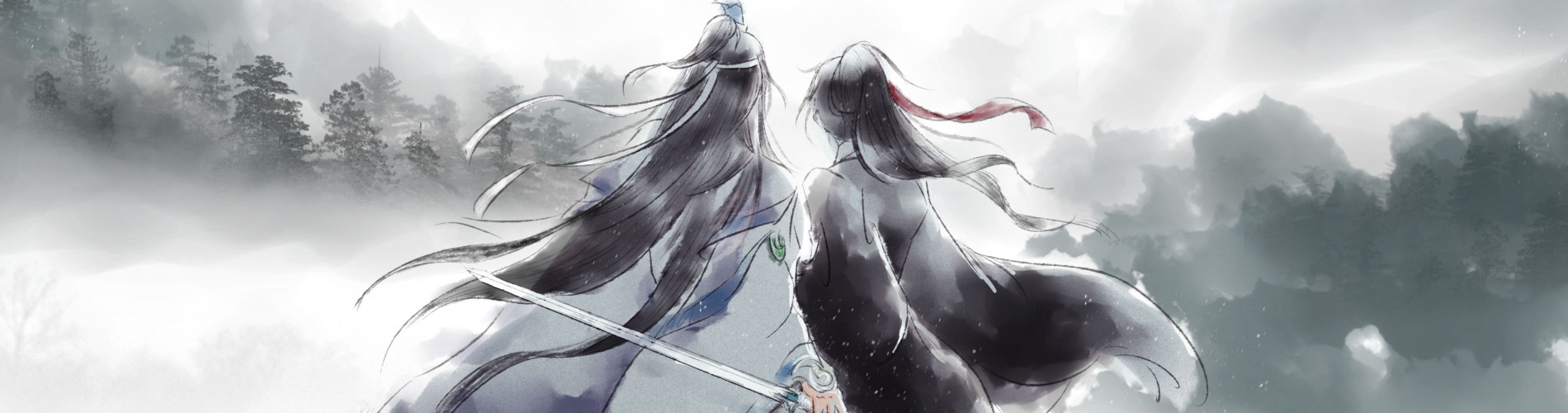
That’s the core ache of The Founder of Diabolism—not just tragedy, but erasure through memory. It’s the horror of surviving your own legend, of watching the world rewrite your sacrifice into sin, your strategy into savagery, your grief into monstrosity. This isn’t wuxia as spectacle; it’s wuxia as autopsy—dissecting how power, trauma, and collective fear fuse into a weapon pointed at the very person who held the line. You don’t just watch Wei Wuxian fall—you re-experience the slow, suffocating collapse of trust, the way loyalty curdles into suspicion, the way “dangerous” becomes synonymous with “uncontrollable” becomes synonymous with “deserving of annihilation.” It makes you question what justice looks like when the crowd holds the gavel—and the torch.
Which is why Dragon Age: Origins lands with such visceral resonance. Its description asks: “When history tells the story of the Fifth Blight, what will be said about the hero who turned the tide against the darkspawn?” That question isn’t rhetorical—it’s the engine of the entire game. Like Wei Wuxian, the Grey Warden isn’t just fighting monsters; they’re fighting narrative. Every major faction—the Chantry, the nobles, the dwarves, the mages—has its own version of truth, its own stakes, its own reasons to elevate or erase you. The player review nails it: “the story is great and its pause attack mechanic is amazing… help a lot to strategist your tactic…” That pause isn’t just gameplay—it’s control reclaimed. In a world where history is written by victors (and survivors), the ability to freeze time, weigh consequences, choose who lives, who dies, whose voice gets heard—that’s the quiet, desperate agency Wei Wuxian was denied. Both works force you to act in real-time while knowing, bone-deep, that every choice will be interpreted, distorted, weaponized later.
The emotional DNA isn’t about magic systems or demon lords—it’s about legacy as liability. It’s about being powerful enough to save everyone, and punished for it because saving them required becoming someone they no longer recognize—or want to remember. That same tension hums in the background of every tactical retreat, every morally grey dialogue option, every moment you choose mercy over expediency and watch your reputation fracture across Thedas. You don’t just play a hero—you play a case study in how societies metabolize trauma, turning saviors into scapegoats when the cost of salvation feels too high.
This pairing sings loudest for the viewer who watches Wei Wuxian’s final stand and doesn’t flinch—but leans in, heart pounding, throat tight—not because they want catharsis, but because they recognize the quiet fury of being misread. For the player who reloads a save not to win, but to reclaim nuance: to make the noble dwarf speak truth to templar power, to let the elven mage choose her own damnation, to hold space for grief instead of rushing to vengeance. These aren’t stories for those who crave clean victories. They’re for people who understand that the most devastating battles aren’t fought with swords or spells—but in the slow, grinding war between what you did, what you meant, and what the world insists you were.
🎮4 Games That Match the Vibe

Match Dimensions Explained
❓Frequently Asked Questions
Why does The Founder of Diabolism feel so much like Dragon Age: Origins during the Ostagar battle?
Because both games drop you into a crumbling, morally gray military disaster where your tactical pauses—like Dragon Age’s real-time-with-pause combat—let you command allies mid-chaos (e.g., ordering Alistair to hold the bridge while you flank with Morrigan). That emotional weight, plus the ‘legacy under siege’ vibe at Ostagar, mirrors Diabolism’s founding crisis scene where your choices fracture alliances before the first major demon breach.
Is there a tabletop RPG adaptation of The Founder of Diabolism?
Not officially—but Dragon Age: Origins has a fully licensed tabletop RPG (by Green Ronin) that captures the same Emotional Narrative and Tactical Warfare pillars. Players build dwarven nobles or elven rogues, resolve dialogue with dice-driven persuasion checks, and stage set-piece battles using hex-grid maps—just like pausing mid-siege to reposition your party before the darkspawn horde hits.
How does Dragon Age: Origins compare to The Founder of Diabolism in terms of party banter and moral ambiguity?
Both thrive on layered party dynamics—like how Dragon Age’s Leliana and Sten clash over faith vs. duty during campfire scenes, mirroring Diabolism’s rival cult leaders debating damnation versus salvation over shared wine. And just as Diabolism forces you to betray one founder to save the others, DA:O makes you choose between saving Loghain or Ferelden at Ostagar—no clean wins, just consequences that echo through every cutscene.
What’s the best game like The Founder of Diabolism if I want slow-burn dread and strategic pause-to-plan combat?
Dragon Age: Origins is your perfect match—its 67 Metacritic score reflects how well it nails that oppressive, decaying-world tension (think: the blighted Wilds at dusk), paired with its legendary pause-and-command system. One player put it perfectly: 'the pause attack mechanic is amazing… help a lot to strategist your tactic' while deciding whether to lure darkspawn into a collapsing tower—or let your dwarf noble take the hit instead.