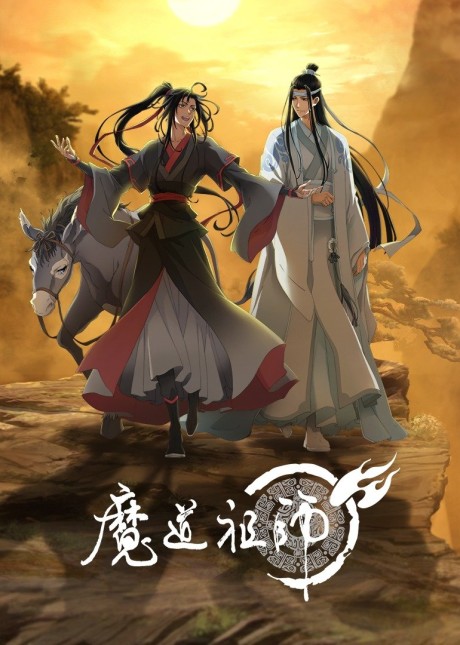
The Founder of Diabolism: Final Season
The third season of Modao Zushi.
📺Anime Details
📝Editorial Analysis
Rain falls in Modao Zushi’s third season—not as weather, but as memory. You feel it first in the silence after Wei Wuxian’s name is spoken in a hushed, broken voice at the foot of the Cloud Recesses steps: no music, just wind lifting ash from cold incense, and the weight of a sword sheath left empty on a lacquered floor. That silence isn’t absence. It’s presence, thick and suffocating—like standing in a temple where every statue has turned its face away.
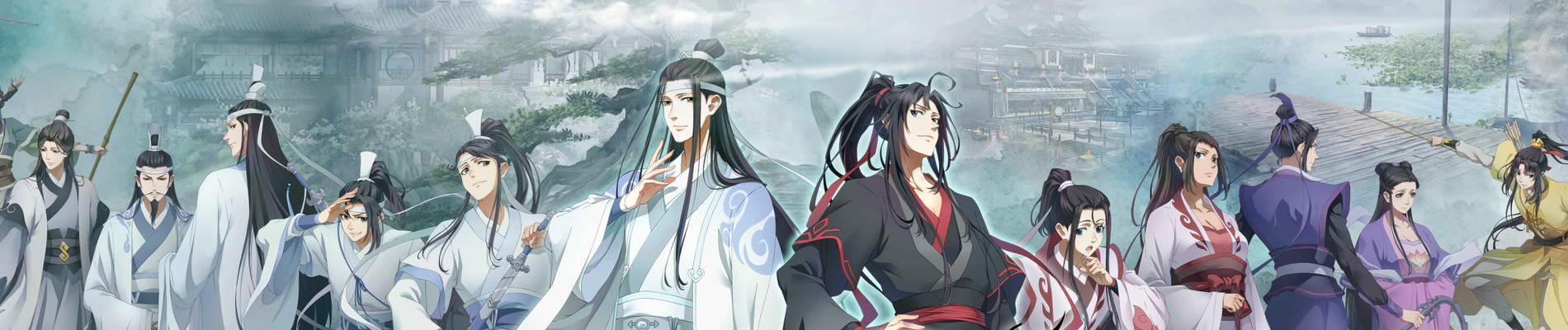
This isn’t wuxia as spectacle. It’s wuxia as unraveling: the slow, inevitable peeling back of reputation, loyalty, and selfhood until only raw nerve remains. The atmosphere doesn’t thrill—it settles, like dust in an abandoned ancestral hall. You don’t watch to escape; you watch because something inside you recognizes the ache of being remembered wrongly, loved conditionally, punished for surviving. There’s no triumphal music when the truth surfaces—only the creak of bamboo underfoot, the tremor in a hand holding a ghostly talisman, the way a single tear evaporates before it hits the ground. It makes you think about how history isn’t written—it’s buried, then exhumed by those who still carry the scent of the grave on their sleeves.
That emotional DNA pulses in Dark Messiah of Might & Magic, not because of its setting or combat system—but because of what the player review calls “ferocious combat in a dark and im…”—that trailing off feels intentional, like breath catching mid-sentence. The game’s “Body Horror & Occult” dimension mirrors the anime’s visceral cost of power: Wei Wuxian’s cultivation isn’t graceful ascension—it’s self-mutilation disguised as mastery, his body a vessel warped by spirits he cannot fully control. When the review notes it “still holds up pretty well today,” it echoes how Modao Zushi’s tragedy refuses to age into nostalgia—it stays present, jagged and unresolved, much like the game’s unpolished, almost uncomfortable physicality: limbs twisting unnaturally in melee, blood clinging to armor like regret.
Then there’s Strong Bad's Cool Game for Attractive People: Season 1, which—on paper—is absurdly dissonant. A comedic point-and-click adventure? But look again at the description: “Enjoy Strong Bad's wacky comedic adventures over 5 full episodes!” And the player review: “With the recent remake of Poker Night, I hope Skunkape considers bringing this game back next….” That longing—not for the jokes, but for the return—mirrors the anime’s central wound. In Modao Zushi, laughter is never safe. It’s weaponized, misremembered, or abruptly silenced—like when Lan Wangji’s rare, quiet chuckle cuts off the moment someone mentions the Yiling Patriarch. The game’s tonal whiplash—absurdity masking deep loneliness—resonates with how the anime uses historical formality and ritual to contain unbearable intimacy. Both works treat comedy not as relief, but as pressure valve: the louder the joke, the more tightly the grief is coiled underneath.
Neither match is about genre alignment. It’s about shared emotional architecture: the way both Dark Messiah and Strong Bad's Cool Game force players into embodied discomfort—whether through clunky, weighty combat or deliberately awkward dialogue trees—that mirrors Modao Zushi’s refusal to let you sit comfortably in catharsis. You don’t “win” in the final season. You witness. You hold space for contradictions: love that looks like vengeance, justice that smells like incense and rot, devotion so fierce it becomes indistinguishable from possession.
This pairing speaks to the person who watches Modao Zushi’s last episode and doesn’t reach for tissues—they reach for a notebook, because they need to write down the exact shade of grey in Lan Wangji’s sleeve as he folds Wei Wuxian’s old flute into silk. It’s for the player who boots up Dark Messiah, not for loot or leveling, but to feel the grind of the blade against bone—and then pauses mid-swing, remembering how Wei Wuxian once laughed while stitching his own wound shut. It’s for the one who replays Strong Bad’s “Dangeresque” episode not for the gags, but for the second where Strong Bad stares blankly at a mirror, and the reflection blinks a half-beat too late—because that’s the moment the mask slips, and you recognize the same exhaustion in your own face. These aren’t stories about heroes or villains. They’re about people who’ve loved too deeply, lived too long, and still wake up each morning wondering if their heart is beating—or just echoing.
🎮17 Games That Match the Vibe

Match Dimensions Explained
❓Frequently Asked Questions
Why does The Founder of Diabolism: Final Season feel so much like Dark Messiah of Might & Magic in its ritual combat scenes?
Because both lean hard into visceral, physics-driven melee with occult stakes—like when you're dismembering cultists mid-ritual in Dark Messiah's 'Cathedral of Flesh' level, where every parry and kick triggers grotesque body horror animations. That same grim, tactile intensity shows up in Diabolism’s finale during the 'Blood Sigil Convergence', where your character’s corrupted limbs warp mid-fight just like Dark Messiah’s bone-shattering finishers.
Is there a TV or anime adaptation of The Founder of Diabolism: Final Season?
No official adaptation exists yet—but fans keep comparing its tonal whiplash to Strong Bad’s Cool Game for Attractive People: Season 1, especially how both pivot from surreal occult dread (like Diabolism’s ‘Mirror Cathedral’ sequence) to abrupt, fourth-wall-breaking comedy (think Strong Bad pausing mid-sacrifice to complain about save files). Skunkape’s recent Poker Night remake has reignited hope, but nothing’s greenlit.
How is The Founder of Diabolism: Final Season different from Strong Bad’s Cool Game for Attractive People: Season 1?
Diabolism leans into oppressive emotional narrative and body horror—like its final boss fight where your own spine unravels into a sigil—while Strong Bad’s game uses those same dimensions (Emotional Narrative, Body Horror & Occult) as ironic scaffolding: one scene has Strong Bad casually reattaching his own severed hand mid-monologue about snack logistics. Same thematic labels, wildly different execution—one terrifies, the other tickles while unsettling.
What’s the best game like The Founder of Diabolism: Final Season if I want that mix of occult dread and dark humor?
Strong Bad’s Cool Game for Attractive People: Season 1 nails it—especially Episode 3, 'The Secret Collectors', where a seemingly goofy antique hunt spirals into a Lovecraftian closet dimension… only for Strong Bad to riff on eldritch geometry like it’s a bad Wi-Fi signal. It shares Diabolism’s 54-score niche in Emotional Narrative + Body Horror & Occult, but swaps despair for absurdity—same vibes, zero self-seriousness.