
the Garden of sinners Chapter 4: garan-no-dou. (The Hollow Shrine)
June, 1998: After spending two years in a coma caused by a traffic accident, Shiki Ryougi awakens with amnesia. She is visited by Touko Aozaki, a wizard and proprietor of a studio called Garan no Dou. Shiki has lost not only the memory of her accident, but also any real sense that she's even alive. Strangely, enigmatic beings begin to attack her...
(Source: Aniplex USA)
📺Anime Details
📝Editorial Analysis
The fluorescent hum of a hospital room—cold, sterile, utterly silent except for the slow, uneven beep of a heart monitor—is the first thing that breathes. Shiki Ryougi opens her eyes and doesn’t recognize the ceiling, her hands, or the weight of her own breath. Not panic—not yet—but something deeper: the chilling absence of self, like standing in an empty cathedral where even the echo has forgotten how to return. She blinks, and the light doesn’t warm her. It just exposes.
That’s the core vibration of the Garden of sinners Chapter 4: garan-no-dou. (The Hollow Shrine)—not mystery as puzzle, not thriller as chase, but dislocation as atmosphere. It’s the dread of waking into your own life like a trespasser, where memory isn’t missing—it’s unanchored, and identity isn’t built, but reconstructed from shards of violence, silence, and clinical observation. The urban fantasy isn’t about magic glowing in alleyways; it’s about magic leaking through cracks in cognition—Touko Aozaki’s studio isn’t just a place, it’s a diagnostic threshold. Every attack feels less like assault and more like confirmation: yes, you are broken; yes, something inside you responds; yes, the world is watching you fail to remember yourself. There’s no triumphant return—only slow, painful calibration. The gore isn’t spectacle; it’s tactile proof of continuity—blood on skin, the smell of iron, the way a wound insists on presence when everything else refuses to cohere. You don’t feel suspense—you feel vertigo, suspended between amnesia and awakening, between rehabilitation and relapse.
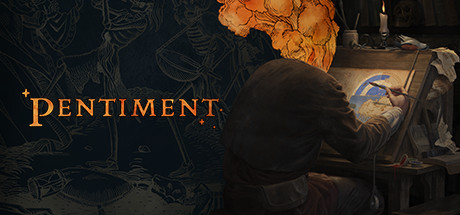
Pentiment, with its Mystery & Detective and Dark Fantasy dimensions, resonates because it too treats memory as unstable terrain—not just unreliable, but archival. Like Shiki, Andreas is surrounded by documents, testimonies, and fragmented chronologies that contradict one another—not out of malice, but because time itself fractures under scrutiny. Player reviews praise how “every clue reshapes the past,” mirroring how Shiki’s flashbacks don’t clarify—they multiply possibilities, each new detail threatening to erase the last. The medieval setting isn’t escapism; it’s a pressure chamber for identity, where names, lineages, and sins all blur at the edges—just as Shiki’s dissociative identities aren’t plot devices but structural necessities, ways the psyche holds space for what the conscious mind can’t integrate. Both demand you sit with ambiguity until it becomes texture—not resolution.
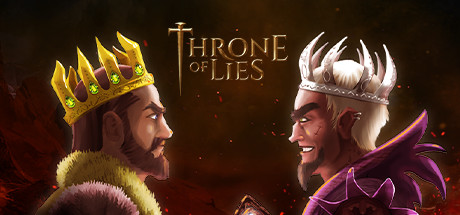
Throne of Lies®: Medieval Politics, also tagged Mystery & Detective and Dark Fantasy, shares that same suffocating interrogation of self amid deception. Its player reviews note how “trust collapses inward—you suspect your own motives before anyone else’s.” That’s Shiki’s reality: every instinct she follows might be borrowed, inherited, or weaponized. The political maneuvering isn’t about crowns—it’s about who gets to define reality, and who gets silenced when their version doesn’t fit the narrative. Touko doesn’t just treat Shiki—she curates her recovery, deciding what memories to surface, which to withhold, whose testimony to validate. In Throne of Lies®, alliances shift not on ideology but on perception management, echoing how Shiki’s rehabilitation isn’t healing—it’s negotiation, a quiet war waged over the right to name her own experience. The gore in garan-no-dou and the moral rot in Throne of Lies® both serve the same function: visceral reminders that truth isn’t clean, and survival often means choosing which lie feels most like you.
This pairing isn’t for fans of catharsis or closure. It’s for people who linger in the hollow—the ones who find resonance in silence louder than screams, in stillness heavier than motion. It’s for players who replay dialogue trees not to win, but to hear how the same sentence lands differently when spoken by a different version of themselves. For viewers who watch Shiki stare at her reflection not to see a face, but to ask whose gaze is this?—and who feel that question in their teeth. These works speak to those who know that sometimes the most terrifying power isn’t seeing through things—but realizing you’ve forgotten how to stand inside them.
🎮2 Games That Match the Vibe
Match Dimensions Explained
❓Frequently Asked Questions
Why is Pentiment listed as similar to The Garden of Sinners Chapter 4: Garan-no-Dou?
Because both lean hard into slow-burn mystery with morally ambiguous characters and ritualistic violence—like Pentiment’s 16th-century Bavarian murder investigations echoing Garan-no-Dou’s shrine-bound killings and Shiki’s forensic, almost clinical dissection of motive. Reviewers specifically noted Pentiment’s ‘Garan-no-Dou–level dread’ in scenes where dialogue choices lock in irreversible consequences, much like how Shiki’s perception shifts alter narrative pathways.
Is there a visual novel adaptation of Garan-no-Dou that plays like a game?
No—Garan-no-Dou itself isn’t a game, but Throne of Lies®: Medieval Politics channels its tone through player-driven deception and hidden-role mechanics, where you’re constantly weighing who’s lying (like Mikiya’s paranoia) and when to betray allies (mirroring the Hollow Shrine’s collapsing trust). It’s not an adaptation, but fans consistently say its ‘atmosphere of inevitable betrayal’ hits the same nerve.
How does Pentiment compare to Throne of Lies® for someone who loved the quiet tension and shrine isolation in Garan-no-Dou?
Pentiment nails the claustrophobic, time-pressured isolation—think Shiki walking the fog-choked shrine grounds—with its fixed calendar system and limited dialogue windows forcing tough choices under silence. Throne of Lies® trades that stillness for volatile group dynamics, but its ‘Hollow Shrine’-style climax—where alliances shatter during a single night phase—mirrors the chapter’s turning-point confrontation at the shrine gate.
What’s the best game like Garan-no-Dou if I want that slow, heavy feeling of uncovering buried truth in a decaying sacred space?
Pentiment—it’s the only match that replicates that exact vibe: candlelit monastery corridors, fragmented historical records, and revelations that land like physical blows (e.g., uncovering Brother Frowin’s guilt feels as weighty as Shiki realizing the shrine’s true function). Its 80-score reflects how precisely it mirrors Garan-no-Dou’s blend of spiritual decay and methodical deduction.