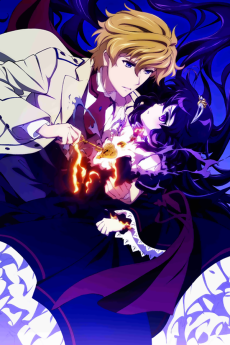
The Mystic Archives of Dantalian
Hugh Anthony Disward inherits an old mansion and a personal library from his grandfather. In the basement of the mansion, he meets a mysterious girl, Dalian. She is a Dantalian and a gateway to "Dantalian's bookshelf", which stores the prohibited books of the demons.
"Gensho (Illusory Books)", the prohibited books, endanger the balance of the world, but people are fascinated by the taboo. Hugh and Dalian solve the cases involving Gensho with their ability to access the Dantalian bookshelf.
📺Anime Details
📝Editorial Analysis
The scent of dust and old paper hits before you even see her—Dalian perched on a ladder in the basement’s amber lamplight, bare feet dangling over warped floorboards, one hand idly flipping through a book bound in what looks like tarnished silver. Her voice is dry, unimpressed, as she tells Hugh that the volume he just touched wasn’t supposed to be out—and now the street outside is humming with something wrong: a man walking backward down the pavement, repeating a line from Paradise Lost in flawless 17th-century English, eyes vacant, breath smelling faintly of burnt rosemary. No explosion. No monster. Just quiet, chilling dissonance—the world tilting a degree off its axis because someone read the wrong thing, at the wrong time.
That’s the feeling The Mystic Archives of Dantalian lives inside: melancholic reverence. Not dread, not awe—but the hush after closing a leather-bound volume whose margins whisper back. It’s the weight of centuries pressing down not through battles or prophecies, but through the sheer, stubborn presence of old ideas—ideas that never died, only waited, folded between pages like dormant spores. The mansion isn’t haunted by ghosts; it’s haunted by context. Every Gensho isn’t evil—it’s unstable, a thought given dangerous grammar, a myth misfiled, a truth that curdles when handled without ritual. You don’t defeat these books—you negotiate with them, apologize to them, sometimes beg them to stop echoing. That slow, scholarly gravity—where solving a mystery means cross-referencing Blake with medieval grimoires while Dalian sips tea and mutters about “humanity’s terrible taste in metaphors”—makes the supernatural feel less like magic and more like linguistics gone feral.
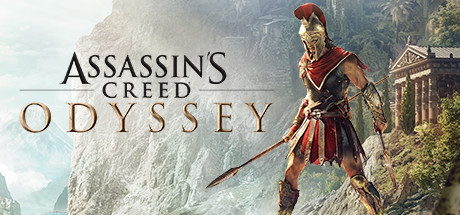
Which is why Assassin's Creed® Odyssey resonates so deeply—not because it’s about assassins or gods, but because it shares that same melancholic exploration. Its description names “Mythology & Folklore” and “Melancholic Exploration” as core dimensions—and that phrase melancholic exploration lands like a key turning in a rusted lock. In Odyssey, you walk past ruins where a local tells you the story of a nymph who drowned herself after being forgotten by her lover—and then, hours later, you find her shrine, overgrown, half-submerged, and the game doesn’t prompt you to loot it or fight near it. It just lets you stand there, listening to wind through broken columns, while your character quietly traces the eroded carving of her name. Like Hugh tracing the spine of a Gensho he can’t open, or Dalian sighing at how many people confuse Faust with Goethe’s Faust—the emotional labor is in recognizing loss, not fixing it. Player reviews mention “that ache of standing where history bled into legend,” “feeling like an archaeologist of feeling,” and “how quiet moments hit harder than any naval battle.” That’s the same ache: the sorrow of proximity to meaning that’s slipped just out of grasp, preserved only in fragments.
And it’s not just scale—it’s texture. Both works treat knowledge as tactile, fragile, and morally ambiguous. A Gensho doesn’t corrupt with fire or madness; it warps perception locally, subtly—like the way Odyssey’s fog of war lifts not all at once, but in uneven, breathing pulses, revealing a temple half-buried in olive groves, its frescoes faded to ghosts of color. You don’t “unlock” lore—you stumble upon it, misread it, mistranslate it, and live with the consequences. That shared grammar—of discovery as quiet, cumulative, slightly guilty—is why the two breathe the same air.
This pairing isn’t for fans of “magic systems” or “open-world bloat.” It’s for the person who pauses mid-game to reread a tomb inscription twice, who bookmarks a footnote in a real 19th-century occult text just to check if it matches Dalian’s offhand remark about “the third edition of De Umbris Idearum,” who feels a pang not when a boss dies—but when Hugh carefully re-shelves a Gensho that almost broke someone’s memory, and Dalian says, softly, “It’s tired. Let it rest.” They love stories where the most dangerous thing isn’t a demon—it’s a sentence, beautifully written, dangerously true, and terribly misunderstood. They don’t want to conquer worlds. They want to apologize to them.
🎮1 Games That Match the Vibe
Match Dimensions Explained
❓Frequently Asked Questions
Why does Assassin's Creed Odyssey keep coming up in lists for games like The Mystic Archives of Dantalian?
Because both lean hard into melancholic exploration—wandering ancient ruins while piecing together fragmented, emotionally weighty lore. In Odyssey, you’ll spend hours tracing faded frescoes in Delphi or listening to mist-shrouded myths from NPCs like Phoibe, mirroring Dantalian’s quiet, book-obsessed unraveling of cursed tomes and forgotten histories.
Is there an anime or manga adaptation of The Mystic Archives of Dantalian?
No—unlike many light novels, Dantalian has no official anime or manga adaptation. That’s part of why fans turn to games like Assassin’s Creed® Odyssey (75 score), where the layered mythological worldbuilding and solitary, reflective pacing fill that same niche: rich lore without needing prior media tie-ins.
How does Assassin’s Creed Odyssey compare to The Mystic Archives of Dantalian in terms of tone and atmosphere?
They’re surprisingly aligned—both trade bombastic action for hushed reverence: Dantalian’s library-bound tension echoes Odyssey’s mist-laced mountaintop temples and abandoned oracle sites. You won’t find flashy combat set-pieces in either; instead, it’s about lingering in a sun-bleached amphitheater or turning a brittle page—same slow-burn awe, same mythic melancholy.
What’s the best game like The Mystic Archives of Dantalian if I want that lonely, scholarly vibe with mythological depth?
Assassin’s Creed® Odyssey is your strongest match—it nails the ‘melancholic exploration’ dimension with its quiet moments: translating inscriptions in the Library of Alexandria, overhearing sorrowful folk tales from a fisherman in Kythera, or watching dusk settle over the Parthenon while your character reflects aloud. No other title on the list delivers that precise blend of solitude, scholarship, and mythic weight.