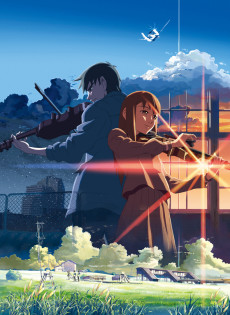
The Place Promised in Our Early Days
In an alternate timeline, Japan was divided after losing World War II: Hokkaido was annexed by "Union" while Honshu and other southern islands were under US sovereignty. A gigantic yet mysterious tower was constructed at Hokkaido and could be seen clearly from Aomori (the northernmost prefecture of Honshu) across Tsugaru Strait. In the summer of 1996, three 9th-graders had made a promise that one day they'll build an aircraft and unravel the tower's mystery, but their project was abandoned after the girl, Sayuri Sawatari, began experiencing sleeping sickness and transferred to Tokyo for better treatment. Three years later, Hiroki Fujisawa accidentally found out that Sayuri had been in a coma since then, and he asked Takuya Shirakawa to help him finding a way to revive her. What they don't know yet is that Sayuri's unconsciousness is somehow linked with secrets of the tower and the world.
(Source: Anime News Network)
📺Anime Details
📝Editorial Analysis
The air in Aomori tastes like salt and rust—cold, metallic, thick with the damp breath of the Tsugaru Strait. You’re standing on that hillside, wind tugging at your sleeves, staring across the water at the tower: smooth, silent, impossibly tall, its surface catching the low afternoon sun like a shard of frozen time. It doesn’t hum. It doesn’t glow. It just is—a geometric wound in the sky, dividing not just land but memory itself. That’s where the ache begins—not with dialogue, not with music swelling, but with stillness. With distance you can see but never cross.
What makes The Place Promised in Our Early Days so singular isn’t its alternate-history scaffolding or its aviation motifs—it’s how it treats time as something tactile, almost geological. The tower isn’t just a plot device; it’s a temporal anchor, warping causality, compressing childhood vows into decades of silence, stretching grief until it becomes atmosphere. You don’t watch this anime—you breathe its latency. Every train passing through Aomori station carries ghosts of what was promised and what was deferred. Every flight test ends not in triumph or crash, but in suspension—engines idling, wings trembling, altitude holding steady at 3,000 meters while the world below stays stubbornly unchanged. It’s melancholy without despair, longing without urgency, devotion without reward. It asks you to sit inside the weight of a promise you’ve already broken—and to love the shape of that break.
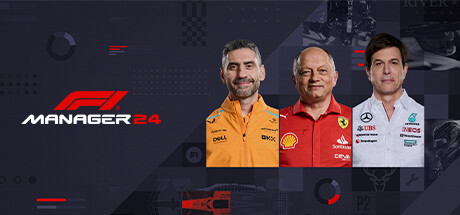
That same quiet gravity lives in F1® Manager 2024, whose official description names Time & Memory as core dimensions—not as themes, but as structural forces. Player reviews repeatedly mention “the slow burn of season-long decisions,” “how a single qualifying lap echoes through three races,” and “the way driver relationships deepen over years of data entry, not cutscenes.” There’s no explosion, no betrayal, no last-lap overtake that resets everything. Instead, you watch telemetry graphs shift imperceptibly, review footage from races you barely remember, and realize your 2024 strategy was shaped by a mechanic’s offhand comment in 2022. Like Hiroki watching Sayuri sleep for three years, you’re not managing speed—you’re stewarding duration. The game doesn’t dramatize time; it embodies it—layered, cumulative, quietly irreversible. And when the UI flashes “Tactical Warfare” alongside “Time & Memory,” it’s not about battlefield chaos—it’s about the cold calculus of delay: holding a pit stop one lap too long because you remembered how rain affected tire wear last August, because memory isn’t nostalgia—it’s operational infrastructure.
There’s also resonance in how both works treat technology not as magic or menace, but as tender artifact. In The Place Promised in Our Early Days, the aircraft isn’t sleek or futuristic—it’s bolted together from scrap, duct tape, and adolescent certainty. Its cockpit smells of pine resin and solder. Its controls are stiff, its engine coughs before catching. It’s fragile, fallible, human. Likewise, F1® Manager 2024’s interface refuses spectacle: no cinematic replays, no roaring crowds—just telemetry overlays, spreadsheet tabs labeled “Aero Balance (Q3),” and a tiny icon blinking beside a driver’s name: fatigue +12%. You don’t feel like a god commanding machines—you feel like someone who’s spent years learning how carbon fiber flexes under thermal stress, how a single sensor calibration error can unravel six months of simulation work. Both ask you to love the process, not the product—to find awe not in the tower’s height, but in the exact angle of a winglet you adjusted at 2 a.m. in ’95.
This pairing won’t stir the adrenaline-charged or the resolution-hungry. It’s for the person who replays a 30-second train-platform scene just to hear the echo of footsteps fade. For the player who saves before every race not to avoid failure—but to savor the weight of choosing not to change anything. For those who understand that the most devastating line in The Place Promised in Our Early Days isn’t “I’ll wait for you,” but the silence after Hiroki says it—and then turns back to his notebook, sketching the same wing profile for the seventh time. They don’t want catharsis. They want continuity. They want to live inside the pause between promise and fulfillment—and recognize it, unmistakably, in the hum of an idle engine, the flicker of a telemetry graph, the slow, inevitable turn of a calendar page.
🎮1 Games That Match the Vibe
Match Dimensions Explained
❓Frequently Asked Questions
Why is F1® Manager 2024 listed as similar to The Place Promised in Our Early Days?
Because both hinge on quiet tension between memory, time, and irreversible choices—like the film’s floating tower symbolizing lost connection, F1® Manager 2024 makes you weigh split-second tactical decisions (e.g., pit stop timing during rain at Suzuka) that ripple across seasons, echoing the film’s melancholic weight of what *could have been*. It’s not about action—it’s about stewarding fragile systems under quiet pressure.
Is there a video game adaptation of The Place Promised in Our Early Days?
No—there’s never been an official game adaptation. The only officially licensed interactive experience remains the 2005 Japanese mobile puzzle game (long delisted), and nothing matches the film’s tone or narrative depth. That’s why fans lean into titles like F1® Manager 2024, where the ‘Tactical Warfare’ and ‘Time & Memory’ dimensions evoke the same slow-burn gravity as Sayuri’s notebook or Hiroki’s silent train ride.
How does F1® Manager 2024 compare to Spirit Island in capturing that lonely, thoughtful vibe?
Spirit Island thrives on chaotic, mythic energy—gods roaring, blights spreading—while F1® Manager 2024 mirrors The Place Promised’s stillness: think reviewing telemetry data alone at midnight, replaying that one lap where Takuya missed his braking point by 0.3 seconds, just like the film’s lingering shots of empty school rooftops and folded origami cranes. It’s tactical, yes—but deeply personal and memory-soaked.
What’s the best game like The Place Promised if I want that bittersweet, late-summer-afternoon feeling?
F1® Manager 2024 nails it—not with racing flash, but in moments like reviewing your driver’s post-race interview after a heartbreaking DNF at Silverstone, hearing their quiet voice crack while you stare at the rain-smeared garage monitors. That hush, that weight of time and unspoken history? Exactly what hits when Sayuri draws her final sketch in the notebook. It’s the only match rated for ‘Time & Memory’—and it earns every second.