
Theatre of Darkness: Yamishibai
A picture-story style of animation whose motif is surrounded and based off the rumors, and urban legends throughout the history of Japan.
(Source: Crunchyroll)
📺Anime Details
📝Editorial Analysis
The flicker of a single paper lantern swaying in a rain-slicked alley—no music, no dialogue, just the wet shush of a train passing unseen beyond a rusted fence—and then, the slow tilt downward to where a child’s sandal lies abandoned beside a puddle that isn’t reflecting the sky. That’s Theatre of Darkness: Yamishibai in its purest breath: not shock, but dread held in suspension, like the moment your foot hovers over a stair that shouldn’t be there.
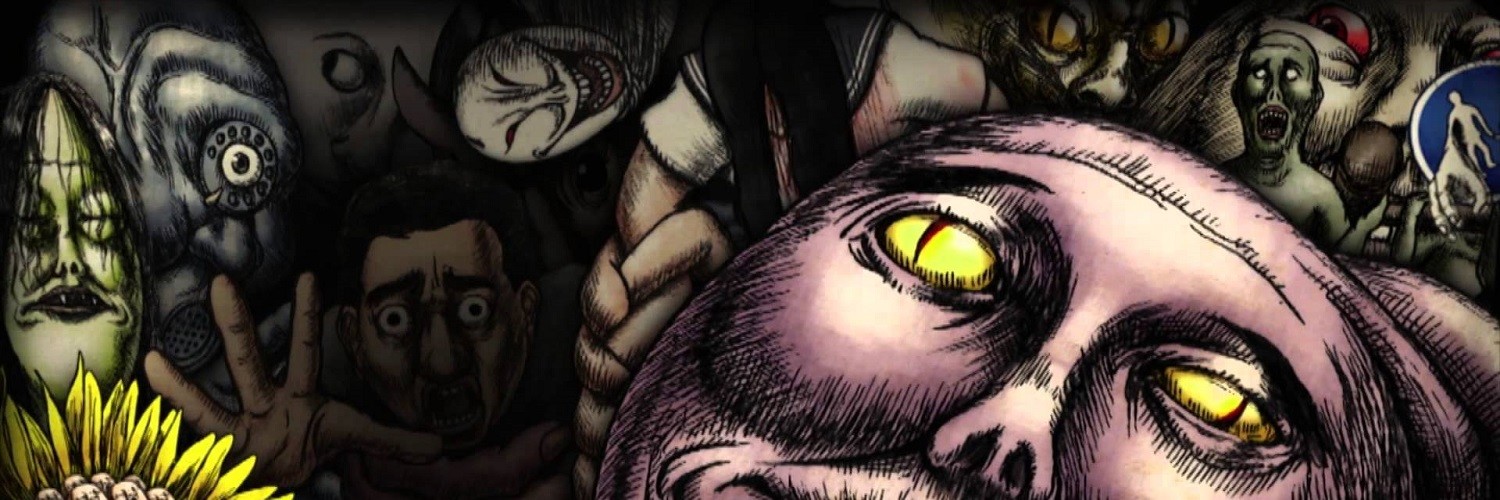
What makes Yamishibai’s atmosphere singular isn’t its ghosts or demons—it’s how it weaponizes absence. The picture-story style strips away cinematic polish; faces are flat, movements minimal, voices hushed or absent altogether. You’re not watching horror unfold—you’re overhearing it, as if standing just outside a shōji screen while something unnameable finishes its work on the other side. It makes you feel unmoored, like memory itself is fraying at the edges. This isn’t urban fantasy as spectacle—it’s urban fantasy as residue: the chill left behind after a rumor settles into concrete, the weight of a train schedule that never accounts for who got off between stations, the quiet tragedy of a body that remembers pain long after the soul has slipped out. It lingers not in jumpscares, but in the hollow space after a whisper ends.
That same emotional DNA pulses through Arx Fatalis. Its description calls it a “post-apocalyptic fantasy world,” but what resonates with Yamishibai isn’t the scale—it’s the melancholic exploration. Like wandering through a station platform at 3 a.m. in Yamishibai, Arx forces you to move slowly, to notice cracked tiles, half-buried glyphs, and the way light doesn’t quite reach certain corners—not because it’s dark, but because something refuses illumination. The player review nails it: “Exploration is truly e…”—that trailing ellipsis feels intentional, like the game, too, cuts off mid-thought, leaving you staring at a wall you know shouldn’t be there. Both refuse exposition; both trust you to feel the wrongness before you understand it. And the tag Body Horror & Occult? That’s the shared tremor—the way a demon’s jaw unhinges in Yamishibai mirrors Arx’s grotesque transformations, not as spectacle, but as inevitability, as if flesh were always just one misstep from remembering its own corruption.
There’s also a quieter echo in how both treat time—not as progression, but as layering. In Yamishibai, a train appears in three episodes across different seasons, always moving the same direction, always carrying someone who won’t arrive. In Arx Fatalis, the world doesn’t rebuild—it accumulates: ruins built atop older ruins, spells carved over older carvings, bodies reshaped by magic that feels less like power and more like erosion. Neither offers catharsis. They offer resonance—low, sustained, and deeply uncomfortable.
Who loves this pairing? Not the seeker of adrenaline or lore dumps. It’s the person who pauses mid-scroll when a streetlamp flickers just once too many times, who walks home a different route after hearing a story about a bridge that “wasn’t on the map last year.” It’s the reader who underlines sentences not for meaning, but for texture—the grain of old wood, the smell of damp tatami, the way silence in a crowded train can suddenly go thick. It’s the player who saves not to win, but to sit in a ruined chapel for ten minutes, listening to wind whistle through broken arches, waiting for the game to breathe again. These aren’t stories about monsters—they’re about the quiet, inescapable hum of the uncanny, the way dread settles not in the dark, but in the space between one blink and the next. That’s where Yamishibai lives. That’s where Arx Fatalis waits. Not with claws or curses—but with stillness, and the terrible, beautiful weight of what’s already passed.
🎮19 Games That Match the Vibe





Match Dimensions Explained
❓Frequently Asked Questions
Why is Arx Fatalis listed as similar to Theatre of Darkness: Yamishibai?
Because both lean hard into melancholic exploration and body horror–occult atmosphere—like when you crawl through Arx’s crumbling, blood-slicked catacombs and trigger a ritual that warps your character’s limbs, echoing Yamishibai’s slow-burn dread and grotesque transformations. The way Arx uses real-time spellcasting via mouse-drawn runes (e.g., the ‘Flesh’ rune that mutates enemies) mirrors Yamishibai’s tactile, almost ritualistic pacing and visceral unease.
Is there a Yamishibai anime or game adaptation?
No official Yamishibai game adaptation exists—but Arx Fatalis is the closest spiritual cousin fans keep circling back to, especially for its oppressive, lore-dense worldbuilding and moments like the 'Cult of the Flesh' dungeon where NPCs whisper fragmented, unsettling parables just like Yamishibai’s narrators. It’s not licensed, but its tone, pacing, and occult weight hit that same nerve.
Arx Fatalis vs. Theatre of Darkness: Yamishibai—which is better for slow, atmospheric dread?
If you want dread built on silence, shadow, and implication (like Yamishibai’s hallway scenes with the faceless girl), stick with Yamishibai—but if you crave dread *you physically navigate*, like creeping through Arx’s pitch-black mines with only a flickering torch while mutated cultists skitter behind cracked walls, then Arx Fatalis delivers that immersive, claustrophobic tension in spades. Both score high on Melancholic Exploration and Body Horror & Occult—but Arx makes you *feel* the decay in your bones.
What if I love Yamishibai’s eerie stillness but hate combat-heavy games?
You’ll likely love Arx Fatalis’ deliberate pace—even though it’s an RPG, combat is minimal and often avoidable; much of the horror comes from environmental storytelling, like discovering the ruined Temple of Arah with its weeping stone statues and audio logs describing failed immortality rituals. Its 56 Metacritic score reflects how its melancholic exploration and occult weight shine *without* forcing action—just like Yamishibai’s quiet, scene-by-scene unraveling.