
Vampire Knight: Guilty
As a direct continuation of the first season, Zero comes back after his disappearance from the academy. Despite her relief, Yuuki, whose past is still shrouded in mystery, wonders what exactly happened to Zero during the separation. As Zero continues having the strange vision that appeared since the day he drank Kaname's blood, he visits the now awakened Maria Kurenai in an attempt to find answers. She only provides him with a cryptic answer that suggests who the true enemy really might be.
In the meantime, vampires from the Supreme Vampire Council arrive at the academy in order to punish Zero with death for his sin of killing a pureblood. However, Kaname intervenes with the council's decision with not only the intention of saving Zero but with another purpose unbeknown to everyone around him.
[Written by MAL Rewrite]
📺Anime Details
📝Editorial Analysis
Rain slicks the moonlit courtyard of Cross Academy—cold, silver, and silent. Yuuki stands beneath the weeping willow, breath shallow, fingers pressed to her throat where Kaname’s fangs once pierced her skin. Zero watches from the shadows, his crimson eyes burning with something older than anger: recognition, grief, hunger. Not for blood—but for the truth buried beneath three years of silence, two identities, and one shared, unspoken vow. That stillness—charged, fragile, thick with what cannot be said—is where Vampire Knight: Guilty lives.
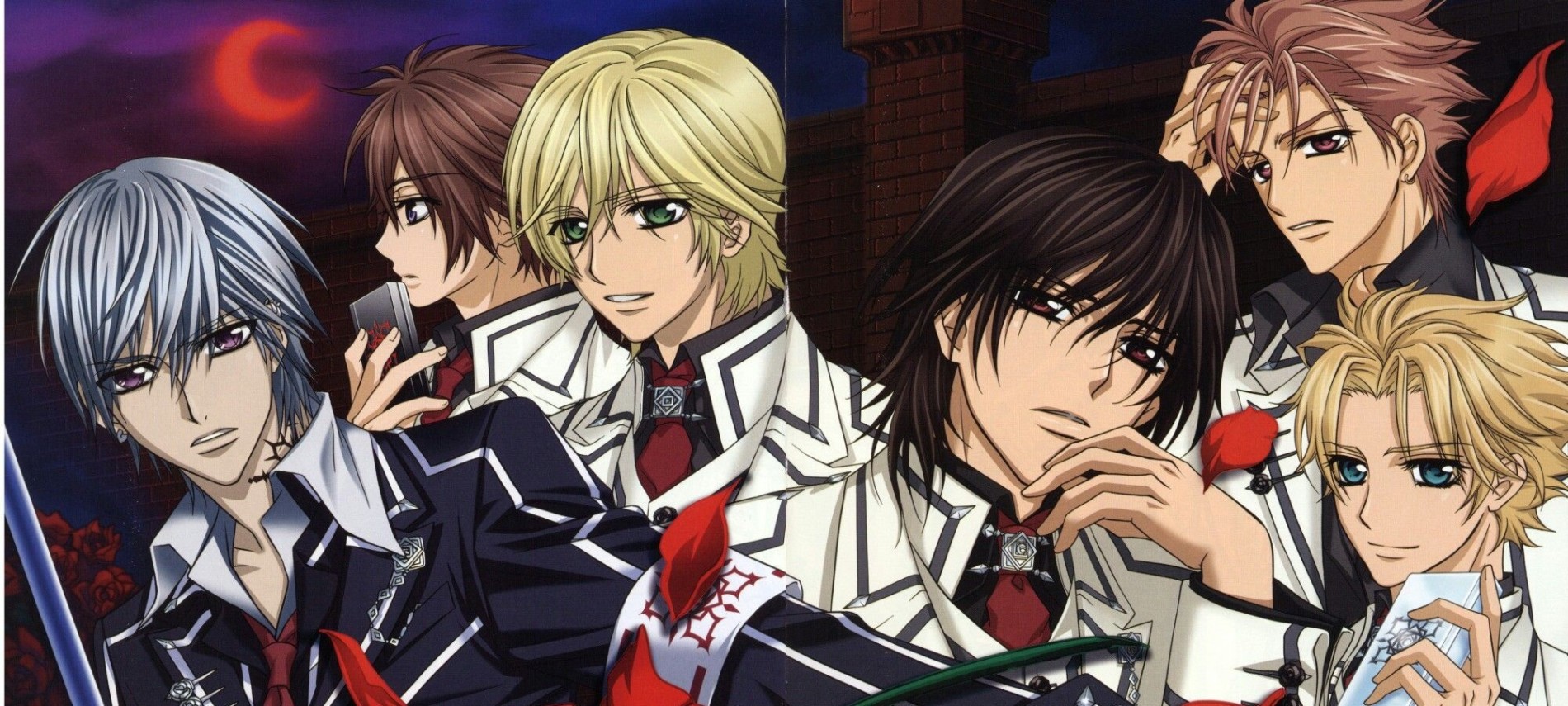
It doesn’t pulse with battle cries or explode in spectacle. Its atmosphere is weight: the weight of a name withheld, the weight of a kiss that tastes like ash and memory, the weight of standing on a bridge between human and vampire while the floorboards groan under inherited sin. This isn’t gothic ornament—it’s gothic resonance. Every hallway hums with unsaid history; every glance across the dining hall carries the gravity of bloodlines tangled like roots beneath marble floors. You don’t watch it to escape—you watch it to lean in, to feel your own pulse sync with Yuuki’s trembling hands as she reaches for Zero’s coat, knowing he’ll flinch—not from disgust, but from the sheer danger of tenderness in a world where love is coded as transgression, loyalty as self-erasure. It makes you think about legacy not as inheritance, but as sentence—and whether breaking it requires more courage than enduring it.
That emotional DNA—intimate dread, romantic fatalism, moral vertigo wrapped in velvet gloom—finds its closest echo not in flashy action RPGs, but in games where choice bleeds into consequence and romance feels less like courtship and more like covenant. Dragon Age: Origins, for instance, matches not through vampires or boarding schools, but through its shoujo-inflected dark fantasy: a world where love isn’t just personal—it’s political, sacrificial, often taboo. The player review notes how the pause-attack mechanic “help[s] a lot to strategize your tactic”—and that’s precisely how Vampire Knight: Guilty operates emotionally: every confession, every withheld truth, every shared glance is a tactical pause before irreversible commitment. You weigh words like spells. You hold your breath before speaking a name aloud—because names here bind. Like Alistair’s lineage or Morrigan’s bargain, Yuuki’s bloodline isn’t backstory—it’s battlefield.
The resonance deepens when you consider the structure of revelation. In Vampire Knight: Guilty, Zero’s visions aren’t exposition—they’re visceral intrusions: fragmented, bodily, disorienting. Maria Kurenai offers no answers—only riddles that coil tighter around identity and intent. That mirrors how Dragon Age: Origins unfolds its lore: not through infodumps, but through half-overheard tavern whispers, crumbling codex entries, and companions whose loyalty hinges on interpreting silences—not just actions. The player review praises the story as “great,” but what makes it feel great is its refusal to clarify too soon. Like Yuuki staring at Kaname’s retreating back, wondering if his kindness is protection or possession, you’re left parsing motive in real time—doubt becomes the dominant emotional rhythm.
And then there’s the boarding school as gilded cage: rigid hierarchy, enforced decorum, corridors that watch you. Cross Academy isn’t just setting—it’s architecture of control, where uniforms mask fangs and prefect duties conceal surveillance. That claustrophobic intimacy—the way power circulates in glances, assignments, and assigned dorm rooms—echoes the noble courts and chantries of Thedas. When the player says they “have fun with it” on their deck, it’s not mindless fun—it’s the slow, deliberate thrill of navigating layered loyalties, where choosing who to trust feels like choosing which wound to reopen.
This pairing sings for the viewer who cries not at deaths, but at reunions—the kind where relief is laced with terror because the person returning is changed, and so are you. For the player who replays dialogue trees not to optimize stats, but to hear a character’s voice crack on the word “remember.” For the reader who underlines passages where love and duty wear the same face—and wonders, quietly, if devotion without surrender is even possible. They don’t want escapism. They want resonance: the shiver when a vampire’s hand hovers near a throat—not to bite, but to measure the pulse of consequence. That’s where Vampire Knight: Guilty and Dragon Age: Origins meet—not in monsters or magic, but in the unbearable, exquisite tension of loving someone whose very existence forces you to choose: yourself, them, or the lie that keeps both alive.
🎮3 Games That Match the Vibe

Match Dimensions Explained
❓Frequently Asked Questions
Why is Dragon Age: Origins listed as a game like Vampire Knight: Guilty?
Because both lean hard into brooding romance amid gothic danger—think Yuki’s torn loyalties between Zero and Kaname mirrored in Alistair or Morrigan’s emotionally charged, consequence-heavy love scenes. The pause-and-plan combat even feels like those tense, slow-burn confrontations in Guilty where every choice (like confessing feelings mid-battle) reshapes your path.
Is there a Vampire Knight: Guilty mobile game or visual novel adaptation?
No official mobile game or visual novel exists—but Dragon Age: Origins nails that same shoujo-tinged dark fantasy vibe with its layered romantic arcs and morally gray choices. You won’t get Zero’s silver hair or Kaname’s stoic glares, but you *will* get Yuki-style emotional whiplash when deciding who to trust—and who to betray—in the Fade or at the Landsmeet.
Dragon Age: Origins vs. Doki Doki Literature Club! — which is closer to Vampire Knight: Guilty’s tone?
Origins, hands down. DDLC leans into meta-horror and playful absurdity, while Origins matches Guilty’s gothic gravitas: think blood-soaked Chantry battles instead of poetry club banter, and romance options that carry real weight—like choosing between Leliana’s quiet devotion or Zevran’s dangerous charm, echoing Yuki’s impossible triangle.
What’s the best game like Vampire Knight: Guilty if I want that ‘tragic noble vampire + forbidden love’ mood?
Dragon Age: Origins—it’s got the brooding, centuries-old elven mage Wynne (a mentor figure with ancient sorrow), the morally ambiguous blood magic system that echoes Zero’s cursed power, and romance paths where love literally costs lives. That scene where you kneel before the Arl of Redcliffe, heart pounding as he decides your fate? Pure Guilty-level tension.