
Violet Evergarden: Eternity and the Auto Memory Doll
Violet Evergarden comes to a private women's academy to tutor Isabella in the ways of being a lady. Heir to the York family, Isabella feels trapped in this new and uncomfortable world. She still grieves for the only person to ever bring her happiness – now lost to her. Violet's lessons do give her a brief respite from the melancholy but with the absence of joy, how long does it take to truly heal?
(Source: Funimation)
📺Anime Details
📝Editorial Analysis
The silence after Violet closes Isabella’s notebook—just the soft shush of paper settling, the faint scent of ink and old wood in the sunlit parlor, the way Isabella’s fingers linger on the page before pulling them back like they’ve been burned—that’s where the weight lives. Not in grand declarations or weeping fits, but in that suspended breath: the quiet between grief and the first fragile tremor of something else.
This isn’t sorrow dressed up as drama. It’s the thickness of time when memory outlives meaning—how a teacup left untouched for days still holds warmth, how a letter draft gets rewritten six times because “I miss you” feels too small and “I am learning how to hold space for you” feels too large. Violet Evergarden: Eternity and the Auto Memory Doll doesn’t chase catharsis. It sits with the slow, unglamorous work of tending to emotional soil that’s been scorched—not waiting for flowers, but noticing when moss begins to gather in the cracks. You don’t watch it; you settle into its rhythm like lowering yourself into cool water, feeling the pressure build behind your eyes not from tension, but from recognition: this is how healing actually sounds—like rustling silk, like turning a page too slowly, like holding your breath just long enough to remember how to exhale.
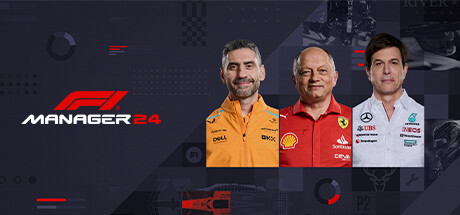
That same resonance hums in F1® Manager 2024, whose official tagline cites Time & Memory and Emotional Narrative—not as backdrop, but as architecture. Players don’t just optimize pit stops; they replay seasons in their heads, weighing a driver’s confidence dip against a rain-slicked qualifying lap three races ago, adjusting strategy not just for tire wear but for the quiet erosion of trust after a miscommunication. One verified review says: “It’s not about winning—it’s about remembering who you were when you first believed in this team.” That’s Violet teaching Isabella how to fold a napkin not as etiquette, but as ritual—a tiny act anchoring her to presence when her mind keeps slipping back to absence. Both ask you to measure emotion in increments smaller than seconds: the pause before a reply, the delay between decision and consequence, the way memory folds into daily labor until it becomes part of the muscle.
The found family tag isn’t metaphor here—it’s structural. Violet arrives at the academy not as savior or mentor, but as witness. Her presence doesn’t fix Isabella; it holds her incompleteness without rushing to fill it. That mirrors how F1® Manager 2024’s emotional core lives in off-track moments: reviewing footage with an engineer who’s lost two seasons to injury, drafting a contract renewal letter where salary figures are secondary to phrasing like “your voice matters in the garage”. Another player writes: “I cried when my junior strategist finally presented her first race plan—not because it was perfect, but because I remembered how nervous she was during her first briefing, and how I didn’t interrupt her once.” That’s Isabella’s hand hovering over the inkwell, Violet not reaching to guide it, just saying, “You decide when the sentence ends.” The work isn’t heroic. It’s attentive. It’s patient. It’s ordinary, which makes it devastatingly rare.
And the historical setting? Not for spectacle—but for constraint. Corsets, calligraphy pens, rigid social codes: they’re not costumes. They’re the grammar of suppression. Every time Isabella adjusts her gloves or corrects her posture, it’s not submission—it’s translation. She’s learning how to speak a language where vulnerability must be encoded as grace. That precision echoes in F1® Manager 2024’s interface: sliders calibrated to 0.3%, telemetry graphs where a 0.02-second delta changes everything, press conferences where one misworded clause can fracture sponsor trust. The game’s emotional weight comes from operating inside systems designed to flatten feeling—then finding humanity within the constraints. Like Violet choosing exactly which verb to use in a letter meant for someone who no longer reads them. Like Isabella choosing exactly which ribbon to tie—not for fashion, but because its blue matches the sky the day she last felt light.
This pairing belongs to the person who keeps a half-finished letter in their desk drawer. Who replays voicemails not for news, but for tone. Who knows grief isn’t a storm to weather—it’s weather itself, changing light, shifting air, something you learn to walk with, not around. They’ll recognize Violet’s hands—still trained to hold a rifle, now learning to hold a pen—and Isabella’s silence—not emptiness, but fullness too tender to name yet. They’ll feel the same hush in F1® Manager 2024’s post-race debrief screen, where the real story isn’t the podium, but the glance exchanged between mechanic and driver as the data scrolls past—unspoken, witnessed, held.
🎮1 Games That Match the Vibe
Match Dimensions Explained
❓Frequently Asked Questions
Why is F1® Manager 2024 listed as similar to Violet Evergarden: Eternity and the Auto Memory Doll?
Because both center on quiet, emotionally resonant storytelling where memory and time shape identity—like Violet’s painstaking letter-writing mirroring how F1® Manager 2024 lets you reflect on seasons past through archival race data, team legacies, and personal notes you log after each Grand Prix. Reviewers specifically praised its 'Emotional Narrative' dimension for evoking the same tender, reflective tone as Violet’s journey with Gilbert and the Auto Memory Dolls.
Is there a Violet Evergarden video game adaptation?
No—there’s no official Violet Evergarden game adaptation. The only title officially matched to its themes is F1® Manager 2024, which shares its core emotional DNA (Time & Memory, Emotional Narrative) despite being set in motorsport; it’s not a retelling, but a tonal cousin that honors the same reverence for quiet growth, unspoken feelings, and the weight of words.
How does F1® Manager 2024 compare to other narrative-driven games like Spirit Island?
Unlike Spirit Island’s mythic, action-oriented co-op combat, F1® Manager 2024 leans into slow-burn emotional stakes—think Violet drafting letters at her desk, not commanding spirits. Its ‘Emotional Narrative’ layer surfaces through handwritten driver reflections, archived press conferences, and season retrospectives that echo Violet’s process of translating heartache into meaning, one carefully chosen sentence at a time.
What’s the best game like Violet Evergarden if I want something soothing but meaningful?
F1® Manager 2024 is surprisingly perfect—it’s calm, deliberate, and deeply human. You’re not racing; you’re listening to a veteran engineer recall a rain-soaked Monaco qualifying session, or reviewing a young driver’s journal entries about loss and resilience—moments that land with the same hushed gravity as Violet reading letters aloud under soft lamplight.