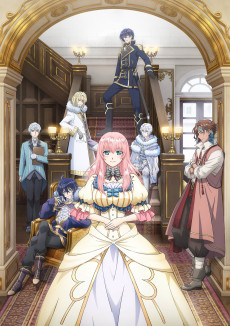
7th Time Loop: The Villainess Enjoys a Carefree Life Married to Her Worst Enemy!
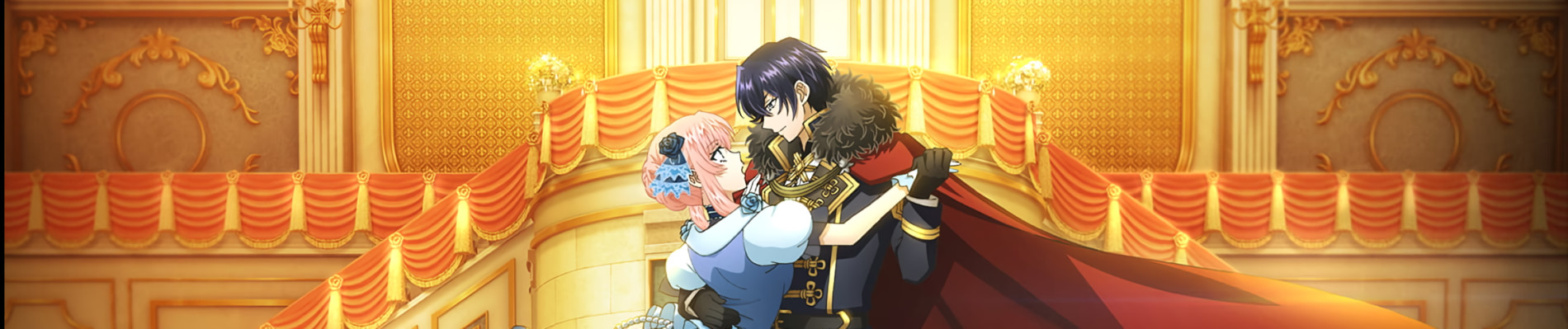
Rishe Irmgard Weitzner, a duke's daughter, has a secret: she died at the age of 20 and returned to the moment five years prior when her engagement was called off. She has already experienced this time loop six times and lived out those five years a different way each time, as a merchant, a doctor, a maid, a knight, and more. Now, on her seventh go-around, she's determined to live to a ripe old age and spend it relaxing. But the moment she flees the castle with that decision in her heart, she runs into the infamously cruel crown prince of a rival kingdom, Arnold Hein. He happens to be the one who killed her during her life as a knight, but now, he seems to have taken a bizarre liking to her... and begs her to become his wife. Thus, in order to stay alive and prevent a war, Rishe utilizes her previous experiences to kick off her seventh life as the bride of an enemy nation's crown prince.
(Source: Crunchyroll)
📺Anime Details
📝Editorial Analysis
The scent of rain on hot stone—sharp, mineral, alive—hangs in the air as Rishe Irmgard Weitzner stands barefoot on the castle balcony, her slippered feet curling over the cool marble edge. She’s just walked away from the engagement announcement. Not with tears, not with trembling hands, but with a quiet, exhaling relief so deep it feels like shedding skin. Her seventh loop isn’t a frantic scramble for survival or redemption. It’s the first time she’s chosen stillness—not as surrender, but as sovereignty.
That’s the atmosphere: weightless agency. Not the giddy rush of power fantasy, but the profound, almost disorienting calm of someone who has already lived every possible version of her life—and found that the most radical act is to stop performing. This isn’t about fixing the past or winning love; it’s about dismantling the expectation that her worth must be earned through labor—emotional, social, or political. The fantasy isn’t thrones or magic—it’s uninterrupted time, the luxury of reading in a sunlit garden without calculating how the scene reads to courtiers, the freedom to say “no” and mean it without rehearsing the consequences. You don’t feel adrenaline here—you feel recognition: that exhaustion of being perpetually legible, and the shock of finally choosing opacity.
Disco Elysium - The Final Cut resonates—not because Rishe is a detective or because Revachol has dukes—but because both works orbit the same emotional gravity: the exhaustion of systems that demand constant self-narration. The game’s description calls it a Political Thriller, but what lingers is the way every dialogue choice, every skill check, forces you to reassemble your identity from fragments while the city watches, judges, and absorbs your contradictions. That player review nails it: “Capital has the ability to subsume all critiques into itself. Even those who would critique capital end up reinforcing it instead.” Rishe’s loops are that system made flesh—each life she’s lived (merchant, doctor, maid, knight) was a role assigned by class, gender, and narrative expectation. Her seventh loop isn’t rebellion—it’s opting out of the dialectic entirely. She doesn’t argue with the system; she stops showing up for its performance reviews. Both works ache with the quiet fury of people who’ve realized their “freedom” was always conditional—and then, impossibly, choose rest anyway.
The shared DNA isn’t in plot mechanics, but in emotional archaeology: digging past the surface drama to expose the sedimentary layers of obligation, inheritance, and quiet, accumulated grief. Rishe’s estranged family isn’t a trope—it’s the ambient pressure of blood-as-bureaucracy, the way love gets tangled with duty until you forget which one you’re fulfilling. That’s why Disco Elysium’s fractured psyche—its amnesiac detective piecing together not just a crime, but a self erased by ideology—feels kin to her seventh loop: both are acts of slow, deliberate reconstruction after the collapse of the story you were told you had to live.
This pairing isn’t for fans of high-stakes battles or grand romances where love conquers all. It’s for the person who’s spent years editing themselves for safety—who’s memorized the script of “acceptable womanhood” and finally, tiredly, closes the book. It’s for the reader who underlines passages about silence in novels, who pauses mid-game to stare at a rainy window in Disco Elysium, not waiting for the next clue, but feeling the weight lift just a little—because for once, no one is asking them to explain themselves. It’s for those who recognize relief as a revolutionary emotion—and who know that the most dangerous thing a villainess can do isn’t seize the throne. It’s sit down, pour tea, and watch the world keep spinning without her.
🎮1 Games That Match the Vibe
Match Dimensions Explained
❓Frequently Asked Questions
Why is Disco Elysium listed as similar to 7th Time Loop when it’s not a romance or otome game?
Great question—it’s about *tone and structural irony*, not genre overlap. Like 7th Time Loop’s villainess who weaponizes charm while navigating political sabotage, Disco Elysium’s detective Harry DuBois constantly performs competence while drowning in self-sabotage, memory loss, and ideological whiplash—especially in scenes where his 'Logic' skill contradicts his 'Empathy' roll during tense negotiations with union leaders in Martinaise. Both use romantic tension (e.g., Kim Kitsuragi’s guarded loyalty / Lainie’s fake-marriage banter) as scaffolding for deeper power critiques.
Is there an anime or visual novel adaptation of 7th Time Loop?
No official anime or visual novel adaptation exists yet—but fans often compare its vibe to *Disco Elysium*’s narrative density because both hinge on layered identity performance: Lainie faking affection while rewriting her fate, just like Harry DuBois rebuilding his fractured psyche through dialogue trees and skill checks (like the iconic 'Shivers' check during the Pale exposition). Neither has licensed adaptations, but both inspire fan-made visual novels riffing on their meta-romance mechanics.
How does Disco Elysium compare to 7th Time Loop in terms of player agency and consequences?
Both games make *consequences feel personal and irreversible*, but differently: In 7th Time Loop, choosing to flirt with your 'worst enemy' (Lord Armand) locks in relationship branches that alter cutscenes—like his cold shoulder turning into shared tea in Chapter 12. Disco Elysium mirrors that weight via skill checks—fail a 'Authority' roll confronting the union boss, and you’ll never unlock the 'Red Sash' ending path; succeed, and Kim Kitsuragi’s trust meter visibly shifts in real time during the Harbor scene. Neither forgives choices—and both reward rereading dialogue logs like a detective or a scheming noblewoman.
What’s the best game like 7th Time Loop if I want that ‘witty, morally grey romance with political stakes’ vibe?
Go straight to *Disco Elysium - The Final Cut*—it nails that exact cocktail. Think Lainie negotiating marriage contracts while undermining the Duke’s council? That’s Harry DuBois debating Marxist theory with a communist dockworker *while* his own 'Volition' skill begs him to abandon the case entirely. The romance isn’t central, but the chemistry between Harry and Kim (or even the tragic flirtation with Cuno’s sister) carries the same sharp, subversive warmth—and every political thriller subplot lands with the same delicious, high-stakes irony.