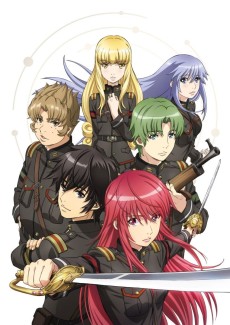
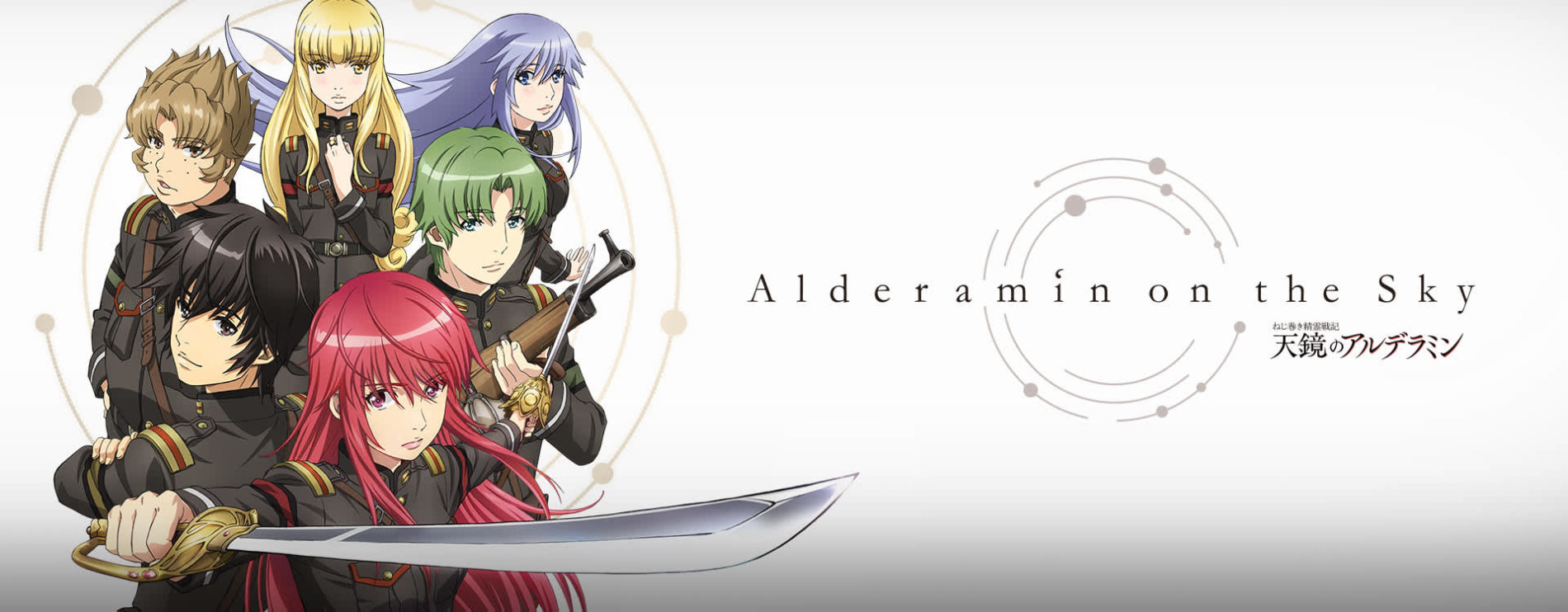
Alderamin on the Sky
The Katvarna Empire is at war with the neighboring Republic of Kioka. In the Katvarna Empire, the lazy, woman-admiring Ikuta hates war, but due to certain circumstances, he grudgingly takes the High Grade Military Officer Exam. No one would have expected that this 17-year-old young man would eventually become a soldier called a great commander by others. Ikuta survives this world engulfed in war with his superior intellect.
(Source: Anime News Network)
📺Anime Details
📝Editorial Analysis
The smell of burnt gunpowder hangs thick in the air—not from a battlefield, but from a cramped exam hall where Ikuta slumps over his desk, sweat beading on his temple as he calculates artillery trajectories in his head, not on paper. His pencil hasn’t moved. He’s already solved it—three variables, two shifting fronts, one supply bottleneck—and he’s bored. Not bored of the math, but bored by the expectation that war is noble, that command is about glory, not cold arithmetic and exhausted logistics. That moment—his quiet, almost contemptuous mastery, delivered while everyone else scrambles—is the pulse of Alderamin on the Sky.
This isn’t a story that makes you yearn for battle. It makes you feel the weight of decisions: the grit under your nails from scrubbing blood off a sword hilt after a skirmish you ordered, the hollow echo in your chest when a subordinate dies because you misread a political signal, not a tactical one. The atmosphere is exhausted intelligence—brilliance worn thin by bureaucracy, idealism fraying at the edges of real-world compromise. You don’t feel heroic; you feel responsible. And that responsibility is never clean—it’s tangled in court intrigue, supply shortages, wounded conscripts who just wanted to farm, and the quiet, devastating realization that victory often tastes like ash, not triumph. It’s philosophical fatigue, the kind that settles in your bones when you’ve out-thought your enemies but still lose sleep over the cost.
That same texture lives in Assassin's Creed™: Director's Cut Edition, not in its parkour or blade-work, but in its political thriller spine and tactical warfare scaffolding. The game’s description explicitly names those dimensions—and they mirror Ikuta’s world perfectly: every rooftop leap is a calculated risk weighed against factional leverage; every assassination is less about vengeance and more about shifting power balances no one announces aloud. A player review admits the visuals are dated—but calls out no issues with me. Why? Because what endures isn’t the sheen, but the substance: the slow burn of navigating layered allegiances, the tension between personal conviction and systemic necessity. Ikuta doesn’t swing swords like Altaïr—he negotiates treaties while calculating troop movements on napkins—but both operate inside the same suffocating architecture of power where every choice ripples outward, unseen until it’s too late.
There’s also an unspoken kinship with games built around military realism and strategic consequence, though only Assassin's Creed™: Director's Cut Edition appears in the data. Its score (56) suggests it’s not flashy—but its dims—Political Thriller, Tactical Warfare—are precise diagnostic terms for what Alderamin on the Sky does so deliberately. When Ikuta debates grain quotas with imperial bureaucrats while Kioka scouts probe the northern pass, it’s the same rhythm: information as weapon, silence as tactic, diplomacy as frontline combat. The anime’s gore isn’t spectacle—it’s the consequence of miscalculation, just as the game’s dated models don’t distract from the visceral weight of choosing which informant to trust before dawn breaks. Both refuse easy moral binaries. Both force you to sit with the uncomfortable arithmetic of survival—not just for nations, but for conscience.
This pairing sings to the viewer who watches a battle scene and counts supply wagons instead of tracking sword swings—who feels a jolt not when the hero shouts a battle cry, but when he quietly overrides a general’s order because the soil composition near the riverbank means cavalry will sink. It’s for the player who reloads a save not to avoid death, but to re-run a dialogue tree and see if this time, with slightly different phrasing, the ambassador might actually sign the treaty. It’s for anyone who’s ever stared at a spreadsheet at 2 a.m., heart pounding, knowing that one decimal point error could collapse everything—and felt, weirdly, seen. Not inspired. Not thrilled. Recognized. That’s the resonance: the shared, weary respect for systems, the quiet awe for minds that navigate chaos not with charisma, but with precision, and the deep, unspoken understanding that the most dangerous frontlines are often drawn in ink, not blood.
🎮2 Games That Match the Vibe
Match Dimensions Explained
❓Frequently Asked Questions
Why does Assassin's Creed: Director's Cut Edition match Alderamin on the Sky?
Because both center on a brilliant, duty-bound strategist—Kazuki in Alderamin and Altaïr in Assassin's Creed—who must navigate complex political intrigue while mastering precise, timing-based combat. The rooftop chases and tactical assassination sequences (like Altaïr’s stealth takedowns in Jerusalem) mirror Kazuki’s battlefield command scenes where split-second decisions shift entire engagements.
Is there an anime or manga adaptation of Assassin's Creed that's similar to Alderamin on the Sky?
No official anime or manga adaptation of Assassin's Creed exists—unlike Alderamin, which got a full 25-episode anime series. But fans often compare Alderamin’s grounded military-political drama to how Assassin's Creed: Director's Cut Edition *feels*: a serious, lore-rich political thriller with tactical warfare, not flashy fantasy.
Assassin's Creed vs. Alderamin on the Sky: which has better tactical battlefield strategy?
Alderamin wins for narrative-driven, large-scale tactics—think Kazuki’s ‘Spearhead Formation’ maneuver at the Battle of Krasnoy—but Assassin's Creed: Director's Cut Edition delivers tighter, moment-to-moment tactical warfare: blending crowd navigation, guard patrol patterns, and environmental assassinations in real time. Both demand planning, but Alderamin leans into war-room logic; AC leans into reactive, spatial stealth.
What's the best game like Alderamin on the Sky if I want political intrigue + disciplined protagonists?
Assassin's Creed: Director's Cut Edition is your top pick—it scores 56 and nails that 'political thriller + tactical warfare' vibe. Altaïr’s arc mirrors Kazuki’s: a gifted but rigid operative forced to question dogma amid shifting alliances, especially during tense council scenes in the Bureau of Assassins or confrontations with Al Mualim.