
ARIA The ANIMATION
Drift peacefully into Neo Venezia, a city on the planet Aqua (formerly known as Mars). By the 24th century, humans have found a way to colonize the previously uninhabitable planet. As futuristic as that sounds, Neo Venezia is still teeming with rustic beauty; gondolas on wide canals and waterways are the main mode of transportation. The city itself is a faithful replication of Manhome's (the planet formerly known as Earth) Venice.
To make sure that residents and tourists alike get the most from Neo Venezia's many wonders, companies offering guided tours via gondola were formed, one of which is named Aria Company.
This is the workplace of Akari Mizunashi, a free spirited teenager from Manhome who is now a novice Undine (the title given to tour guides). Join Akari as she becomes intimately acquainted with other Undine, tourists, Neo Venezia's residents, and even the city itself, learning many valuable life lessons along the way, such as the wonderful truth that there are such things as manmade miracles.
📺Anime Details
📝Editorial Analysis
The gondola glides—no engine hum, no splash, just the soft shush of water parting beneath polished wood as Akari leans slightly over the side, watching her reflection ripple and re-form in the canal. Sunlight catches the brass bell at the prow, a single chime dissolving into the hush of late afternoon. A breeze lifts the edge of her red scarf. No crisis looms. No timer ticks. Just this: weightless motion, liquid light, and the quiet certainty that time here doesn’t demand speed—it bends, gently, around presence.
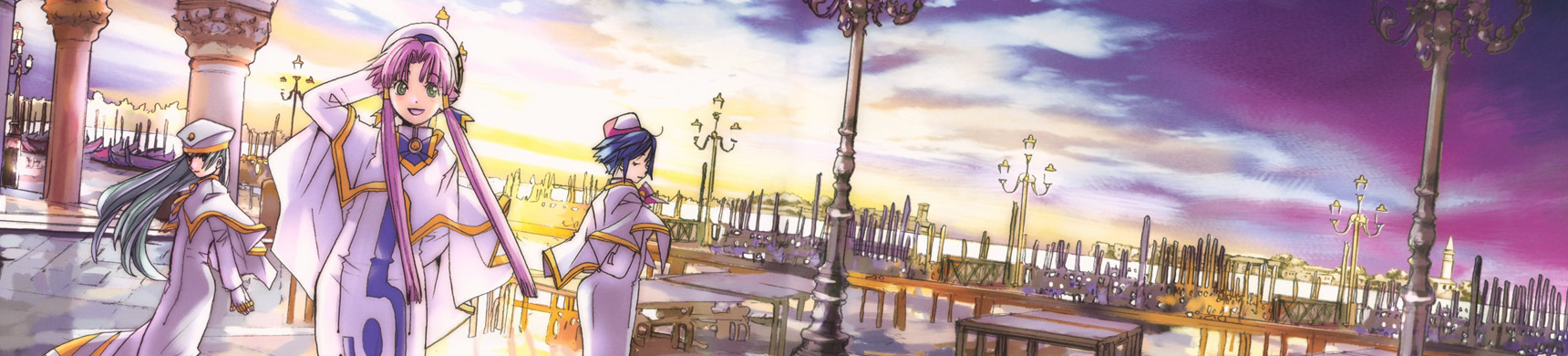
That’s the core alchemy of ARIA The ANIMATION: not escapism, but re-anchoring. In a world where Mars has been terraformed into Aqua and Venice rebuilt brick-for-brick on alien soil, nothing feels like conquest—it feels like return. The sci-fi isn’t about breakthroughs or frontiers; it’s the silent, profound backdrop for something tenderly human: learning to steer a gondola with your body, not your wrist; memorizing the names of bridges not for navigation, but for poetry; watching tourists pause mid-step because a stray cat blinked at them from a sun-warmed stone ledge. It makes you feel stillness as action, patience as devotion, smallness as safety. You don’t watch Neo Venezia—you breathe with it. And in that breath, the show whispers its quiet philosophy: meaning isn’t seized. It’s gathered, like lily pads drifting into alignment at dawn.
Which is why Prince of Persia lands with such uncanny resonance. Its official tagline cites Healing & Slow Life, Melancholic Exploration—not combat stamina or puzzle velocity, but the pace of recovery, the ache and grace of moving through ruins that hold memory like water holds light. The player review calls it “a new prince, new lands and a brand new story”—yet what binds it to ARIA The ANIMATION isn’t novelty, but reverence. Both treat space as sacred ground: Neo Venezia’s canals are mapped by rhythm and respect; Persia’s sandstone arches and crumbling gardens are traversed with tactile care—the Prince’s hands brushing moss, his footfall echoing in vaulted silence. Neither world rewards haste. In both, momentum comes from attunement: Akari learning the canal’s current by wrist-angle and wind; the Prince reading gravity’s language in the curve of a crumbling staircase. The melancholy isn’t despair—it’s the bittersweet fullness of standing inside beauty that remembers older things. That shared emotional grammar—healing, slow life, melancholic exploration—isn’t aesthetic coincidence. It’s the same heartbeat measured in different time signatures.
There’s also a deeper kinship in how both works frame labor as ritual. Akari’s gondola training isn’t vocational prep—it’s embodied philosophy. Every stroke, every call to “Ora!”, every bow to a departing passenger is a stitch in the fabric of belonging. Likewise, the Prince’s acrobatics aren’t just parkour—they’re a physical dialogue with architecture, a way of honoring space by moving through it with precision and humility. His leaps aren’t about domination over height or distance, but about continuity: hand to ledge to beam to sand, a seamless flow that says I am part of this. Like Akari guiding tourists past the Glass Bridge at twilight—not to deliver them faster, but to let them feel the city’s breath slow beside them.
Who would love these pairings? Not just fans of “relaxing” media—but people who carry quiet exhaustion in their shoulders, who’ve forgotten how to walk without checking a screen, who miss the visceral comfort of ritual done well. The kind of person who pauses to watch rain gather on a windowpane, who traces the grain of wood on a café table, who feels a lump in their throat when a stranger smiles at them unasked. They’re the ones who don’t need plot fireworks to feel seen—they need resonance. The soft chime of a gondola bell. The whisper of silk against stone. The exact moment sunlight hits a canal just so, turning water into liquid topaz—and for three seconds, everything else dissolves. That’s the gift both ARIA The ANIMATION and Prince of Persia offer: not distraction, but reclamation. The slow, sure return to the self, one gentle, deliberate motion at a time.
🎮5 Games That Match the Vibe


Match Dimensions Explained
❓Frequently Asked Questions
Why does Prince of Persia keep coming up when I search for games like ARIA The ANIMATION?
Because both lean hard into 'Melancholic Exploration' — that quiet, reflective pacing where you linger in sun-dappled canals (like Neo-Babylon’s waterways) or stroll through Venice-inspired gardens, just like Ai in ARIA’s gondola scenes. Prince of Persia’s healing mechanics and slow-life rhythm — pausing to tend vines, restore light, or watch time ripple across stone — mirror the gentle emotional cadence of ARIA’s daily life in Neo-Venezia.
Is there an anime adaptation of Prince of Persia that’s similar to ARIA The ANIMATION?
No — Prince of Persia has had films and shorts, but no anime series, let alone one with ARIA’s soft-spoken charm or slice-of-life focus. Unlike ARIA’s faithful adaptation of the manga’s serene tone, Prince of Persia’s existing adaptations go full action-fantasy; nothing captures that same 'healing & slow life' vibe — which is exactly why fans turn to the *game* instead for that ARIA-like calm.
How does Prince of Persia compare to Stardew Valley for someone who loves ARIA’s peaceful vibes?
Stardew Valley’s farming loops and social calendars are warmer and more structured, while Prince of Persia offers ARIA-style melancholic exploration — think wandering empty palaces at dusk, listening to wind chimes in overgrown courtyards, or restoring ancient fountains scene-by-scene like Ai tending her gondola’s lanterns. Both soothe, but Prince of Persia matches ARIA’s poetic stillness more closely than Stardew’s cheerful busyness.
What’s the best game like ARIA The ANIMATION if I want something deeply calming and bittersweet?
Prince of Persia is your top match — it scores 84 and nails 'Healing & Slow Life' with mechanics like carefully reviving wilted flora or walking silent corridors where light shifts like water under a gondola. That bittersweet tone? It’s right there in the prince’s quiet reflections on memory and loss — echoing ARIA’s moments like Alicia’s solo piano scene or the hush before sunset over Neo-Venezia’s canals.