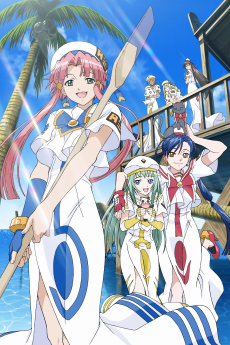
ARIA The NATURAL
Akari Mizunashi continues her training to become a Prima Undine (a professional tour guide gondolier) along with her friends Aika and Alice in the peaceful city of Neo Venezia. Despite the fact that these three girls are from competing companies, they are constantly together, learning more about how to become better tour guides and more about the mysteries of Neo Venezia.
As the group continues to meet interesting and unforgettable people through their daily routines, they will also come closer to the secrets that make the enigmatic and ever beautiful city of Neo Venezia so warm and alive.
Welcome back to Neo Venezia: the city where miracles can be created by hand.
📺Anime Details
📝Editorial Analysis
The gondola glides—no engine, no rush—just the soft shush of water against polished wood as Akari leans into the oar, her breath steady, the late afternoon sun catching the mist rising off Neo Venezia’s canals. She doesn’t speak. Neither does the elderly woman seated behind her, wrapped in a faded shawl, watching swallows dip between domes and bridges. A single white feather drifts down, lands on the water, spins once, then vanishes beneath the surface. No music swells. No plot twist looms. Just this: presence, held like breath.
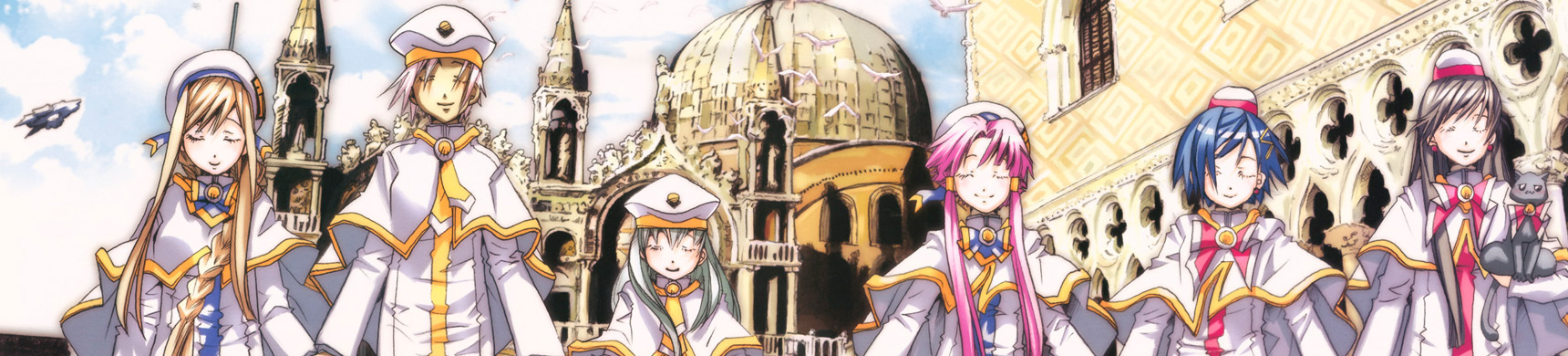
That’s the quiet gravity of ARIA The NATURAL—not escapism, but settling. It doesn’t ask you to solve, conquer, or even understand. It asks you to witness: the way light pools in a canal at 4:17 p.m., how Aika’s laugh catches when she misjudges a turn and nearly capsizes, how Alice’s quiet intensity softens when a stray cat winds between her ankles. This isn’t slow pacing—it’s temporal generosity. Time isn’t currency here; it’s atmosphere, thick and breathable. You feel the weight of small choices—the decision to pause for tea instead of rushing to the next booking, the choice to listen longer than necessary to a stranger’s half-remembered story about the old terra firma. It makes you think about duration not as delay, but as devotion—to craft, to place, to each other. Not healing as recovery, but healing as continuity: the gentle, daily reaffirmation that care is practiced in repetition, not revelation.
Which is why Prince of Persia (2024) resonates so deeply—not as action spectacle, but as melancholic exploration. Its description names “Healing & Slow Life” and “Melancholic Exploration” as core dimensions—and yes, the game’s new prince traverses surreal, crumbling cities, but player reviews confirm what feels familiar: “a new prince, new lands and a brand new story completely separate from the sands…” That separation matters. Like Akari arriving in Neo Venezia with no inherited legacy, no prophecy—just a boat, an oar, and the humility to learn—this Prince walks unfamiliar ground without the armor of past triumphs. His movement is deliberate, his jumps measured, his failures graceful. There’s no frantic sprinting across collapsing towers; instead, there’s lingering on a balcony overlooking a drowned garden, wind stirring dust motes in slanted light—exactly the kind of suspended attention ARIA The NATURAL cultivates. Both works treat space not as obstacle or map, but as memory made visible: a cracked mosaic recalls a forgotten ritual; a half-submerged bell tower echoes a lullaby hummed by a grandmother in Episode 13. Neither explains. Both trust you to feel the resonance.
And it’s not just movement—it’s scale. In ARIA The NATURAL, grandeur lives in micro-detail: the steam curling from a cup of espresso ordered at the same café every Tuesday, the precise angle of Alice’s beret when she adjusts it before greeting a guest. Likewise, Prince of Persia’s “next-generation” rendering doesn’t glorify scale for spectacle’s sake—it renders texture: the grit of ancient stone under palm, the frayed edge of a tapestry fluttering in a draft, the way light bleeds through stained glass onto sun-warmed marble. That fidelity to tactile reality mirrors Neo Venezia’s own layered authenticity—futuristic yet handmade, alien yet intimately domestic. You don’t “unlock” Neo Venezia; you inhabit its rhythms until your pulse syncs with the tide’s ebb. Same with the Prince’s world: you don’t master it—you acclimate.
This pairing sings to the person who keeps a notebook not for to-dos, but for observations: the way rain smells different on cobblestone versus canal water, how silence changes when shared with someone who doesn’t need to fill it. It’s for the viewer who watches Akari tie her hair back for the third time in one episode and feels a quiet surge of kinship—not because it’s “relatable,” but because it’s true. For the player who, after leaping across a chasm in Prince of Persia, pauses mid-air—not to aim, but to watch dust spiral in a sunbeam, and thinks, Yes. This is enough. Not the ambitious, not the restless—but the attentive. The ones who know that the deepest magic isn’t in transformation, but in tending: to a boat, to a city, to a moment, to the fragile, luminous fact of being here, now, breathing beside someone else who also chose to stay.
🎮16 Games That Match the Vibe









Match Dimensions Explained
❓Frequently Asked Questions
Why does Prince of Persia feel so much like ARIA The NATURAL’s ‘rainy bridge’ scene with Natsumi and Ryo?
That melancholic, slow-burn intimacy—where time seems to stretch as characters stand in quiet rain, weighted by unspoken feelings—is mirrored perfectly in Prince of Persia’s Healing & Slow Life dimension. Like Natsumi’s hesitant confession on the bridge, the Prince’s silent walks through mist-draped ruins or his tender, wordless interactions with Elika (especially during the Melancholic Exploration sequences) evoke the same fragile, breath-held emotional resonance.
Is there an anime or manga adaptation of Prince of Persia that captures ARIA’s gentle romance vibe?
No official anime or manga adaptation exists—but the 2008 film and Ubisoft’s own lore-rich concept art *do* lean into emotional restraint and poetic yearning, much like ARIA’s tone. That said, if you’re craving something with ARIA’s soft-spoken romance *and* Prince of Persia’s atmospheric weight, the game itself delivers it more authentically than any adaptation ever could—especially in its quieter moments between the Prince and Elika.
How does Prince of Persia compare to Spirit of the North in terms of ARIA-like emotional pacing?
Spirit of the North leans into wordless, nature-driven solitude (great for quiet reflection), but Prince of Persia nails ARIA’s specific blend: human connection layered over melancholic exploration. Where Spirit gives you a fox companion and sweeping vistas, Prince gives you Elika’s hand-in-hand guidance, healing gestures that feel like whispered confessions, and combat pauses where the camera lingers on shared glances—exactly the 'slow life' intimacy ARIA fans recognize.
What’s the best game like ARIA The NATURAL if I want that bittersweet, rainy-day-feel-good vibe?
Prince of Persia is your top pick—its 85-scored Healing & Slow Life dimension hits that exact sweet spot: rain-slicked stone paths, Elika’s quiet strength mirroring Natsumi’s gentle resolve, and story beats where emotion lives in pauses—not exposition. It’s not flashy or loud; it’s the kind of game where you catch your breath watching light filter through ancient arches, just like rewatching ARIA’s café scenes on a grey afternoon.