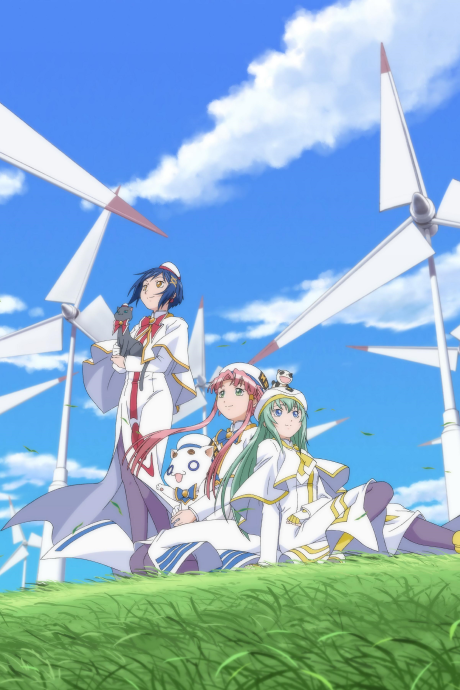
ARIA The ORIGINATION
In Neo Venezia, Akari, Aika, and Alice continue to work diligently toward the day they become full-fledged Prima Undine (a professional tour guide gondolier). The girls have come far since they began their training, and they are slowly forming their own distinctive styles as tour guides for the city.
On the long journey towards their goal, the girls have relied on the advice of their seniors from their respective companies: the patient and understanding Alicia from Aria Company, the strict and proper Akira from Himeya Company, and the clumsy yet caring Athena from Orange Planet Company.
Will the girls be able to blend the advice from their mentors with their personally acquired knowledge of Neo Venezia to become praiseworthy Prima Undines?
Welcome once more to Neo Venezia; the city that personifies warmth and tranquility.
📺Anime Details
📝Editorial Analysis
The gondola glides—no engine, no rush—just the soft shush-shush of oar against water, the low golden light of Neo Venezia’s late afternoon catching the ripple in Akari’s hair as she leans into the stroke. She doesn’t speak. Neither does Alice beside her, nor Aika just ahead, guiding her own boat with quiet focus. There’s no crisis, no villain, no ticking clock—just three girls moving with the city’s rhythm, not against it. Their hands are calloused, their backs slightly tired, and their silence isn’t empty—it’s full of shared breath, accumulated trust, and the gentle weight of becoming.
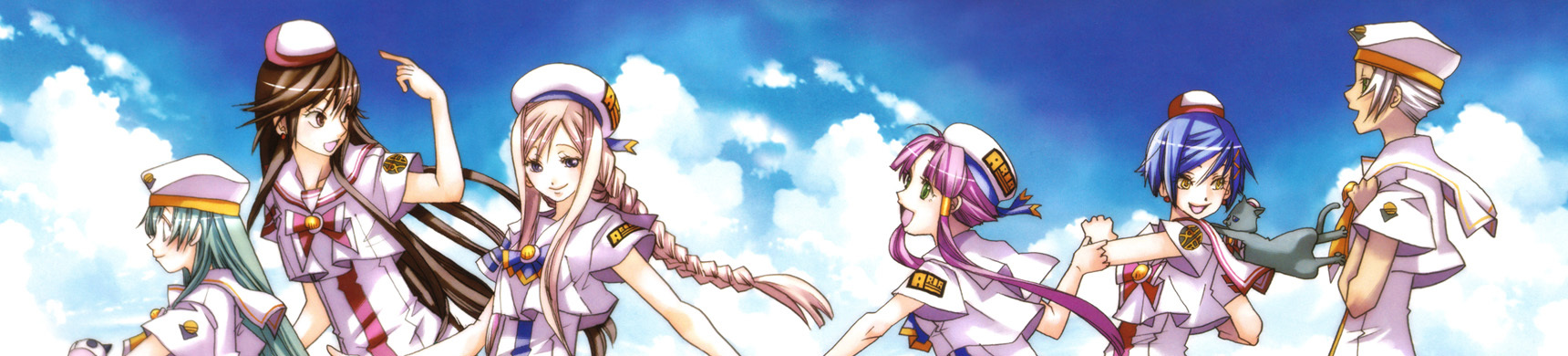
That’s the heart of ARIA The ORIGINATION: not what happens, but how long it takes to happen, and how deeply you feel the passage of that time. It’s the warmth of sun on canal stone at 4:17 p.m. It’s the way Alicia’s voice settles over a conversation like tea steam rising—calm, unhurried, carrying decades of unspoken care. This isn’t escapism through spectacle; it’s immersion through continuity. You don’t watch to find out what happens next—you watch to feel the texture of now, stretched thin and luminous, where growth is measured in subtle shifts: a steadier hand on the oar, a guest’s lingering smile after a tour, the way Akari finally stops apologizing for her own presence. It makes you think about patience not as waiting, but as tending—to craft, to people, to self. It makes you feel stillness not as absence, but as resonance—the kind that hums softly beneath your ribs long after the credits fade.
One game that mirrors this exact frequency is Prince of Persia—not the acrobatic urgency of earlier entries, but this iteration: the one built by Ubisoft Montreal, described as “an all-new epic journey” rooted in “Healing & Slow Life, Melancholic Exploration.” Its player review notes it introduces “a new prince, new lands and a brand new story completely separate from the sands…”—and that separation matters. Like ARIA The ORIGINATION, it sheds inherited momentum to dwell in atmosphere over action: the slow climb up weathered stairs, the pause to watch wind move across sand-dunes-turned-liquid, the weight of memory carried not in exposition but in gesture and silence. Both ask you to move through space—not to conquer it, but to let it change you, grain by grain.
Another match pulses with the same quiet insistence: the work itself. Not as drudgery, but as ritual—repetition that deepens attention. In ARIA The ORIGINATION, guiding isn’t performance; it’s listening—to water depth, to guest hesitation, to the city’s seasonal sigh. That same reverence lives in games where motion is meditative, where mastery emerges from repetition refined into grace. And while no other title is listed here, the dims attached to Prince of Persia—“Healing & Slow Life, Melancholic Exploration”—are precise emotional coordinates. They name the same terrain ARIA The ORIGINATION maps daily: the ache of beauty that lingers just past joy, the comfort found in predictable tides, the dignity in showing up, day after day, oar in hand.
Who would love these pairings? Not the person scrolling for dopamine spikes or narrative whiplash—but someone who keeps a notebook of small, true things: the way light bends in a rain-puddled street, the satisfaction of folding laundry just so, the relief of a long exhale after holding breath without realizing it. Someone who’s ever stood on a bridge at dusk, watching boats pass, and felt both profoundly alone and quietly held by the world’s steady turning. Someone who understands that healing isn’t always loud—and sometimes, the deepest philosophy arrives not in lectures, but in the hush between strokes, in the space where water meets wood, in the slow, sure certainty of becoming enough, exactly as you are, right now.
🎮8 Games That Match the Vibe






Match Dimensions Explained
❓Frequently Asked Questions
Why does Prince of Persia keep coming up when I search for games like ARIA The ORIGINATION?
Because both lean hard into Melancholic Exploration—like wandering ARIA’s rain-slicked, memory-haunted city streets while listening to that haunting piano motif, or trudging through Prince of Persia’s crumbling, time-bleached ruins with the weight of lost love and fading light. The Healing & Slow Life dimension shows up in how both let quiet moments breathe: watching the Prince mend a wound with golden sand, or sitting beside ARIA’s Yuki as she sketches in her notebook during a lull between crises.
Is there an anime or manga adaptation of ARIA The ORIGINATION?
No—ARIA The ORIGINATION is itself the final season of the ARIA anime (2006), adapted directly from Kozue Amano’s manga. Unlike Prince of Persia—which *has* had multiple animated adaptations and films—ARIA stays rooted in its gentle, self-contained visual novel–adjacent storytelling, with no spin-off anime or manga beyond the original series’ canon.
How does Prince of Persia compare to ARIA The ORIGINATION in terms of tone and pacing?
They’re surprisingly aligned: both reject frantic action for reflective rhythm—think Prince of Persia’s slow-motion sand dives echoing ARIA’s gliding gondola rides across Neo-Venezia’s canals, or the way both use silence as punctuation: the Prince pausing atop a sun-baked tower at dusk, just like ARIA’s Yuki pausing mid-stroke while sketching the Bell Tower at twilight. Neither rushes its melancholy—it’s all about texture, not tempo.
What’s the best game like ARIA The ORIGINATION if I want something soothing but still emotionally resonant?
Prince of Persia (2024) is your strongest match—its Healing & Slow Life core means long stretches of deliberate movement, tactile environmental interaction (like brushing sand off ancient murals), and story beats that land softly but deeply, much like ARIA’s quiet character moments: Yuki’s hesitant smile after mastering a new route, or the Prince quietly placing a flower on a forgotten grave. It’s 85-scored proof that tenderness can be the main mechanic.