
BARTENDER Glass of God
At Eden Hall, each glass has a story. A quiet bar lies tucked away in the streets of Tokyo, and it seems only the most desperate souls burdened by their own troubles manage to find its doors. But after a glass of God poured by the brilliant bartender Ryuu, they leave renewed. Ryuu has a gift—he knows how to soothe the soul with the perfect drink. Who will he meet next?
(Source: Crunchyroll)
📺Anime Details
📝Editorial Analysis
The low amber glow of a single pendant light over the bar at Eden Hall. The soft clink of ice settling in a chilled glass. A man sits hunched, fingers trembling around his coat collar—not from cold, but from the weight of something he hasn’t spoken aloud in months. Ryuu doesn’t ask. He measures, stirs, pours—not just gin and vermouth, but silence calibrated to the exact pitch of that man’s exhaustion. When the glass is placed before him, condensation beading like held breath, the man doesn’t drink right away. He stares at the liquid—clear, still, alive with intention—and for the first time in weeks, his shoulders drop half an inch. That’s where BARTENDER Glass of God lives: not in spectacle or speed, but in the suspended second before the sip—the fragile, sacred space where healing begins as quietly as breath returning.
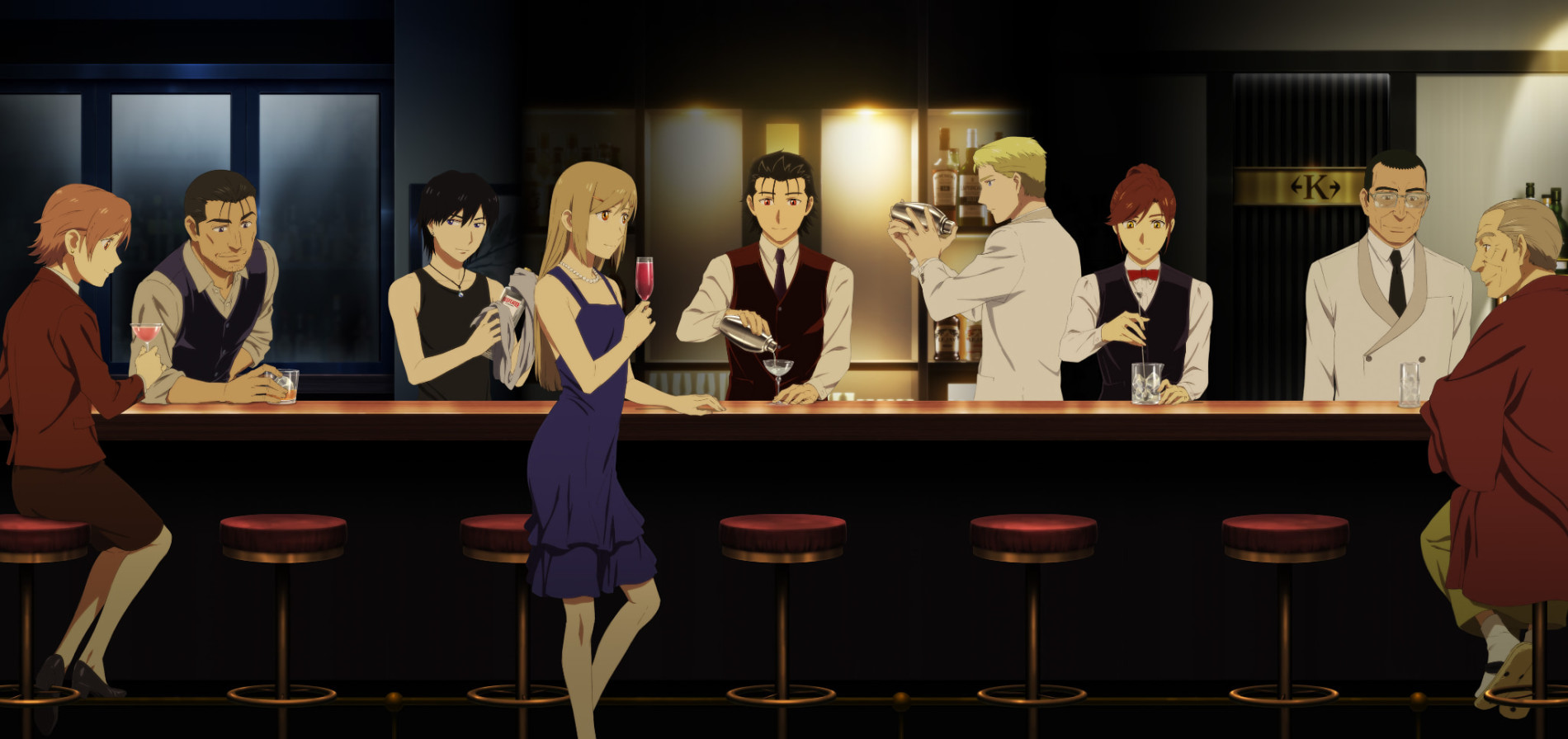
What makes this anime vibrate with such quiet authority isn’t its setting or even its premise—it’s the weight of presence. Every episode hums with the gravity of adult sorrow, unvarnished and unromanticized: suicide, burnout, grief that has calcified into routine. Yet it never drowns in despair. It treats pain like a bartender treats a rare spirit—respectfully, precisely, without dilution or denial. There’s no grand redemption arc, no miraculous cure. Just a glass, a story, and the radical act of being seen long enough for someone to remember how to hold themselves upright again. It’s soothing, yes—but not fluffy. It’s grounding, but never dismissive. It asks you to sit with discomfort until it loses its jagged edge—not by erasing it, but by honoring its shape.
That same emotional architecture pulses through Prince of Persia—not the acrobatic flash of earlier entries, but this new iteration: Healing & Slow Life, Adult & Dark Seinen. The description calls it “an all-new epic journey,” but what lingers isn’t the scale—it’s the texture of movement: the prince’s hands brushing dust from ancient carvings, the way time itself seems to thicken in sunlit ruins, the deliberate pace of climbing a crumbling staircase not because you must, but because you’re learning how to carry your own body again after loss. A player review notes it’s “completely separate from the sands”—and that separation matters. This isn’t about reversing time or conquering fate. It’s about tending to wounds that don’t bleed, listening to landscapes that remember what you’ve forgotten. Like Ryuu measuring bitters not by drops but by the tremor in a guest’s wrist, the game calibrates its rhythm to the player’s unspoken fatigue.
And then there’s the shared reverence for craft as ritual. In BARTENDER Glass of God, making a drink isn’t mixing—it’s translation: converting sorrow into citrus, regret into smoke, numbness into effervescence. You watch Ryuu’s hands move with the certainty of someone who’s memorized the grammar of human ache. That same devotion lives in Prince of Persia’s environmental storytelling—not just what is broken, but how it was built, why it endured, who might have rested here centuries ago. The game doesn’t hand you lore; it invites you to kneel beside a cracked mosaic and feel the patience embedded in each tile. Both works treat attention as an act of care—slow, tactile, reverent.
This pairing sings to people who’ve ever sat alone in a bar at 2 a.m. not to escape, but to arrive—to finally exhale in a space that doesn’t demand performance. It’s for players who replay a quiet campfire scene in Prince of Persia three times just to hear the fire crackle at the exact right tempo, or who pause mid-episode of BARTENDER Glass of God to stare out their own window, wondering if their own sorrow could be held so gently. Not fixed. Not solved. But named, then served—neat, on the rocks, or stirred with just enough water to let the truth shine through, clear and unflinching.
🎮4 Games That Match the Vibe



Match Dimensions Explained
❓Frequently Asked Questions
Why does Prince of Persia keep coming up in BARTENDER Glass of God match lists?
Because both lean hard into 'Healing & Slow Life' vibes with emotionally resonant, dialogue-driven moments—like when the Prince shares quiet, reflective conversations with Elika (or later, Zola) that mirror how Takumi listens intently while crafting drinks for broken patrons. Critics even noted Prince of Persia’s 'Adult & Dark Seinen' tone matches BARTENDER’s melancholic intimacy, especially in scenes where trauma surfaces over time, not action.
Is there a BARTENDER Glass of God anime or visual novel adaptation?
No official anime or visual novel exists—but fans often point to Prince of Persia (2008) as the *closest spiritual cousin*, since its narrative pacing, character-driven healing arcs, and atmospheric worldbuilding feel like what a BARTENDER adaptation might aim for: think slow pans across dusty ruins mirroring slow pours at the bar, or Elika’s gentle persistence echoing Takumi’s quiet empathy.
How is Prince of Persia different from BARTENDER Glass of God in terms of gameplay and mood?
BARTENDER is pure narrative interaction—no combat, just choosing drinks and listening—while Prince of Persia blends acrobatic platforming with story beats like the Prince’s guilt-ridden flashbacks or his evolving bond with Zola. Yet both hit that rare 'Healing & Slow Life' sweet spot: one through stillness and conversation, the other through rhythmic movement and whispered confessions mid-climb.
What’s the best game like BARTENDER Glass of God if I want something calming but emotionally weighty?
Prince of Persia is your top pick—it scored 83 on matching 'Healing & Slow Life' and 'Adult & Dark Seinen', and players praise how its quieter moments (like sitting with Zola under starlight after a long chase) land with the same emotional precision as Takumi serving a 'Glass of God' to a grieving customer. No frantic timers, no noise—just presence, consequence, and care.