
BLUE LOCK
Japan’s desire for World Cup glory leads the Japanese Football Association to launch a new rigorous training program to find the national team’s next striker. Three hundred high school players are pitted against each other for the position, but only one will come out on top. Who among them will be the striker to usher in a new era of Japanese soccer?
(Source: Crunchyroll)
📺Anime Details
📝Editorial Analysis
The air in the BLUE LOCK facility is thick—not with humidity, but with breath held too long. You feel it in the silence before Isagi’s first penalty kick against Rin: no crowd noise, no commentary, just the scrape of cleats on concrete and the low, animal hum of three hundred teenagers watching one another not blink. That moment isn’t about sport. It’s about being stripped bare—no team colors, no legacy, no safety net—just your body, your instinct, and the crushing weight of being measured.
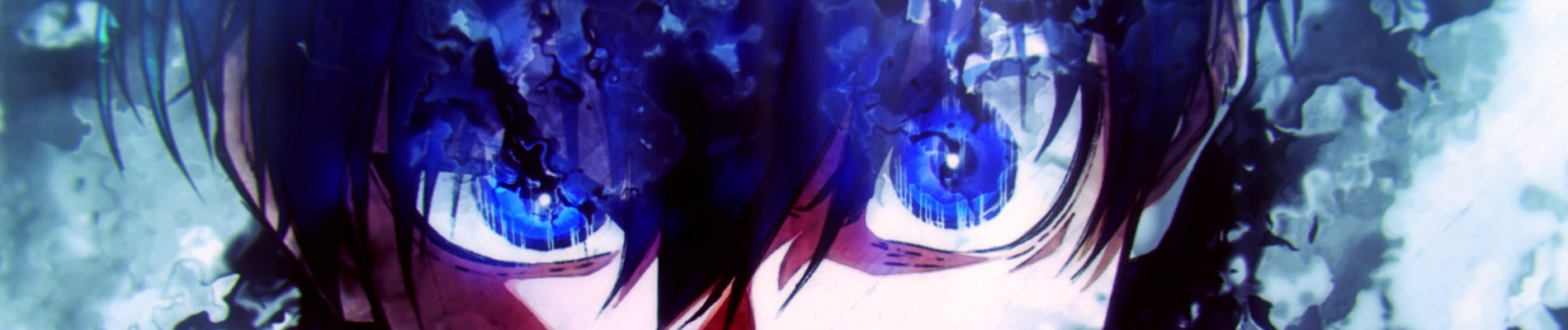
What makes BLUE LOCK vibrate at this frequency isn’t its football choreography or shōnen escalation—it’s the relentless calibration of worth. Every drill, every match, every stare-down operates under one unspoken law: value is assigned, revoked, and weaponized in real time. There’s no moral center, no coach offering gentle correction—only data, rankings, and the cold arithmetic of elimination. You don’t root for growth; you watch for fracture. When a player cracks—not from fatigue, but from realizing his entire identity was built on a role he’s now forbidden to play—that’s when the show doesn’t just depict pressure, it transmits it. It makes you question what you’d discard to survive the gaze of a system that only sees utility.
That same visceral recalibration of self lives in Rust. Its description says the only aim is to survive—and everything wants you dead. Not metaphorically. Literally: wildlife, environment, other players. There’s no tutorial hand-holding, no narrative justification—just raw, unmediated consequence. A player review nails it: “I’ve never played a game that simulates emotional damage this accurately. Rust is less of a survival game and more of a full-time job where everyone…” That ellipsis? It hangs like the silence after a BLUE LOCK expulsion announcement. In both, trust is not broken—it’s designed out. You learn fast that kindness is inefficient, hesitation is fatal, and your most dangerous opponent isn’t the rival across the pitch or the raiding party at your base—it’s the version of yourself who still believes in fairness. The exhaustion isn’t physical; it’s existential attrition, worn like a second skin.
This isn’t about competition as spectacle. It’s about competition as conditioning. And that’s why the emotional DNA aligns—not with flashy sports sims or heroic RPGs, but with systems that force you to redefine agency. In BLUE LOCK, Isagi doesn’t become a striker by mastering technique—he becomes one by learning how to want differently: to want dominance over camaraderie, to want truth over comfort, to want the win so fiercely it hollows out everything else. In Rust, you don’t “win” by building the biggest base—you win by internalizing scarcity until generosity feels like self-sabotage. Both demand you shed old reflexes—team loyalty, empathy, even basic trust—as if they were weak joints holding up a crumbling scaffold.
Who lives for this? Not the casual fan chasing catharsis. Not the player who logs in for joy or nostalgia. It’s the ones who recognize the hunger: the teenager rewatching Episode 12 because they need to see Barou’s collapse again, not to pity him, but to measure their own tolerance for isolation. The player who spends three hours crafting a single reinforced door in Rust, not because they love carpentry, but because the act of fortifying against betrayal feels like breathing. They’re the ones who don’t flinch at the word elimination—they lean in. Because they know the real test isn’t whether you can score a goal or hold a base. It’s whether you’ll still recognize yourself in the mirror after you’ve done whatever it took to stay in the room. That’s not drama. That’s recognition. And it doesn’t come wrapped in triumph—it comes wrapped in sweat, silence, and the slow, grinding certainty that nothing here is given. Everything is taken. And then, somehow, remade.
🎮6 Games That Match the Vibe

Match Dimensions Explained
❓Frequently Asked Questions
Why does BLUE LOCK’s final match feel so intense compared to other sports games?
Because BLUE LOCK’s climax isn’t about flashy combos or stamina bars—it’s pure psychological warfare and split-second decision-making under suffocating pressure, just like Rust’s late-game PvP raids where you’re scanning the horizon for threats while your heart races, knowing one misstep means losing everything you’ve scavenged. That raw, visceral tension—where every choice feels consequential and emotionally exhausting—is what Rust nails with its ‘survival & crafting’ loop and player-driven hostility.
Is there a BLUE LOCK video game adaptation coming out soon?
No official BLUE LOCK game exists yet—no console release, no mobile title, nothing announced by Kodansha or Bandai Namco. But if you’re craving that same high-stakes, ego-fueled intensity, Rust delivers it in spades: think Isagi’s isolation during the Germany arc, but translated into scrambling through abandoned buildings at dawn, hearing footsteps echo while clutching a stone hatchet—pure competitive spirit, zero hand-holding.
Rust vs. FIFA 23: which one captures BLUE LOCK’s cutthroat team dynamics better?
Rust—hands down. FIFA 23 leans into polished teamwork and scripted set pieces, while Rust forces brutal, unscripted alliances and betrayals—like when Barou abandons his squad mid-raid or Reo’s cold calculations mirror how players in Rust weigh trust against loot. The ‘Competitive Spirit’ dimension in Rust’s match list isn’t hype—it’s the gut-punch reality of watching someone you shared a campfire with steal your sulfur *then* grief your base.
What’s the best game like BLUE LOCK if I want that ‘I’m alone but must become legendary’ vibe?
Rust is *exactly* that vibe—no tutorials, no safety net, just you, a rock, and the crushing weight of proving yourself against both nature and other players. It’s Isagi staring down the pitch in Episode 1, but in pixelated form: every crafted weapon, every fortified shack, every hard-won scrap of metal feels like your own ‘Ego Boost’ moment—earned, fragile, and fiercely personal.