Rust
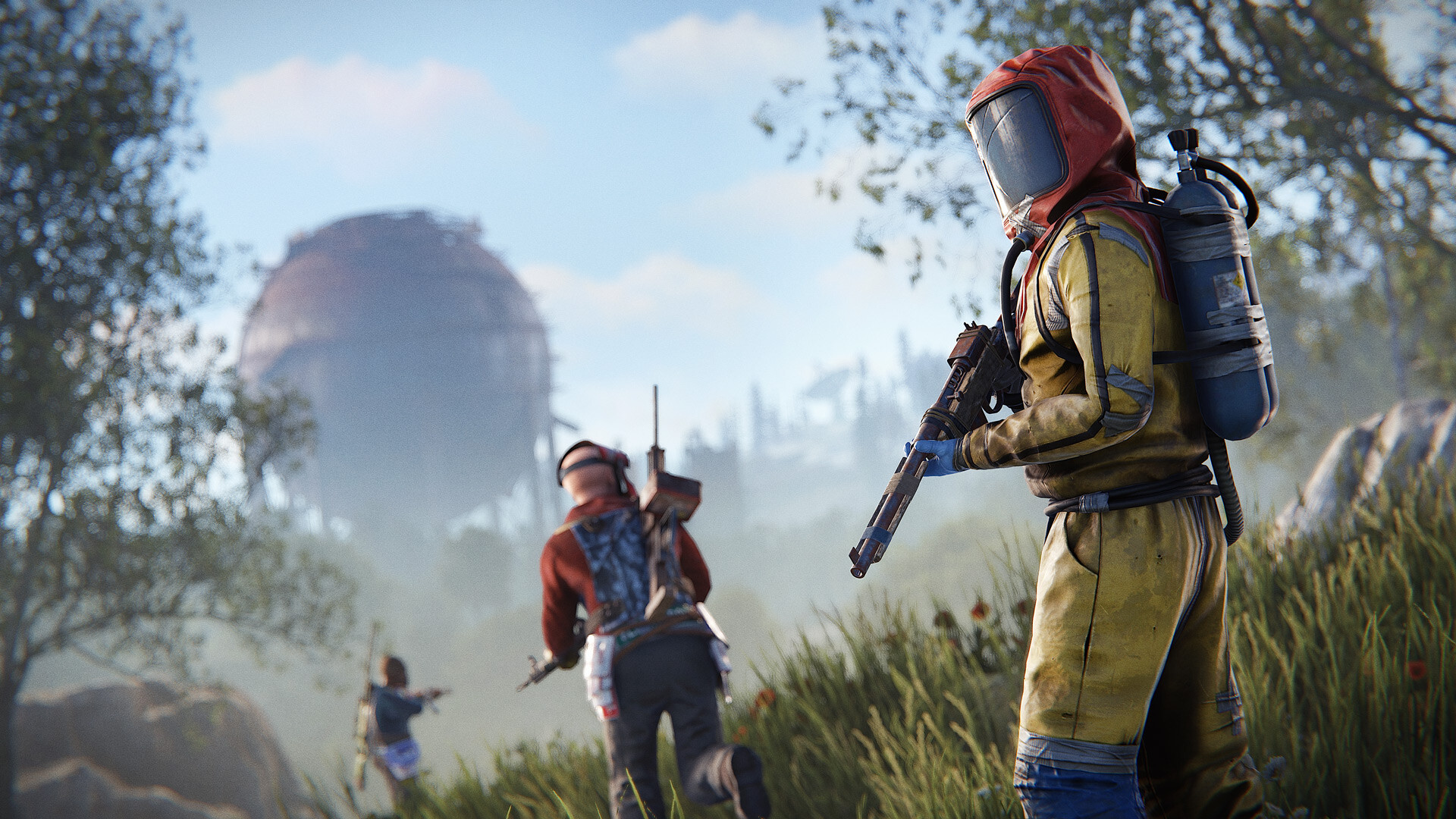
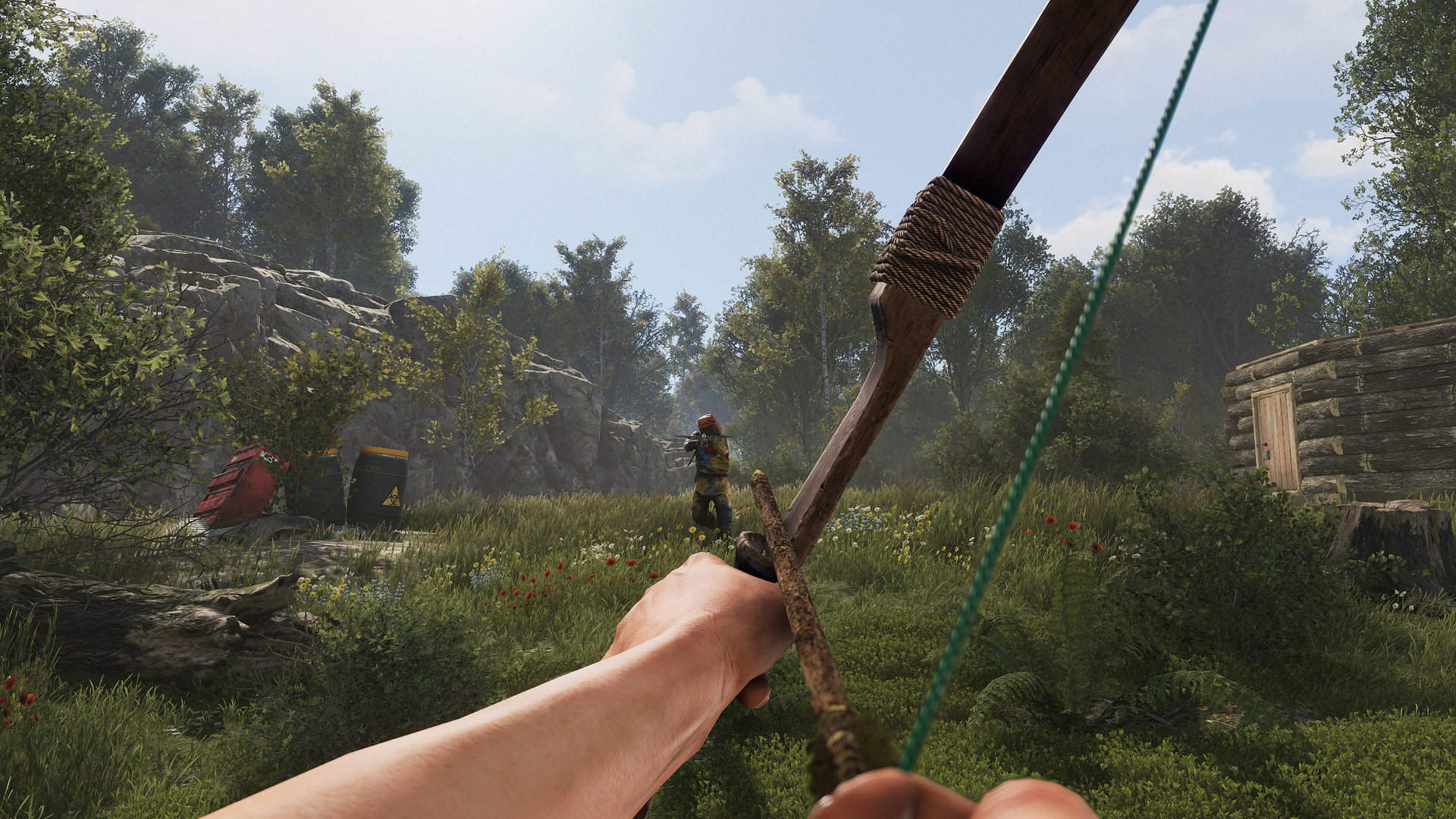
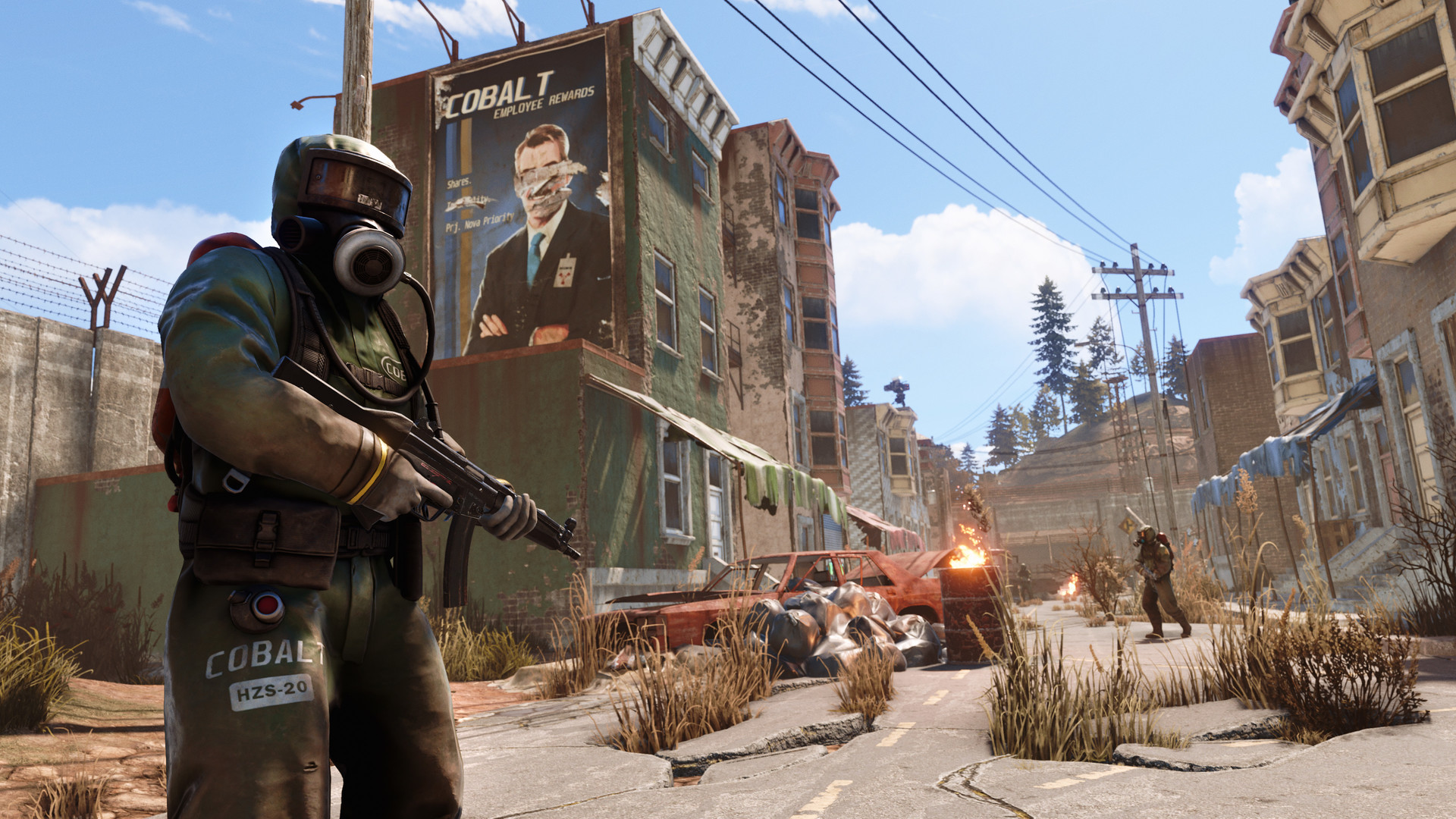
The only aim in Rust is to survive. Everything wants you to die - the island’s wildlife, other inhabitants, the environment, and other survivors. Do whatever it takes to last another night.
🎮Game Details
💬What Players Say
"“I’ve never played a game that simulates emotional damage this accurately. Rust is less of a survival game and more of a full-time job where everyone is armed, unemployed, and deeply committed to ruining your evening. I spent 6 hours gathering wood and stone to build a tiny shack, only for a shirtless man named ‘TaxEvader420’ to break in with a flamethrower and call me poor in voice chat...."
"I installed Rust at 3:14 AM and immediately my refrigerator started speaking Romanian. The loading screen lasted 8 years, but emotionally it felt like a Tuesday. First thing I did was punch a tree, which caused a nearby horse to file taxes under my name...."
"If you enjoy the feeling of your balls being placed in a hydraulic press, this game is a great fit for you!"
📝Editorial Analysis
The first punch lands on bark—not flesh, not metal, but wood, raw and unyielding. You’re standing barefoot in damp grass at 3:14 AM, the loading screen still breathing Romanian syllables into your fridge, and your knuckles sting with a truth no tutorial could teach: this is not preparation—it’s surrender to consequence. Rust doesn’t open with a cutscene or lore dump. It opens with impact: your fist against a tree, your breath ragged, your inventory empty, your trust already broken by the game’s own silence—and by the fact that everything wants you to die. Not metaphorically. Not thematically. Literally. The island’s wildlife, the weather, the other survivors—they don’t wait for motive. They act. You act back. Or you don’t. And if you don’t, you become part of the rust.
What makes Rust’s atmosphere singular isn’t its crafting loops or base-building—it’s how it weaponizes emotional erosion. It’s the way player review #1 nails it: this isn’t survival as gameplay—it’s survival as lived exhaustion, where “full-time job” isn’t hyperbole but diagnosis. You aren’t playing against scarcity; you’re metabolizing it. Every fire you light flickers with the memory of one you failed to maintain. Every door you reinforce echoes the sound of someone else’s crowbar on your wall. There’s no safe zone, no narrative buffer—just the grinding, unblinking arithmetic of threat: hunger, cold, radiation, betrayal. It doesn’t ask who are you? It asks how much can you hold before your hands shake too hard to reload? That’s why the hydraulic-press feeling in review #3 isn’t absurd—it’s precise. It’s the sensation of pressure applied even when nothing is happening, because something is always about to happen, and you’re always already behind.
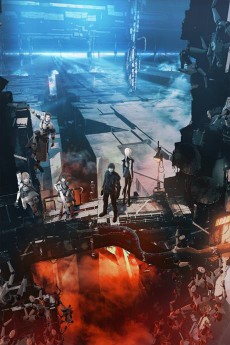
Bubble, with its shattered Tokyo skyline and gravity-defying ruins, shares Rust’s DNA not in setting—but in weight. Both treat environment as antagonist first, backdrop second. In Bubble, every leap across floating debris carries the same visceral stakes as climbing a Rust roof under sniper fire: one misjudgment isn’t failure—it’s erasure. The crafting isn’t cozy; it’s desperate improvisation—tape, wire, salvaged optics—mirroring Rust’s duct-taped turrets and scrap-metal armor. And the competitive spirit? It’s not sport. It’s selection. Who gets air? Who gets time? Who gets to breathe without calculating the cost?
Fire Force Season 3 doesn’t just echo Rust’s dystopia—it accelerates it. The world isn’t post-apocalyptic; it’s mid-collapse, burning faster than anyone can map it. Like Rust’s sudden raid at 2 a.m., Fire Force drops consequences without preamble: a building ignites, a comrade vanishes mid-sentence, a plan unravels in three frames. Its “crafting” is kinetic—splicing flame abilities, jury-rigging gear mid-chase—exactly how Rust players cobble together a spear while sprinting from wolves. Both refuse catharsis. Victory smells like smoke and sweat, not triumph.
Planetarian, at first glance, seems gentler—but its 74-score alignment with Rust on Survival & Crafting and Cyberpunk & Dystopia is razor-sharp. Here, survival isn’t about fending off raiders—it’s about keeping memory alive in a dead city. The protagonist crafts meaning from broken projectors, scavenged film reels, and the quiet, stubborn ritual of serving tea to a robot who remembers everything he’s forgotten. That’s Rust’s soul, too: not the loot, not the kill count—but the act of maintaining humanity while everything conspires to oxidize it. The rust isn’t just on the metal. It’s on the hope. And yet—you polish anyway.
Who lives for these pairings? Not the player who wants mastery, but the one who recognizes fatigue as texture. The viewer who watches BLUE LOCK’s endless drills and feels their own jaw clench—not from excitement, but recognition: yes, this is what it feels like to be perpetually evaluated, perpetually insufficient, perpetually on the verge. They’re the ones who mute the Discord call after a raid, stare at the fire they just lit in Rust, and whisper, “I made this. Just this. For now.” They don’t seek escape. They seek resonance. The kind that hums in your molars when the rain starts in Rust—and when the lights flicker in Patema Inverted, and when the last battery dies in Planetarian. Not hope. Not despair. Just continuance. Raw. Unvarnished. Real.
→41 Anime That Match the Vibe

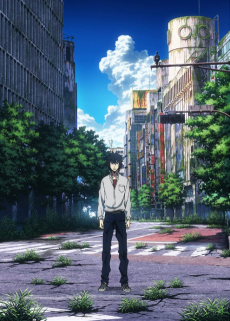
Gravity fails in Tokyo’s ruins just as rust eats through Rust’s scavenged tools—both worlds demand relentless adaptation to hostile physics. Where Rust’s players craft shelters from scrap under radioactive rain, Bubble’s Uta and Riku train midair on shattered skyscrapers, turning dystopian collapse into a ballet of survival & romance. This ONA’s gravity-defying parkour isn’t just sport—it’s Crafting reimagined: every leap recalibrates trust, risk, and fragile human connection amid systemic decay.

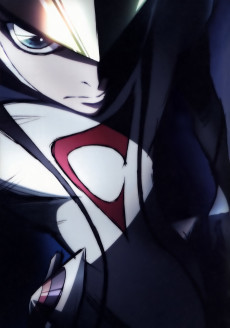
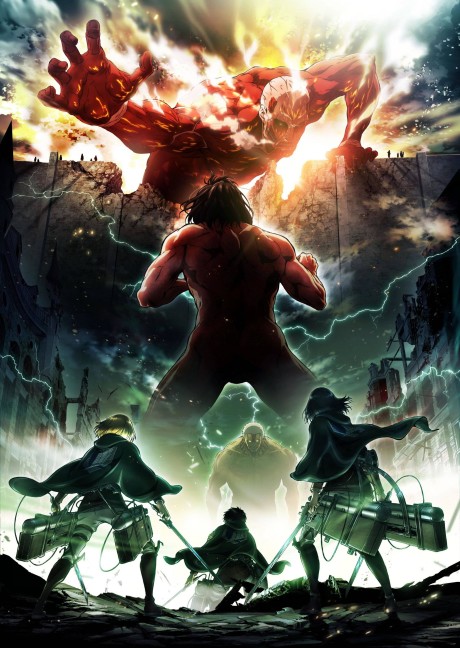
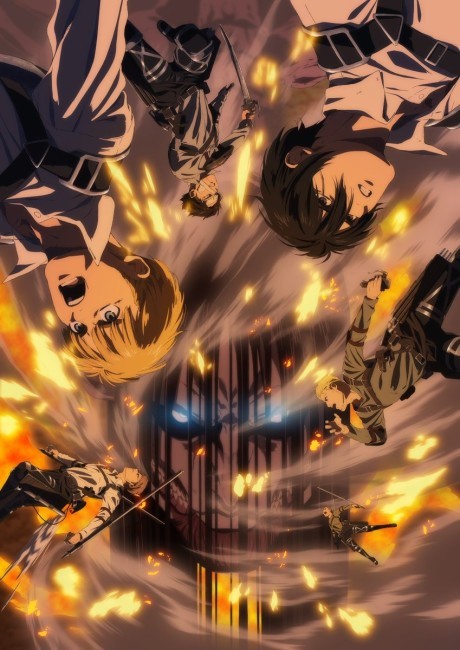
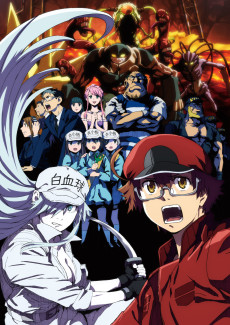
Shinra’s desperate, soot-streaked sprint through the crumbling Neo Kyoto ruins mirrors Rust’s frantic 3 a.m. scavenging—both demand split-second crafting decisions under suffocating pressure. Unlike most dystopias that romanticize rebellion, Season 3 and Rust treat survival as visceral labor: welding scrap into shelter or forging fireproof gear while the world literally burns around you. That shared 🔨 Survival & Crafting intensity—raw, unglamorous, tactile—makes their resonance startlingly physical, not philosophical.
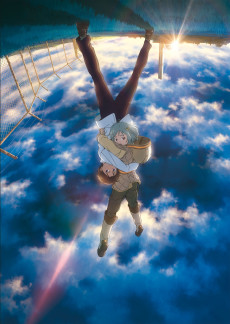
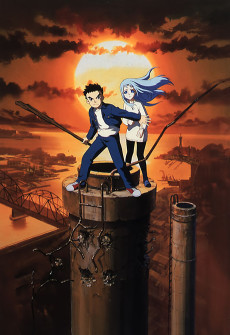
Patema’s first breath of open sky—wind whipping her hair, gravity flipping her world—mirrors the jarring vulnerability of Rust’s spawn screen: no tools, no shelter, just raw exposure to a hostile system. Where Rust weaponizes crafting as desperate ritual against environmental and human threat, Patema Inverted frames underground tunnel life as quiet, cloth-wrapped resilience—yet both hinge on *Survival & Crafting* as embodied knowledge, not convenience. That contrast—claustrophobic safety versus exposed peril—makes their shared dystopian weight feel startlingly intimate, not generic.

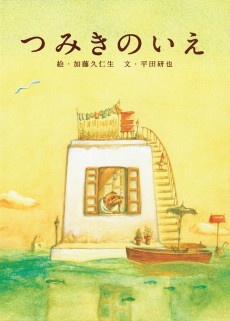
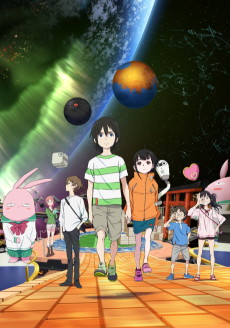
Yumemi’s quiet, dust-choked planetarium—where she polishes lenses and recites star charts for a ghost audience—mirrors Rust’s desolate, scavenged landscapes where players craft shelters from scrap just to endure another night. Unlike most dystopias that glorify resistance, both commit to the raw, tactile weight of *Survival & Crafting*: Yumemi repairs her own fraying cognition like a player jury-rigging a furnace, each act a fragile refusal of entropy. That shared, aching tenderness amid ruin—making meaning with broken tools—is what makes their resonance so startlingly human.
Build, survive, thrive — the satisfaction of carving out your place in a hostile world.
Build, survive, thrive — the satisfaction of carving out your place in a hostile world.

Build, survive, thrive — the satisfaction of carving out your place in a hostile world.
Build, survive, thrive — the satisfaction of carving out your place in a hostile world.

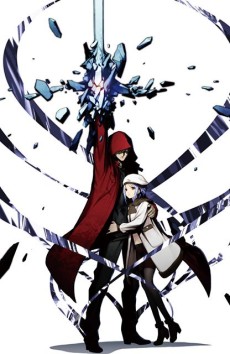
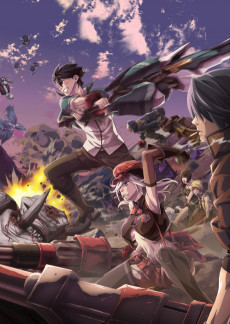
Rust’s frostbitten nights—where players scavenge scrap under hostile skies—mirror BLUE LOCK’s brutal Selection Camp, where Isagi stares down 299 rivals in a zero-sum war for one striker slot. 🔨 Survival & Crafting isn’t just about building bases or sharpening cleats; it’s the visceral calculus of resource scarcity, betrayal, and self-reinvention under relentless pressure. Unlike most sports anime, BLUE LOCK treats football like Rust treats oxygen: not a given, but something you claw, hoard, and weaponize—making their shared tension unnervingly, brilliantly raw.

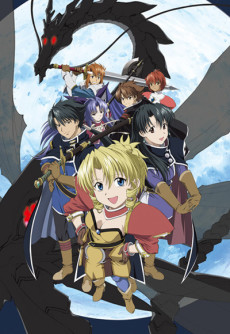
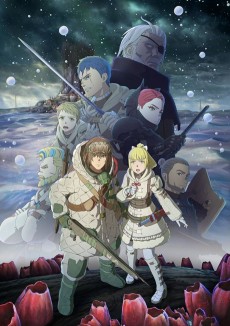
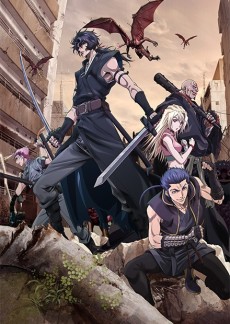
Leo’s exhausted shrug after deflecting yet another mob’s thrown rock mirrors the hollow satisfaction of crafting a rusted hatchet at dawn—survival isn’t heroic, it’s procedural. Unlike most fantasy finales, *I’m Quitting Heroing* rejects triumphalism just as Rust discards narrative reward: both weaponize 🔨 Survival & Crafting to expose how systems grind down idealism. That resonance feels quietly radical—a shared refusal to romanticize endurance.













Match Dimensions Explained
❓Frequently Asked Questions
Why is Bubble ranked higher than Fire Force Season 3 for Rust fans?
Bubble nails Rust’s brutal, high-stakes crafting loop—like when Kaito and his crew jury-rig oxygen recyclers from scrap while dodging gravity-defying predators on the floating ruins. Fire Force Season 3 has great survival tension (hello, Infernal City collapse scenes), but Bubble mirrors Rust’s 'emotional damage' vibe more closely—especially that gut-punch moment where a character loses their entire base to a surprise environmental collapse, just like your Rust base vanishing overnight to raiders with no warning.
Is there an anime adaptation of Rust?
No official Rust anime exists—but Bubble is basically what happens if Facepunch handed their dev team a storyboard instead of a Unity engine. It’s got Rust’s core DNA: hostile environments, scavenged tech, zero hand-holding, and that same 'refrigerator-speaking-Romanian' absurd-yet-raw emotional whiplash from the player reviews. Even the character designs feel like they stepped out of a Rust server’s chaotic lore wiki.
How does Patema Inverted compare to Planetarian for Rust vibes?
Both hit Rust’s 'survival & crafting in a broken world' dimension, but Patema Inverted leans harder into Rust’s physical stakes—think Patema and Age desperately reinforcing crumbling inverted tunnels with salvaged gears and duct-tape logic, just like patching a Rust wall with scrap metal before a raid hits. Planetarian gives you Rust’s isolation and resource scarcity (that single battery powering the planetarium’s projector? Pure 'my last can of beans at 3am' energy), but Patema’s constant environmental threat feels closer to Rust’s 'everything wants you to die' mantra.
What if I love Rust’s 'balls-in-a-hydraulic-press' stress but hate cyberpunk aesthetics?
You’ll still vibe with BLUE LOCK—it swaps neon dystopias for soccer fields turned psychological war zones, but keeps Rust’s suffocating competitive survival pressure. Watch Isagi’s trembling hands during the final penalty shootout: that’s the exact 'hydraulic press' feeling from the player review, just channeled through sweat, shin guards, and zero second chances. It’s Rust’s 'do whatever it takes to last another night' energy—no guns, no scrap, just pure, unrelenting human pressure.