
From the New World
Following a sudden outbreak of psychokinesis in 0.1% of the population, a rapid transformation swept the world. The godlike ability to manipulate matter remotely turned many power wielders to violence, inciting a long period of upheaval. Finally, after a chaotic era shaped by the rise and fall of oppressive regimes, the psychic humans were able to achieve a fragile peace by isolating their society, creating a new world bound by complex rules.
In the town of Kamisu 66, 12-year-old Saki Watanabe has just awakened to her powers and is relieved to rejoin her friends—the mischievous Satoru Asahina, the shy Mamoru Itou, the cheerful Maria Akizuki, and Shun Aonuma, a mysterious boy whom Saki admires—at Sage Academy, a special school for psychics. However, unease looms as Saki begins to question the fate of those unable to awaken to their powers, and the children begin to get involved with secretive matters such as the rumored Tainted Cats said to abduct children.
Shinsekai yori tells the unique coming-of-age story of Saki and her friends as they journey to grow into their roles in the supposed utopia. Accepting these roles, however, might not come easy when faced with the dark and shocking truths of society, and the impending havoc born from the new world.
(Source: MAL Rewrite)
📺Anime Details
📝Editorial Analysis
The air in Kamisu 66 doesn’t just feel still—it presses. Not with heat or humidity, but with the weight of unspoken rules: the way Saki’s breath hitches when she notices her friend’s eyes flicker too long on a sparrow, the way the teacher’s voice drops half an octave before reciting the “Ten Commandments of Psychic Ethics,” the way the forest beyond the town limits hums—not with insects, but with something older, hungrier, and watching. That silence isn’t peace. It’s the held breath before a scream that’s been surgically removed from the vocabulary.
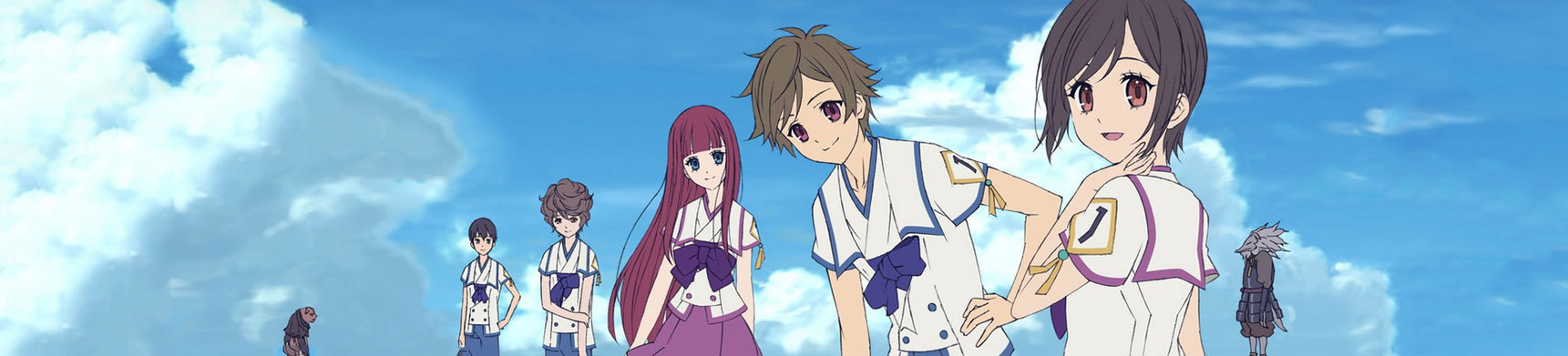
What makes From the New World ache so deeply isn’t its psychic powers or its post-apocalyptic scaffolding—it’s the dread of inheritance. You don’t just watch Saki grow up; you feel the slow, chilling realization that every ritual, every lullaby, every sanctioned punishment is a stitch holding together a society built on mass trauma, buried genocide, and engineered amnesia. It’s not horror as jump-scares, but as recognition: the moment you understand that the adults aren’t protecting the children—they’re protecting the lie from the children. The philosophy isn’t abstract; it’s carved into bone—class struggle made literal in the caste of “Queens” and “Blasted Ones,” coming-of-age as moral dissection, tragedy not as misfortune but as inevitability, baked into the architecture of survival. You don’t fear the monsters in the woods—you fear becoming one without ever knowing you crossed the line.
That same suffocating inheritance echoes in BioShock. Its description calls it a Political Thriller set in a Cyberpunk & Dystopia—but read between the lines: Rapture isn’t just fallen; it’s logically consistent. Its collapse stems from the same poisoned root as Kamisu 66: absolute faith in human rationality, then absolute terror of what happens when power outstrips empathy. The player review calls it “one of the most revolutionary games ever”—and it is, because its horror lives in the architecture of ideology. When Fontaine’s lies unravel, when the Little Sisters whisper “Would you kindly?”—it’s not shock at betrayal. It’s the sickening vertigo of realizing your own choices were pre-scripted by the very system you thought you mastered. Just like Saki learning the truth about the “Cataclysm,” you don’t rage—you recoil inward, questioning every assumption you’ve ever trusted.
Then there’s BioShock Infinite, scored alongside Time & Memory and Adult & Dark Seinen. Its description frames Booker DeWitt as indebted, hunted, tasked with rescuing Elizabeth—but the player review hints at something sharper: “the Bioshock Infinite we could have gotten.” That phrase aches. Because BioShock Infinite doesn’t just show broken worlds—it shows fractured memory, where history isn’t linear but recursive, layered, and violently suppressed. Elizabeth isn’t just a damsel; she’s a living archive, and every tear she opens is a wound in time where truth bleeds through. Like Saki confronting the buried records of the “Peaceful Revolution,” Booker’s journey forces him to witness his own complicity across timelines. The emotional DNA isn’t in the sky-cities or vigors—it’s in that gut-level shame when you realize your freedom was purchased with someone else’s erased identity. The game doesn’t ask “What would you do?” It asks, “What have you already done—and forgotten?”
And finally, Prince of Persia: Warrior Within, with its Time & Memory core and the immortal Dahaka hunting the Prince—not as villain, but as consequence. The description names Dahaka “an immortal incarnation of Fate,” and the player review calls the chase “goated”… but what sticks is the relentlessness. This isn’t a boss fight; it’s a pursuit of accountability. Every sand-powered rewind feels less like a cheat and more like a desperate, failing attempt to outrun the self you’ve become. Saki can’t rewind time—but she relives it, over and over, in the quiet moments after a sanctioned execution, in the way her mother’s smile never quite reaches her eyes. Both Warrior Within and From the New World trap you in the aftermath, where action has already curdled into legacy, and the only thing more terrifying than the monster is the face you see when you finally stop running.
This pairing isn’t for fans of “cool powers” or “epic twists.” It’s for the ones who replay a scene three times just to catch the tremor in a character’s hand before they lie. For the ones who pause BioShock mid-dialogue to stare at a faded poster of Andrew Ryan and think, “I’d have signed that charter too.” For the ones who don’t skip the lore logs—they linger, because the horror isn’t in the monster’s roar, but in the quiet, clinical footnote describing how it was bred. These are stories for people who understand that the most devastating dystopias aren’t built with steel and surveillance—but with lullabies, textbooks, and the gentle, firm pressure of a hand on a child’s shoulder saying, “Don’t look too closely. Don’t ask why.”
🎮62 Games That Match the Vibe

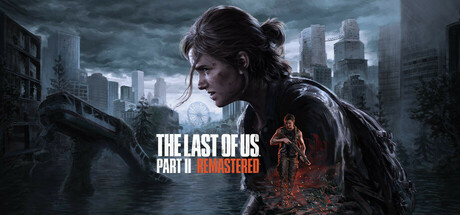

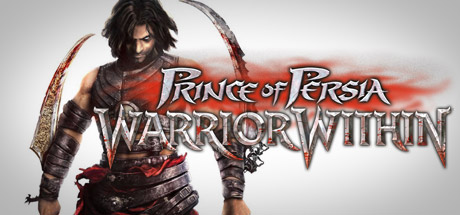
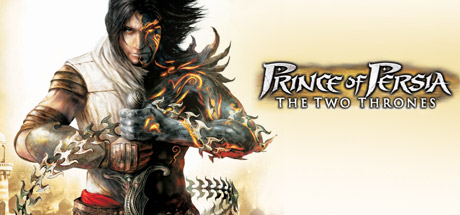













Match Dimensions Explained
❓Frequently Asked Questions
Why is BioShock Infinite listed as similar to From the New World despite having no psychic powers?
Great question—it’s not about psychic powers per se, but how both stories weaponize memory and time as narrative traps. In From the New World, Saki’s suppressed memories of the 'Cataclysm' mirror Elizabeth’s fragmented recollections of Columbia’s atrocities and her own erased past—especially that gut-punch reveal in Comstock House where reality fractures like a cracked mirror. Both lean hard into Adult & Dark Seinen themes: moral decay masked by utopian facades, and the horror of realizing your society’s 'peace' was built on systematic erasure.
Is there a From the New World anime or game adaptation?
No official game adaptation exists—but Prince of Persia: Warrior Within and The Two Thrones come shockingly close in spirit. Both feature a tormented protagonist hunted by an unstoppable force (Dahaka = the Robber Fly or even the Fiend), visceral time-manipulation mechanics that warp perception (like rewinding moments mid-combat), and that same oppressive, rain-soaked dread as Saki walking through the ruined library in Episode 22. Even the voice acting in Warrior Within—raw, exhausted, haunted—feels ripped from Saki’s inner monologues.
How does Prince of Persia: Warrior Within compare to BioShock in terms of dystopian worldbuilding?
BioShock’s Rapture is all cold, decaying Art Deco and ideological rot—think Andrew Ryan’s speeches echoing through flooded halls—while Warrior Within’s Babylon is a fever-dream of crumbling sandstone, blood-slicked stairwells, and Dahaka’s relentless pursuit across fractured timelines. Both are Cyberpunk & Dystopia heavy, but Warrior Within leans into psychological claustrophobia (that first Dahaka chase in the Palace of Time? Pure From the New World-level tension), whereas BioShock uses environmental storytelling to dissect failed utopias—like discovering Little Sisters’ rooms tucked behind broken vending machines.
What’s the best game like From the New World if I want that slow-burn dread and quiet character intimacy?
Go straight to Prince of Persia: The Two Thrones. It’s got that same hushed, melancholic weight—especially the Prince’s fractured psyche manifesting as the Dark Prince, mirroring Saki’s guilt and self-loathing after the Robber Fly incident. The quiet moments between him and Kaileena before everything collapses? That fragile warmth amid gathering darkness? Exactly like Saki and Satoru sharing tea while knowing their world is seconds from shattering. And yes—the score swells with the same aching, strings-heavy sorrow as the anime’s OST.