
Ricochet
A futuristic action game that challenges your agility as well as your aim, Ricochet features one-on-one and team matches played in a variety of futuristic battle arenas.
🎮Game Details
💬What Players Say
"Truly a life changing experience all should play... Ricochet combines the drama of a soap opera and the tense atmosphere of a horror movie all in one combat filled art peice only the highest of iq players will understand, This game truly is a masterclass in design. John ricochet proves to be a well developed and relatable protagonist for the game's 600 hour story...."
"Wowie Zowie Zowza! This sure was quite the dazzling experience! I spent hundreds of hours playing this EVERY day, and it really left a laSTING mark!..."
"It's basically Valve's version of Tron's disc wars. It is much more fast and crazy and less synth and Daft Punk though. I do have a funny story to tell as well...."
📝Editorial Analysis
The air hums—not with music, but with tension. You’re airborne, gravity a suggestion, your trajectory bending off a chrome wall as a disc screams past your ear—too close. Your thumb flicks the stick; your wrist snaps. A ricochet isn’t just physics here—it’s punctuation. A breath held, then released in a burst of light and impact. That’s Ricochet: not a match, not a round, but a pulse, where every bounce carries consequence, every arena feels like a stage lit for high-stakes theater, and your body forgets it’s sitting still. The official description calls it “futuristic action” — yes — but the players? They call it soap opera drama fused with horror-movie dread, all wrapped in combat so precise it feels like choreographed violence set to silent lightning.

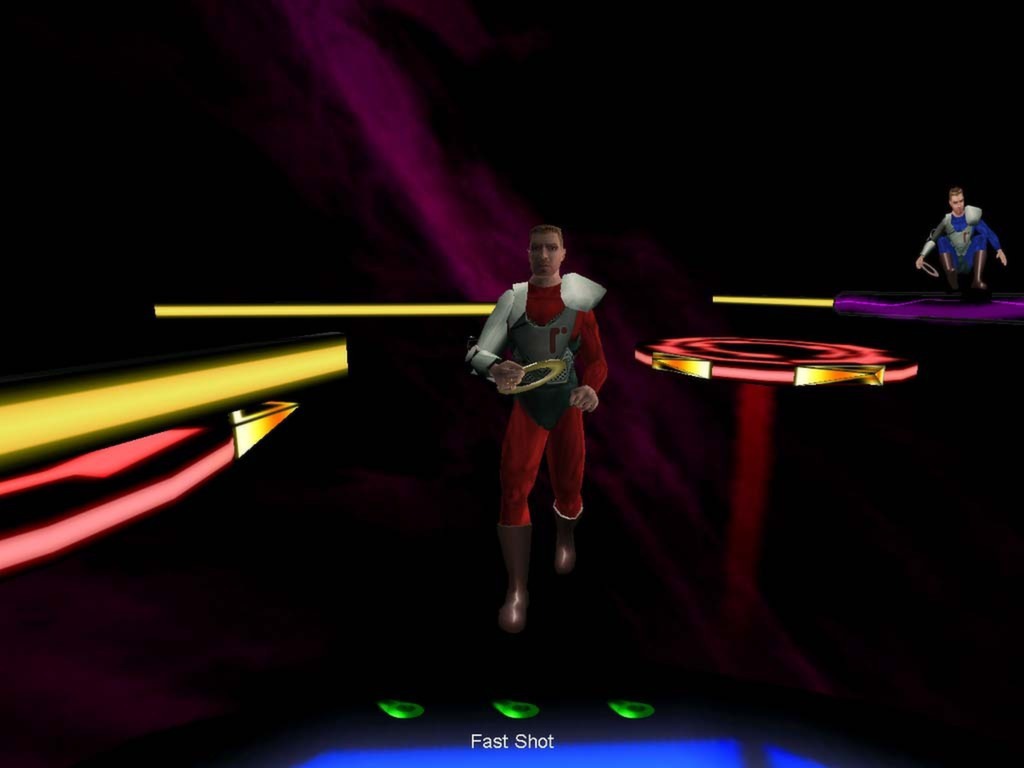

What makes Ricochet’s atmosphere singular isn’t its neon grids or zero-G arenas—it’s how it weaponizes flow. Not just movement, but inevitability. Player Review 2 nails it: “Everything… flows together in perfect H…” — that trailing ellipsis isn’t accidental. It’s the gasp before impact, the pause mid-air when time stretches thin and you know, deep in your tendons, that the next half-second will define everything. It’s less about winning and more about witnessing yourself become reflex incarnate—a sensation that lives somewhere between euphoria and vertigo. You don’t play Ricochet to relax. You play it to feel alive in the razor’s edge, where intelligence isn’t abstract—it’s the split-second calculation that saves you, the instinct that turns chaos into rhythm. That’s why it lands like a horror film: not with jumpscares, but with anticipation so thick you taste it. And why it reads like a soap opera: because every duel has stakes that feel personal, even anonymous—two silhouettes locked in a ballet of survival, their histories implied in every dodge, every feint, every perfectly timed rebound.
That same electric friction between control and collapse is why Redline hits so hard. Its cosmic racetrack isn’t just speed—it’s consequence made visible: engines screaming, asphalt vaporizing, pilots leaning into the impossible curve, trusting physics only just enough to hold. Like Ricochet, it runs on Competitive Spirit and Sci-Fi & Space, but more crucially, both treat motion as moral language—every drift, every ricochet, every near-miss says something about who you are when pushed past human limits.
Then there’s BAKI, where the ring isn’t a stage but a crucible—and every punch, every grapple, every deliberate stumble is a test of will disguised as sport. The Political Thriller dimension isn’t about policy; it’s about power structures revealed through bodies in motion: who yields, who breaks, who bends without snapping. Just like Ricochet’s one-on-one matches, BAKI’s fights aren’t spectacles—they’re dialogue, spoken in muscle memory and millisecond timing. You don’t watch to see who wins—you watch to see what each fighter reveals under pressure.
And MEGALOBOX 2: NOMAD—its rusted arenas, its battered fighters moving like clockwork wound too tight—mirrors Ricochet’s Cyberpunk & Dystopia not through aesthetics alone, but through emotional texture: exhaustion worn like armor, hope sharpened to a blade, and dignity preserved only through relentless, unglamorous precision. When Nomad ducks a blow and counters with a single, devastating elbow—that’s the same feeling as landing a triple-bounce shot in Ricochet: no flash, no fanfare—just certainty, forged in repetition and risk.
This is for the person who watches a fight scene and doesn’t blink—not out of adrenaline, but because they’re counting frames, tracing the arc of a kick like a mathematician reading poetry. It’s for the player who replays a match not to win, but to re-feel that one perfect moment when thought dissolved into motion. For the ones who love weight in velocity, history in a glance, and drama not in dialogue—but in the split second before impact, when everything hangs, suspended, waiting for you to decide—now—how hard you’ll hit the wall, and how beautifully you’ll bounce back.
→124 Anime That Match the Vibe
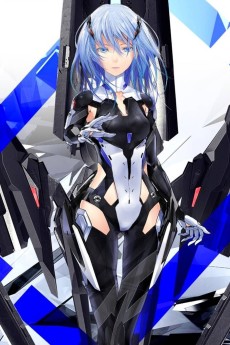
Connected through 3 aesthetic dimensions.

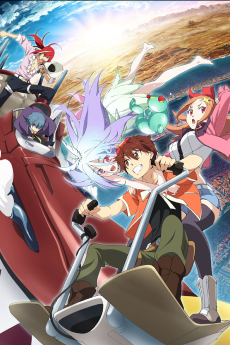
JP’s hairpin turn around the collapsing orbital ring in *Redline*’s final lap mirrors Ricochet’s gravity-defying arena flips—both weaponize velocity as choreography. Unlike most sci-fi competitions, they fuse 🚀 Sci-Fi & Space with raw, tactile stakes: a missed jump isn’t just failure, it’s explosive disintegration. That shared obsession with split-second precision amid cosmic chaos makes their kinetic languages feel like dialects of the same adrenaline dialect.

Matsukaze Tenma’s desperate, gravity-defying dribble past three defenders in Episode 12—where time seems to warp mid-air—mirrors Ricochet’s core loop: split-second spatial recalibration under pressure. Unlike most sports anime, *Inazuma Eleven GO* leans into political thriller stakes as the Football Frontier tournament exposes systemic corruption in youth soccer governance—echoing Ricochet’s arena-based power struggles where control of orbital arenas reflects real-world influence. This shared tension between individual agility and institutional contest makes their resonance startlingly precise: competitive spirit isn’t just about winning—it’s about reclaiming agency within rigged systems.
Gearless Joe’s battered knuckles scraping concrete in Megalonia’s rain-slicked ruins mirror Ricochet’s arena floors—glitching holograms flicker over cracked ferrocrete as players dodge laser barrages. Unlike most cyberpunk pairings, their resonance isn’t just visual: it’s the raw, unvarnished weight of competition under dystopian pressure—🏆 Competitive Spirit forged in exhaustion, not spectacle. Nomad’s Season 2 obsession with legacy and fractured identity deepens Ricochet’s team-match tension, where every ricochet reflects a choice between survival and solidarity.
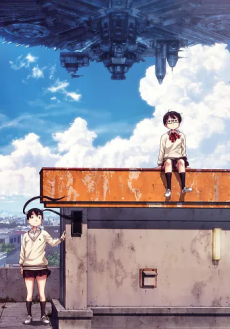
Connected through 3 aesthetic dimensions.

Baki’s brutal sparring in the underground arena—where every dodge echoes a ricocheting bullet—mirrors the game’s split-second spatial calculus. Where Ricochet forces players to read angles and anticipate rebounds in zero-gravity arenas, BAKI (the 2023 ONA) weaponizes physics itself: Hanma’s footwork against Muhammad Ali’s ghost or his father’s crushing grip turns bodies into vectors, embodying the *Competitive Spirit* as relentless geometric negotiation. It’s startling how both treat mastery not as power fantasy, but as a high-stakes, almost mathematical duel of perception and timing.

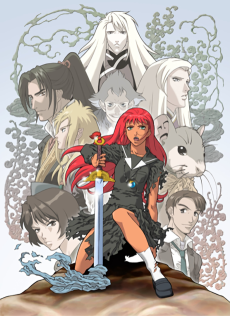
Connected through 2 aesthetic dimensions.
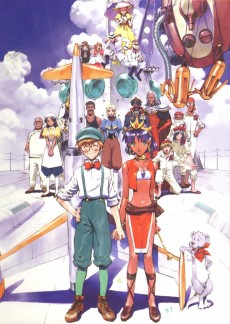
Nadia’s desperate dive into the Blue Water’s abyss—where ancient tech hums beneath steampunk gears—mirrors Ricochet’s arena floors vibrating with unstable energy fields. Where Gargoyle weaponizes Atlantean science as political theater, Ricochet players duel in arenas shaped by contested futurism: sleek, militarized, and humming with the same sci-fi tension that makes Nadia’s 1889 feel less like history than a prelude to collapse. This resonance isn’t superficial—it’s the shared pulse of 🚀 Sci-Fi & Space as ideological battleground, where every ricocheting shot and submerged ruin asks who controls tomorrow’s physics.

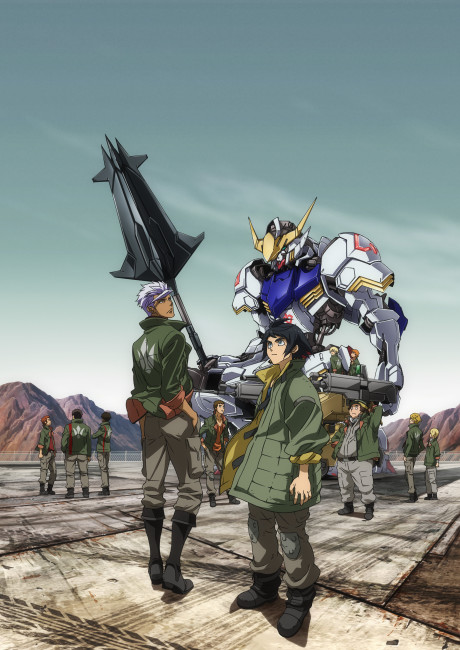
Vash’s ricocheting bullet deflection in TRIGUN STAMPEDE’s Neo-Babylon standoff mirrors the game’s core mechanic—where split-second angular precision turns chaos into control. Unlike most cyberpunk action, both reject brute force: Vash’s pacifism and Ricochet’s arena-based agility demand tactical restraint amid dystopian sprawl. That shared tension—between explosive motion and ethical stillness—makes their resonance in the 🌆 Cyberpunk & Dystopia dimension unexpectedly profound.
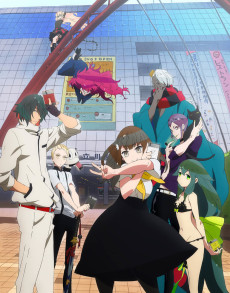
Connected through 2 aesthetic dimensions.


![[C] - CONTROL - The Money and Soul of Possibility](https://s4.anilist.co/file/anilistcdn/media/anime/cover/medium/bx10163-DGTY24yRLZrt.jpg)








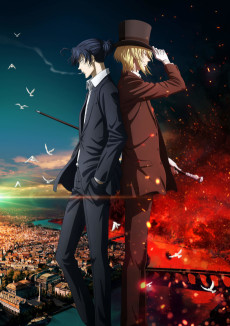
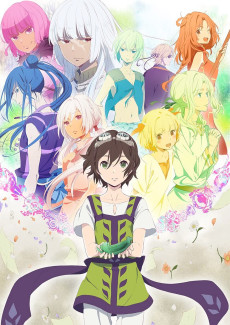

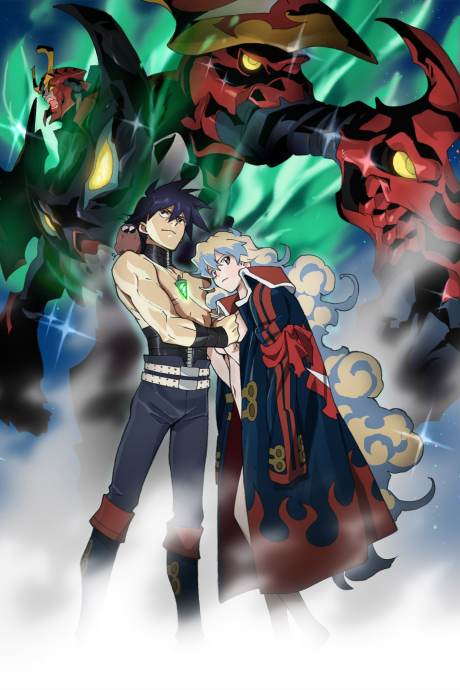
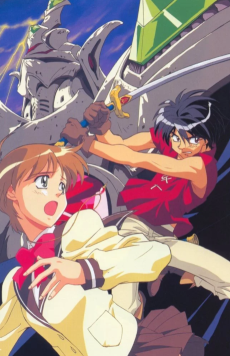




























Match Dimensions Explained
❓Frequently Asked Questions
Why is Redline recommended for Ricochet fans?
Redline nails that same breakneck, physics-defying agility and razor-sharp arena combat — think JP's insane drifts through neon-drenched space tunnels or the final race's zero-G ricochet jumps off orbital debris. It shares Ricochet’s Sci-Fi & Space + Cyberpunk & Dystopia vibes *and* that white-knuckle Competitive Spirit, especially in how every frame feels like a high-stakes, one-on-one duel with split-second timing.
Is there an anime adaptation of Ricochet?
Nope — Ricochet is a standalone game, not based on any anime, and there’s no official anime adaptation in the works. That said, fans often joke it *feels* like an anime come to life — especially when you’re dodging laser volleys in the ‘Neon Crucible’ arena while your opponent pulls off a triple-wall bounce like Jin from MEGALOBOX 2: NOMAD’s underground fights.
How does BAKI compare to Ricochet in terms of fight pacing and tension?
BAKI matches Ricochet’s relentless Competitive Spirit — imagine Hanma’s bare-knuckle brawls in the underground colosseum mirroring Ricochet’s tight, 60-second team skirmishes where every dodge, feint, and counter has to land *exactly* right. Both thrive on raw physical precision and escalating stakes, though BAKI swaps energy blasts for sweat, grunts, and bone-crunching impact — same intensity, different toolkit.
What’s the best anime like Ricochet if I want that fast, chaotic, ‘wall-bounce’ energy?
Go straight to MEGALOBOX 2: NOMAD — its Nomad Arena fights are pure Ricochet energy: characters slide, rebound off pipes and scaffolding mid-combo, and time their counters like they’re reading laser trajectories. The cybernetic enhancements, grimy dystopian arenas, and that ‘one wrong move ends it’ tension? Spot-on — especially when Sachio flips off a rusted girder into a spinning elbow drop, just like Ricochet’s ‘Gravity Flip’ mechanic.