
Neon Genesis Evangelion
In the year 2015, the Angels, huge, tremendously powerful, alien war machines, appear in Tokyo for the second time. The only hope for Mankind's survival lies in the Evangelion, a humanoid fighting machine developed by NERV, a special United Nations agency. Capable of withstanding anything the Angels can dish out, the Evangelion's one drawback lies in the limited number of people able to pilot them. Only a handful of teenagers, all born fourteen years ago, nine months after the Angels first appeared, are able to interface with the Evangelion. One such teenager is Shinji Ikari, whose father heads the NERV team that developed and maintains the Evangelion. Thrust into a maelstrom of battle and events that he does not understand, Shinji is forced to plumb the depths of his own inner resources for the courage and strength to not only fight, but to survive, or risk losing everything.
(Source: AniDB)
Note: Later releases include edited versions of Episodes 21-24 called the "Director's Cut" with some visual editing and adding extra scenes that appeared in the theatrical recap 'Death'.
📺Anime Details
📝Editorial Analysis
The flicker of fluorescent light over Shinji Ikari’s face as he stares at his own trembling hand—sweat-slicked, knuckles white on the Evangelion’s entry plug control yoke—is not just a moment of fear. It’s the sound of breath catching in a throat too tight to swallow, the hum of machinery vibrating up through the spine like a trapped nerve, the sudden, nauseating realization that this body is all you have, and it’s already failing you.

That’s Neon Genesis Evangelion’s atmosphere—not dread as spectacle, but dread as texture. It’s the weight of inherited trauma pressing down like atmospheric pressure before a storm no one named. It’s the silence between lines of dialogue where meaning collapses into static. You don’t watch it—you inhabit its claustrophobia: the cramped cockpit, the hollow echo of NERV’s geofront corridors, the way sunlight never quite feels warm, only interrogative. It makes you think about the violence of expectation, the terror of being seen and unseen at once, the quiet horror of realizing your deepest wounds are shaped less by angels than by the people who raised you—and the institution that weaponized your grief.
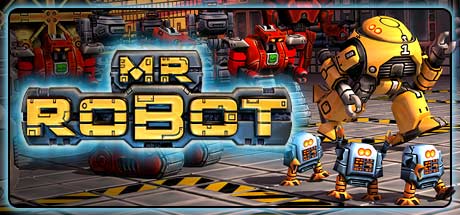
Among real games that resonate with this emotional DNA, Mr. Robot stands out—not for scale or spectacle, but for its suffocating isolation. Asimov is “a lowly service mechanoid aboard the interstellar colony ship Eidolon,” carrying frozen humans toward an unknown future while the ship’s own mind unravels. Like Shinji piloting Unit-01, Asimov isn’t chosen for strength or destiny—he’s available, expendable, wired into a system he doesn’t understand and can’t trust. The player review notes its “very light Mega Man Battle Network type exploration and battles”—but what lingers isn’t combat rhythm; it’s the retro feel, the pixelated loneliness, the sense that every corridor is both shelter and cage. That’s Evangelion’s tone: systems built to protect humanity, yet designed to erode the self from within.
Then there’s Supreme Commander, where “three opposing forces have waged war for what they believe is true” across a millennium—the Infinite War. Its scale is staggering, yes, but the player review zeroes in on what matters: “The scale of the battles is immense… but it feels different even today.” That difference? It’s time. Not clock time, but psychic time—the slow, grinding erosion of conviction, the way ideology calcifies into dogma until survival and annihilation blur. Evangelion’s Angels aren’t just enemies; they’re mirrors, manifestations, theological glitches in reality’s code. So too does Supreme Commander make war feel less like strategy and more like ritual: vast, inevitable, recursive. You don’t win—you persist. And in that persistence, something inside you hollows out.
And then—BioShock 2, set “along the Atlantic coastline, a monster has been snatching little girls.” Its description names Rapture’s sins echoing in its halls, and the player review fixates on instability: “Crashes non stop… every 30 seconds to two minutes.” That’s not just a technical flaw—it’s thematic resonance. Evangelion’s narrative fractures deliberately: logic fails, timelines splinter, characters dissolve into light and screaming static. BioShock 2’s instability—its refusal to hold together—mirrors Shinji’s psyche mid-breakdown, the way truth buckles under the weight of memory and guilt. It’s not about smooth gameplay; it’s about embodied disintegration. When the game crashes, it doesn’t break immersion—it deepens it.
Who loves these pairings? Not just fans of mecha or dystopia—but people who recognize the ache of being a vessel. The ones who’ve sat in silence after a fight they didn’t start, replaying a parent’s words like corrupted audio files. The ones who flinch at praise because it feels like another demand. The ones who understand that cosmic horror isn’t about tentacles—it’s about looking in the mirror and wondering if the face staring back is yours, or just the latest iteration of someone else’s design. They don’t want catharsis. They want recognition. A shared breath in the dark, before the next Angel descends—or the next system error appears—and all you can do is grip the controls tighter, knowing the real battle was never out there. It was always here, in the trembling hand, in the hum, in the silence between heartbeats. Alone. Seen. Unmoored. Held.
🎮85 Games That Match the Vibe


























Match Dimensions Explained
❓Frequently Asked Questions
Why does Mr. Robot feel like Evangelion even though it's not about giant robots fighting Angels?
It nails Evangelion’s claustrophobic dread and psychological isolation—like Shinji trapped in the Eva cockpit, you’re Asimov, a lone mechanoid aboard the failing colony ship Eidolon, wrestling with fragmented AI directives and existential doubt. The retro-styled exploration and turn-based combat echo the tense, methodical pacing of early Eva episodes, especially when systems glitch and corridors flicker with corrupted logs—very much like NERV’s decaying infrastructure.
Is there a Neon Genesis Evangelion video game adaptation I can actually play without jumping through hoops?
No official, modern, fully playable Evangelion game exists right now—most are Japan-only, outdated, or unlicensed. That’s why fans lean into matches like Supreme Commander: its massive, morally gray mecha warfare across fractured continents mirrors the scale and ideological exhaustion of the Infinite War, much like SEELE’s shadow war or Gendo’s silent machinations.
How is Beyond Good and Evil different from BioShock Infinite if both have dystopian conspiracies and female leads?
Beyond Good and Evil leans into Eva’s grounded political thriller vibe—Jade’s investigative journalism on her occupied planet feels like Misato’s covert ops briefing, all urgency and moral ambiguity—while BioShock Infinite trades that for soaring, symbolic spectacle (think Soryu’s aerial dogfights vs. Elizabeth opening tears). Also, Jade’s bond with Pey’j echoes Shinji and Pen-Pen’s quiet, wordless companionship—something Infinite never slows down enough to replicate.
What’s the best game like Evangelion if I want that heavy, oppressive ‘I’m trapped in my own head and the world is collapsing’ feeling?
BioShock 2 is your pick—it’s got that suffocating Rapture decay, Little Sisters echoing Rei’s eerie detachment, and Fontaine’s recordings hitting like Gendo’s cold, clinical voiceovers. Even the constant crashes (per player reviews) weirdly reinforce the vibe: your reality keeps breaking down, just like Shinji’s psyche during Instrumentality—no polish, just raw, fraying tension.